Ian Mell – författare
Visar alla böcker från författaren Ian Mell. Handla med fri frakt och snabb leverans.
17 produkter
17 produkter
Inbunden, Engelska, 2024
2 201 kr
Skickas inom 10-15 vardagar
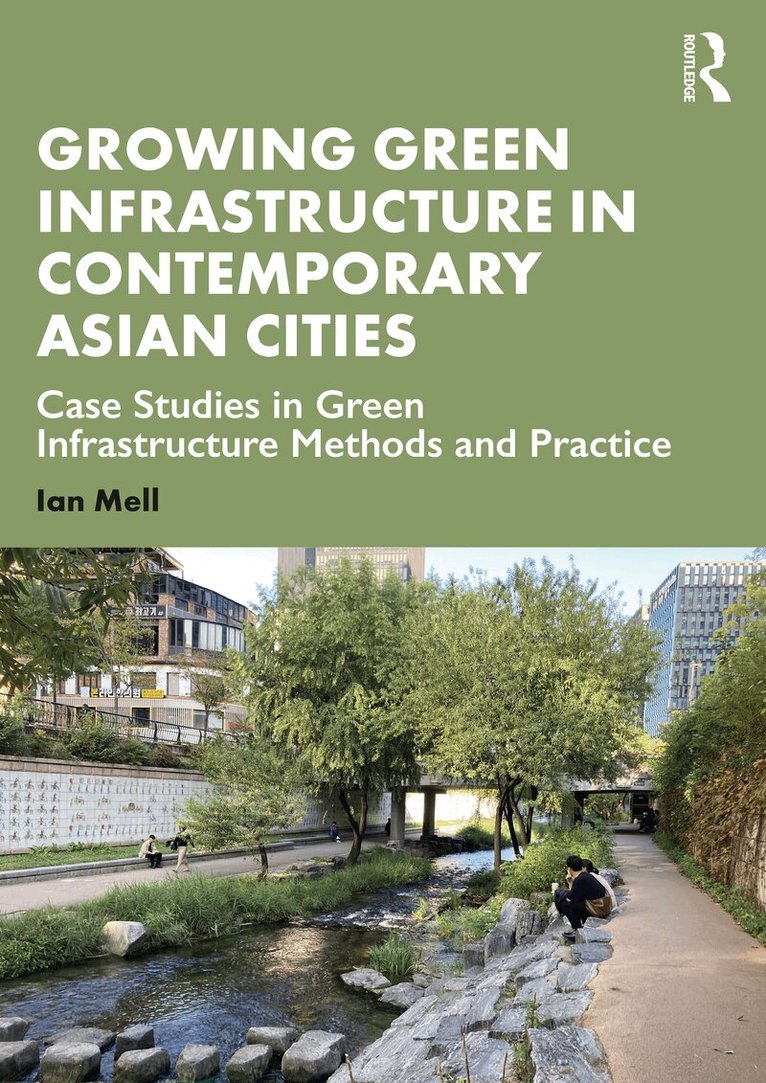
Growing Green Infrastructure in Contemporary Asian Cities examines to what extent green infrastructure (GI) is being implemented in East and Southeast Asian cities. The book reflects upon the integration of contemporary approaches to landscape planning alongside traditional forms of green space design and cultural understandings of the landscape in China, Hong Kong, Japan, Singapore, and South Korea. Working from a multi-locational perspective, the book illustrates how political, socio-cultural, economic, and ecological factors influence the delivery of GI and the consequences of these decisions. The book provides a set of best practice recommendations for the design, development, and management of greener urban areas. It both explains how GI is being utilised in East and Southeast Asia to address climate change, promote economic prosperity, and support the development of more livable places, and identifies future trends in its use. It is a key resource for any practitioners, students, and academics working in landscape planning and green infrastructure in an Asian context.
Häftad, Engelska, 2024
528 kr
Skickas inom 5-8 vardagar
Growing Green Infrastructure in Contemporary Asian Cities examines to what extent green infrastructure (GI) is being implemented in East and Southeast Asian cities. The book reflects upon the integration of contemporary approaches to landscape planning alongside traditional forms of green space design and cultural understandings of the landscape in China, Hong Kong, Japan, Singapore, and South Korea. Working from a multi-locational perspective, the book illustrates how political, socio-cultural, economic, and ecological factors influence the delivery of GI and the consequences of these decisions. The book provides a set of best practice recommendations for the design, development, and management of greener urban areas. It both explains how GI is being utilised in East and Southeast Asia to address climate change, promote economic prosperity, and support the development of more livable places, and identifies future trends in its use. It is a key resource for any practitioners, students, and academics working in landscape planning and green infrastructure in an Asian context.
Häftad, Engelska, 2025
584 kr
Skickas inom 10-15 vardagar
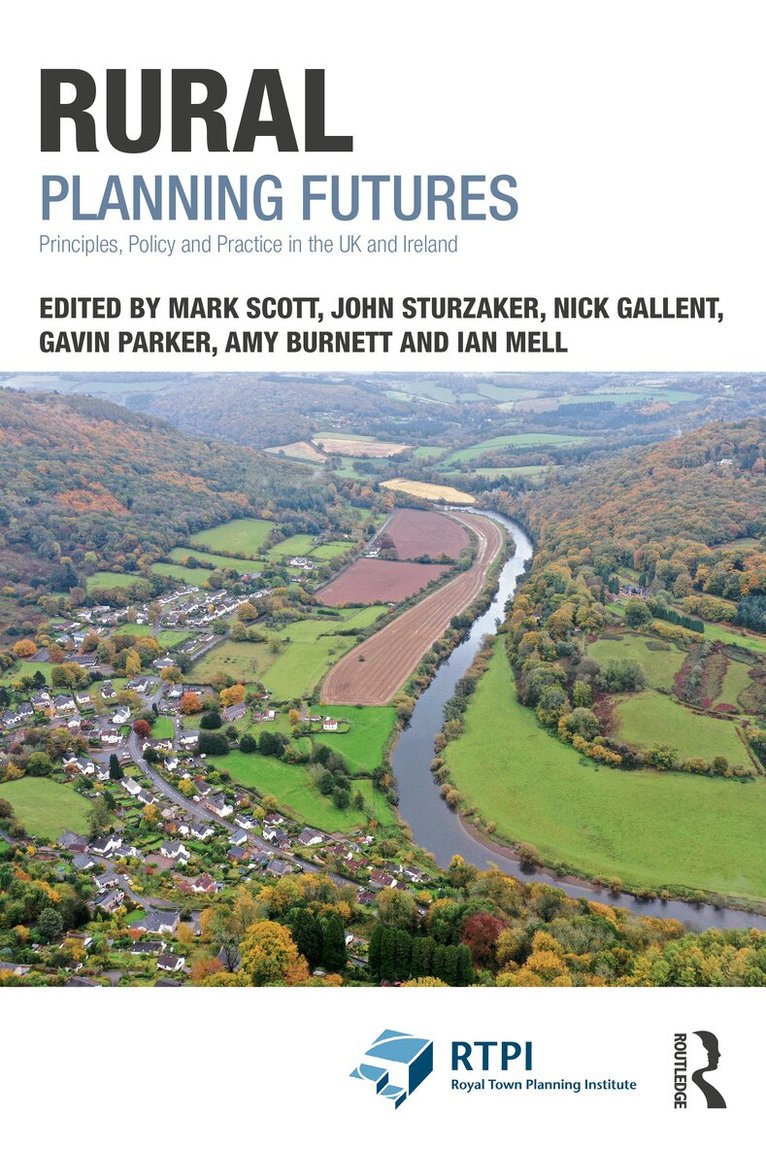
Rural Planning Futures charts the critical societal challenges that are reshaping rural places across the UK and Ireland. The book evaluates current planning processes and explores the prospects for an enhanced, cross-sectoral and holistic future practice that mediates rural change towards more resilient and sustainable outcomes. Rural places and planning have, for too long, been viewed as marginal to both the theory and practice of planning. However, rural places are central to addressing critical global challenges – from climate action, through nature recovery, energy transitions, and food security, to water quality – while also facing more localised conflicts around housing, the siting of infrastructure, and the challenge of sustaining local services. The policy response to these complex challenges has too often been fragmented, siloed, and fixated on the short-term. By illustrating how key 'rural capitals' are linked and integrated, this book argues for a reset of the rural planning narrative and for the urgent disruption of established ways of working. Using innovative case studies, the chapters detail how planning for rural places must be guided by the pursuit of social value rather than protecting private interests. This book is essential reading for undergraduate and graduate students in planning, geography, rural studies, landscape studies, and regional studies.
Inbunden, Engelska, 2025
2 137 kr
Skickas inom 10-15 vardagar
Rural Planning Futures charts the critical societal challenges that are reshaping rural places across the UK and Ireland. The book evaluates current planning processes and explores the prospects for an enhanced, cross-sectoral and holistic future practice that mediates rural change towards more resilient and sustainable outcomes. Rural places and planning have, for too long, been viewed as marginal to both the theory and practice of planning. However, rural places are central to addressing critical global challenges – from climate action, through nature recovery, energy transitions, and food security, to water quality – while also facing more localised conflicts around housing, the siting of infrastructure, and the challenge of sustaining local services. The policy response to these complex challenges has too often been fragmented, siloed, and fixated on the short-term. By illustrating how key 'rural capitals' are linked and integrated, this book argues for a reset of the rural planning narrative and for the urgent disruption of established ways of working. Using innovative case studies, the chapters detail how planning for rural places must be guided by the pursuit of social value rather than protecting private interests. This book is essential reading for undergraduate and graduate students in planning, geography, rural studies, landscape studies, and regional studies.
Häftad, Engelska, 2018
680 kr
Skickas inom 10-15 vardagar
Most of us have heard of green belts – but how much do we really know about them? This book tries to separate the fact from the fiction when it comes to green belts by looking both backwards and forwards. They were introduced in the mid-twentieth century to try and stop cities merging together as they grew. There is little doubt they have been very effective at doing that, but at what cost? Are green belts still the answer to today’s problems of an increasing population and ever higher demands on our natural resources?Green Belts: Past; present; future? reflects upon green belts in the United Kingdom at a time when they have perhaps never been more valued by the public or under more pressure from development. The book begins with a historical study of the development of green belt ideas, policy and practice from the nineteenth century to the present. It discusses the impacts and characteristics of green belts and attempts to reconcile perceptions and reality. By observing examples of green belts and similar policies in other parts of the world, the authors ask what we want green belts to achieve and suggest alternative ways in which that could be done, before looking forward to consider how things might change in the coming years.This book draws together information from a range of sources to present, for the first time, a comprehensive study of green belts in the UK. It reflects upon the gap between perception and reality about green belts, analyses their impacts on rural and urban areas, and questions why they retain such popular support and whether they are still the right solution for the UK and elsewhere. It will be of interest to anyone who is concerned with planning and development and how we can provide the homes, jobs and services we need while protecting our more valuable natural assets.
Inbunden, Engelska, 2018
2 272 kr
Skickas inom 10-15 vardagar
Over the last decade research exploring green infrastructure planning has burgeoned. Transferable green infrastructure messages between locations though are less well established and there remains a visible gap between the conceptual understanding of green infrastructure and its application in practice. Drawing together evaluations of green infrastructure policy-making and practice from across the world Global Green Infrastructure illustrates where successful practices can be identified. Examples from major green infrastructure development areas in the UK, Europe and the USA highlight the variety of investment options that can deliver socio-economic benefits. There is also a growing awareness of the added value of landscape planning in the rapidly developing cities of India and China. Reflecting on ten international case studies Global Green Infrastructure highlights the ways that ecology and engineered solutions can deliver successful urban development. Based on in situ research with the growing community of green infrastructure researchers and practitioners Global Green Infrastructure looks at the contradictions, consensus, and expanding evidence base of successful investments. This book also presents an in-depth commentary on the contemporary approaches to investment in urban greening and green infrastructure, and draws on the lessons we have learnt from a decade of experimentation, delivery and reflection.
Häftad, Engelska, 2016
757 kr
Skickas inom 10-15 vardagar
Over the last decade research exploring green infrastructure planning has burgeoned. Transferable green infrastructure messages between locations though are less well established and there remains a visible gap between the conceptual understanding of green infrastructure and its application in practice. Drawing together evaluations of green infrastructure policy-making and practice from across the world Global Green Infrastructure illustrates where successful practices can be identified. Examples from major green infrastructure development areas in the UK, Europe and the USA highlight the variety of investment options that can deliver socio-economic benefits. There is also a growing awareness of the added value of landscape planning in the rapidly developing cities of India and China. Reflecting on ten international case studies Global Green Infrastructure highlights the ways that ecology and engineered solutions can deliver successful urban development. Based on in situ research with the growing community of green infrastructure researchers and practitioners Global Green Infrastructure looks at the contradictions, consensus, and expanding evidence base of successful investments. This book also presents an in-depth commentary on the contemporary approaches to investment in urban greening and green infrastructure, and draws on the lessons we have learnt from a decade of experimentation, delivery and reflection.
Inbunden, Engelska, 2016
1 381 kr
Skickas inom 10-15 vardagar
Most of us have heard of green belts – but how much do we really know about them? This book tries to separate the fact from the fiction when it comes to green belts by looking both backwards and forwards. They were introduced in the mid-twentieth century to try and stop cities merging together as they grew. There is little doubt they have been very effective at doing that, but at what cost? Are green belts still the answer to today’s problems of an increasing population and ever higher demands on our natural resources?Green Belts: Past; present; future? reflects upon green belts in the United Kingdom at a time when they have perhaps never been more valued by the public or under more pressure from development. The book begins with a historical study of the development of green belt ideas, policy and practice from the nineteenth century to the present. It discusses the impacts and characteristics of green belts and attempts to reconcile perceptions and reality. By observing examples of green belts and similar policies in other parts of the world, the authors ask what we want green belts to achieve and suggest alternative ways in which that could be done, before looking forward to consider how things might change in the coming years.This book draws together information from a range of sources to present, for the first time, a comprehensive study of green belts in the UK. It reflects upon the gap between perception and reality about green belts, analyses their impacts on rural and urban areas, and questions why they retain such popular support and whether they are still the right solution for the UK and elsewhere. It will be of interest to anyone who is concerned with planning and development and how we can provide the homes, jobs and services we need while protecting our more valuable natural assets.
Inbunden, Engelska, 2019
428 kr
Skickas inom 5-8 vardagar
What is green infrastructure? Why should we develop it? Who uses it? And what socio-economic and ecological value does it provide? This useful guide provides an essential introduction to green infrastructure for planners, landscape architects, engineers and environmentalists keen to understand how we can use landscape principles to deliver more sustainable urban planning.Using multiple examples from practice in the UK, Europe, North America and Asia, the book illustrates how good policy ideas and innovative planning practice can help create more sustainable and ecologically focused urban landscapes.
Inbunden, Engelska, 2019
1 925 kr
Skickas inom 10-15 vardagar
This book explores novel theories, strategies and methods for re-naturing cities. It enables readers to learn from best practice and advances the current theoretical and empirical understanding in the field. The book also offers valuable insights into how planners and policymakers can apply this knowledge to their own cities and regions, exploring top-down, bottom-up and mixed mechanisms for the systemic re-naturing of planned and existing cities. There is considerable interest in ‘naturalising’ cities, since it can help address multiple global societal challenges and generate various benefits, such as the enhancement of health and well-being, sustainable urbanisation, ecosystems and their services, and resilience to climate change. This can also translate into tangible economic benefits in terms of preventing health hazards, positively affecting health-related expenditure, new job opportunities (i.e. urban farming) and the regeneration of urban areas.There is, thus, a compelling case to investigate integrative approaches to urban and natural systems that can help cities address the social, economic and environmental needs of a growing population. How can we plan with nature? What are the models and approaches that can be used to develop more sustainable cities that provide high-quality urban green spaces?
Del 35 - Landscape Series
Planning with Landscape: Green Infrastructure to Build Climate-Adapted Cities
Inbunden, Engelska, 2023
1 873 kr
Skickas inom 10-15 vardagar
This edited volume examines how to develop a planning and design process with green infrastructure that creates technical answers to the social and ecological function of the city’s climate change adaptations demands. In this context, it proposes a process that engage the values linked to the art and culture of the place, capable of generating adoption by the population and promoting the right to landscape.Since the nineteenth century, many theoretical and practical experiences have integrated urban and environmental issues, revising the understanding of nature as an object and thinking of nature and culture in conjunction. However, consensus of the methodological strategies needed to guide the development of multi-scale landscape planning and design capable of responding to the climate emergency, heritage, water, biodiversity and social inclusion, among other issues has not been achieved. Green infrastructure has emerged as a tool to link considerations of theplanning and design process to examine the impact urban nature can have at a global and a local scale.The book gathers together authors from different parts of the world and disciplines to showcase conceptual thinking, best practices and methodological strategies relating to landscape planning and design with green infrastructure adapted to climate change. The topic of this book is particularly relevant to scholars, practitioners and developers around the world who have an interest in planning and environmental management, landscape architecture, and socio-cultural understandings of landscape.
625 kr
Skickas inom 5-8 vardagar
Del 35 - Landscape Series
Planning with Landscape: Green Infrastructure to Build Climate-Adapted Cities
Häftad, Engelska, 2024
1 873 kr
Skickas inom 10-15 vardagar
This edited volume examines how to develop a planning and design process with green infrastructure that creates technical answers to the social and ecological function of the city’s climate change adaptations demands. In this context, it proposes a process that engage the values linked to the art and culture of the place, capable of generating adoption by the population and promoting the right to landscape.Since the nineteenth century, many theoretical and practical experiences have integrated urban and environmental issues, revising the understanding of nature as an object and thinking of nature and culture in conjunction. However, consensus of the methodological strategies needed to guide the development of multi-scale landscape planning and design capable of responding to the climate emergency, heritage, water, biodiversity and social inclusion, among other issues has not been achieved. Green infrastructure has emerged as a tool to link considerations of theplanning and design process to examine the impact urban nature can have at a global and a local scale.The book gathers together authors from different parts of the world and disciplines to showcase conceptual thinking, best practices and methodological strategies relating to landscape planning and design with green infrastructure adapted to climate change. The topic of this book is particularly relevant to scholars, practitioners and developers around the world who have an interest in planning and environmental management, landscape architecture, and socio-cultural understandings of landscape.
Häftad, Engelska, 2012
891 kr
Skickas inom 5-8 vardagar
251 kr
Tillfälligt slut
What is green infrastructure? Why should we develop it? Who uses it? And what socioeconomic and ecological value does it provide? This useful guide provides an essential introduction to green infrastructure for planners, landscape architects, engineers, and environmentalists keen to understand how we can use landscape principles to deliver more sustainable urban planning. Using multiple examples from practice in the UK, Europe, North America, and Asia, the book illustrates how good policy ideas and innovative planning practice can help create more sustainable and ecologically focused urban landscapes.
251 kr
Tillfälligt slut
What is green infrastructure? Why should we develop it? Who uses it? And what socioeconomic and ecological value does it provide? This useful guide provides an essential introduction to green infrastructure for planners, landscape architects, engineers, and environmentalists keen to understand how we can use landscape principles to deliver more sustainable urban planning. Using multiple examples from practice in the UK, Europe, North America, and Asia, the book illustrates how good policy ideas and innovative planning practice can help create more sustainable and ecologically focused urban landscapes.
251 kr
Tillfälligt slut