Igor Contreras Zubillaga – författare
Visar alla böcker från författaren Igor Contreras Zubillaga. Handla med fri frakt och snabb leverans.
9 produkter
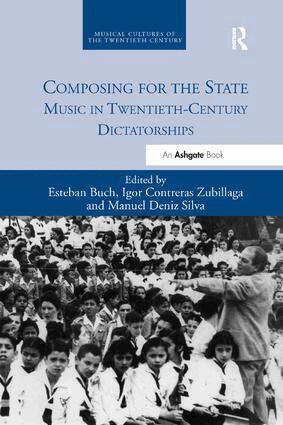
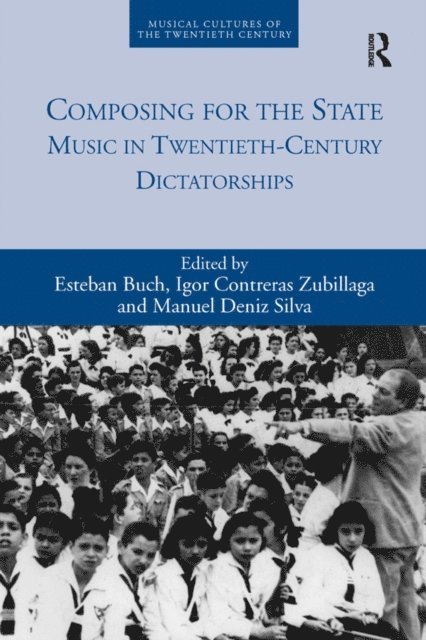
Composing for the State
Music in Twentieth-Century Dictatorships
Av Esteban Buch, Igor Contreras Zubillaga m. fl.
Häftad, 2019
785 kr
Lägg i varukorg
Under the dictatorships of the twentieth century, music never ceased to sound. Even when they did not impose aesthetic standards, these regimes tended to favour certain kinds of art music such as occasional works for commemorations or celebrations, symphonic poems, cantatas and choral settings. In …
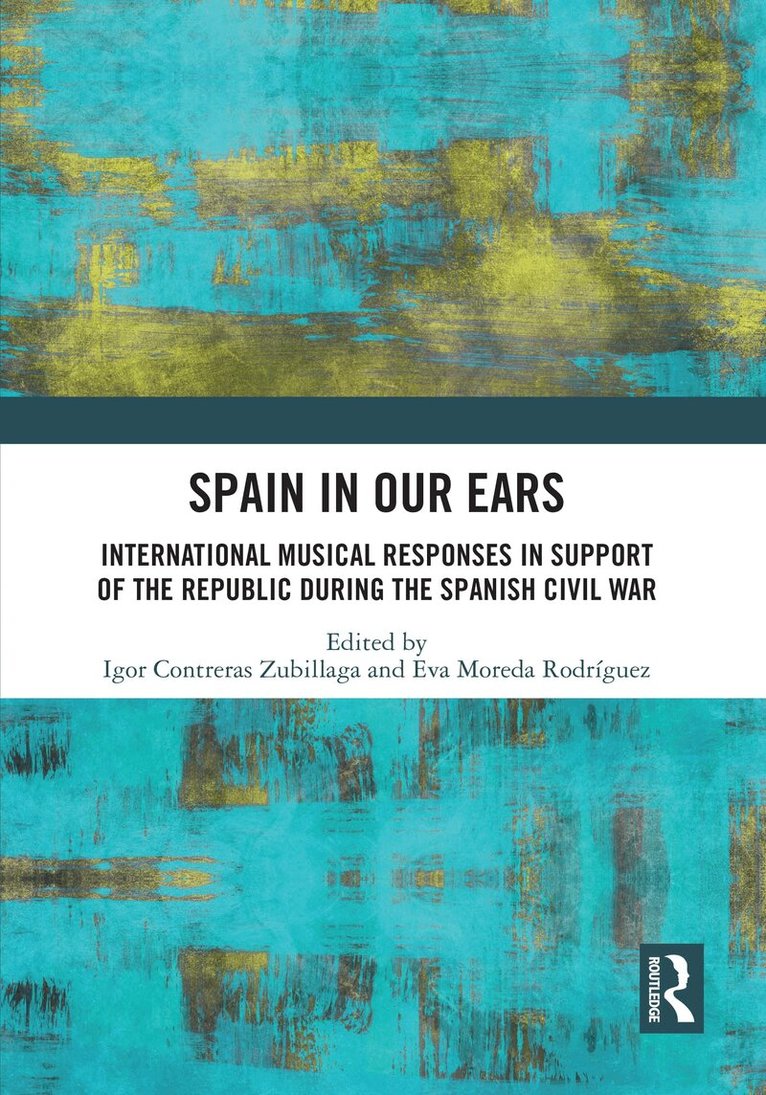
Spain in Our Ears
International Musical Responses in Support of the Republic during the Spanish Civil War
Av Eva Moreda Rodriguez, Igor Contreras Zubillaga
E-bok, 2023
785 kr
Lägg i varukorg
This book intends to reflect the variety and diversity of the musical responses that arose in favour of the Republic and against fascism during the Spanish Civil War (1936-1939), encompassing a wide range of music (classical music, film music, popular music), geographies (the US, the URSS, Britain, …
Spain in Our Ears
International Musical Responses in Support of the Republic during the Spanish Civil War
Av Eva Moreda Rodriguez, Igor Contreras Zubillaga
E-bok, 2023
785 kr
Lägg i varukorg
This book intends to reflect the variety and diversity of the musical responses that arose in favour of the Republic and against fascism during the Spanish Civil War (1936-1939), encompassing a wide range of music (classical music, film music, popular music), geographies (the US, the URSS, Britain, …
Spain in Our Ears
International Musical Responses in Support of the Republic during the Spanish Civil War
Av Igor Contreras Zubillaga, Eva Moreda Rodriguez
Inbunden, 2023
2504 kr
Lägg i varukorg
This book intends to reflect the variety and diversity of the musical responses that arose in favour of the Republic and against fascism during the Spanish Civil War (1936-1939), encompassing a wide range of music (classical music, film music, popular music), geographies (the US, the URSS, Britain, …
Spain in Our Ears
International Musical Responses in Support of the Republic during the Spanish Civil War
Av Igor Contreras Zubillaga, Eva Moreda Rodriguez
Häftad, 2024
646 kr
Lägg i varukorg
This book intends to reflect the variety and diversity of the musical responses that arose in favour of the Republic and against fascism during the Spanish Civil War (1936-1939), encompassing a wide range of music (classical music, film music, popular music), geographies (the US, the URSS, Britain, …
Composing for the State
Music in Twentieth-Century Dictatorships
Av Manuel Deniz Silva, Igor Contreras Zubillaga m. fl.
E-bok, 2016
907 kr
Lägg i varukorg
Under the dictatorships of the twentieth century, music never ceased to sound. Even when they did not impose aesthetic standards, these regimes tended to favour certain kinds of art music such as occasional works for commemorations or celebrations, symphonic poems, cantatas and choral settings. In …
Composing for the State
Music in Twentieth-Century Dictatorships
Av Manuel Deniz Silva, Igor Contreras Zubillaga m. fl.
E-bok, 2016
927 kr
Lägg i varukorg
Under the dictatorships of the twentieth century, music never ceased to sound. Even when they did not impose aesthetic standards, these regimes tended to favour certain kinds of art music such as occasional works for commemorations or celebrations, symphonic poems, cantatas and choral settings. In …
Composing for the State
Music in Twentieth-Century Dictatorships
Av Esteban Buch, Igor Contreras Zubillaga m. fl.
Inbunden, 2016
2578 kr
Lägg i varukorg
Under the dictatorships of the twentieth century, music never ceased to sound. Even when they did not impose aesthetic standards, these regimes tended to favour certain kinds of art music such as occasional works for commemorations or celebrations, symphonic poems, cantatas and choral settings. In …
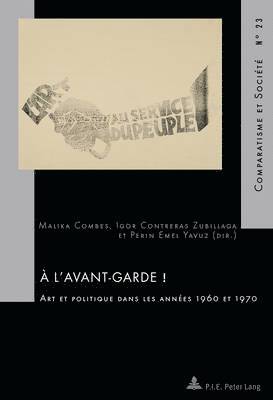
L'avant-Garde!
Art Et Politique Dans Les Annaees 1960 Et 1970
Av Malika Combes, Hubert Roland m. fl.
Inbunden, 2013
940 kr
Lägg i varukorg
Les années 1960 et 1970 ont vu se développer un art de la contemporanéité faisant interagir l’œuvre d’imagination et l’intelligibilité de la société, souvent dans des actions collectives et interdisciplinaires. Ainsi les mouvements de contestation en faveur d’un nouvel équilibre mondial et sociétal …