I.K. Iskandar – författare
Visar alla böcker från författaren I.K. Iskandar. Handla med fri frakt och snabb leverans.
5 produkter
5 produkter
721 kr
Skickas inom 10-15 vardagar
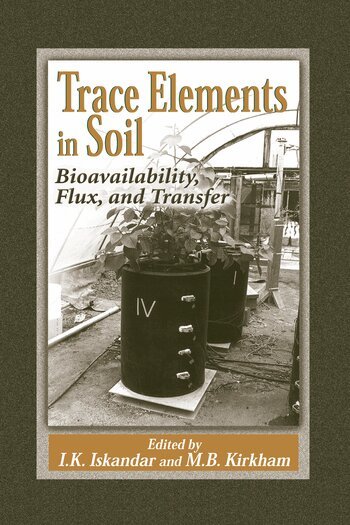
Historically, research on the methods and amounts of trace element application to agriculture soils for correcting plant deficiencies has received major attention. More recently, due to industrial development and past disposal activities, trace elements are considered to be important environmental contaminants that affect all components in the atmosphere and in aquatic and terrestrial systems. Prepared by a multi-disciplinary group of scientists, Trace Elements in Soil: Bioavailability, Flux, and Transfer explores and discusses emerging issues in biogeochemistry research.The book emphasizes the role of biological and chemical interactions and discusses the newest research and its application to major environmental problems. It provides a concise compilation of current research and a handy, time-saving reference. With contributions from an international panel of authors, the book focuses on trace element issues in developing countries and environmentally sound techniques such as stabilization and bioremediation.Fundamental yet complex, bioavailability can be relatively simple to parameterize under controlled simulated conditions. This is not always the case under field conditions. To expand our understanding of the fate and transport of trace elements in soils, the methods of assessing trace element bioavailability, flux, and transfer among the different soil components needs to be redefined and developed. Trace Elements in Soil: Bioavailability, Flux, and Transfer is unique in its emphasis on bioavailability and how trace element contamination ultimately effects plants, wildlife, and human population.
1 998 kr
Skickas inom 10-15 vardagar
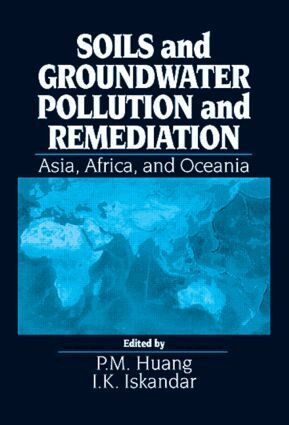
The increasing population densities of Asia, Africa and Oceania are in conflict with the ecosystem. A growing demand for food and fiber causes agriculture to rely heavily upon chemical fertilization, herbicides and pesticides. Rising industrial output creates higher contamination from cadmium, lead, selenium, and other metals.Soils and Groundwater Remediation explores the toxic levels of metals, radionuclides, inorganics, and anthropogenic organic compounds found in the soils and groundwater of Asia, Africa and Oceania. This 14 chapter book reviews the distribution, transformation, and dynamics of the pollutants. The authors also reflect on the impact of Acid-rain.The contributors to this book are well-known scientists from Japan, China, Korea, Malaysia, New Zealand, Australia, and Kenya. The authors address their findings to researchers, educators, government regulators, and students.As the title suggests, the book is ultimately concerned with remediation. Huang and Iskandar feel "the potential for restoring ecosystem health ... in these areas is enormous." The contributions of Soils and Groundwater Remediation will bring science closer to achieving that possibility.
2 136 kr
Skickas inom 10-15 vardagar
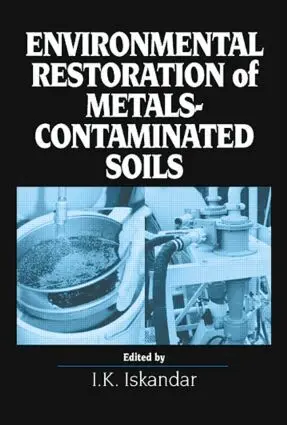
Written by a multidisciplinary group of scientists from around the globe Environmental Restoration of Metals-Contaminated Soils provides a summary of the current environmental remediation technology.Topics include:Physical-Chemical processes for in situ remediation by adding amendments for stabilization The mechanics of metal retention and release from soils Chemical remediation method for soil contaminated with CD and Pb The effect of soil pH on the distribution of metals among soil fractions Physical and electrical separation methods for soil remediation Relationship between the phytoavailability and the extractability of heavy metals An overview on environmental restoration of Se-contaminated soils Trace elements in the soil-plant system under tropical environment The process of metal removal by chelation using amino acids The effects of natural zeolelite and bentonite on the phytoavailability of heavy metals Metal uptake by agricultural crops from sewage-sludge treated soilsIn many cases an integrated approach to the remediation of metals contaminated soil yields the best results. Environmental Restoration of Metals-Contaminated Soils explores the emerging issues of the biogeochemistry of trace elements in the environment and provides an approach combining elements from biology, geochemistry, hydrology, and soil physics and chemistry.
707 kr
Skickas inom 10-15 vardagar
Environmental contamination in cold regions poses unique problems. It affects traditionally pristine areas and presents substantial operational difficulties. The extreme temperature range, soils and geology, the unique biological diversity, the freezing and thawing of pollutants, and the impact of human activities make environmental site assessment and remediation a challenging task.Based on papers presented at an international workshop held in Anchorage, Alaska, Contaminant Hydrology: Cold Regions Modeling provides insight into areas such as: Problems of contaminant hydrology Strategies for development of cost effective amelioration procedures Basic guidelines for conducting groundwater modeling Feasibility and computer model studiesAppoximately 50% of the earth's land mass is frozen at some time during the annual cycle. While we know a lot about contaminant fate and transport in cold regions, we must gain a better understanding of the effects of contamination and predicting the effectiveness of remedial actions. Contaminant Hydrology: Cold Regions Modeling provides this knowledge, making it easier to choose cost-efficient and effective methods.
3 234 kr
Skickas inom 10-15 vardagar
Historically, research on the methods and amounts of trace element application to agriculture soils for correcting plant deficiencies has received major attention. More recently, due to industrial development and past disposal activities, trace elements are considered to be important environmental contaminants that affect all components in the atmosphere and in aquatic and terrestrial systems. Prepared by a multi-disciplinary group of scientists, Trace Elements in Soil: Bioavailability, Flux, and Transfer explores and discusses emerging issues in biogeochemistry research.The book emphasizes the role of biological and chemical interactions and discusses the newest research and its application to major environmental problems. It provides a concise compilation of current research and a handy, time-saving reference. With contributions from an international panel of authors, the book focuses on trace element issues in developing countries and environmentally sound techniques such as stabilization and bioremediation.Fundamental yet complex, bioavailability can be relatively simple to parameterize under controlled simulated conditions. This is not always the case under field conditions. To expand our understanding of the fate and transport of trace elements in soils, the methods of assessing trace element bioavailability, flux, and transfer among the different soil components needs to be redefined and developed. Trace Elements in Soil: Bioavailability, Flux, and Transfer is unique in its emphasis on bioavailability and how trace element contamination ultimately effects plants, wildlife, and human population.