Imre Vida – författare
Visar alla böcker från författaren Imre Vida. Handla med fri frakt och snabb leverans.
4 produkter
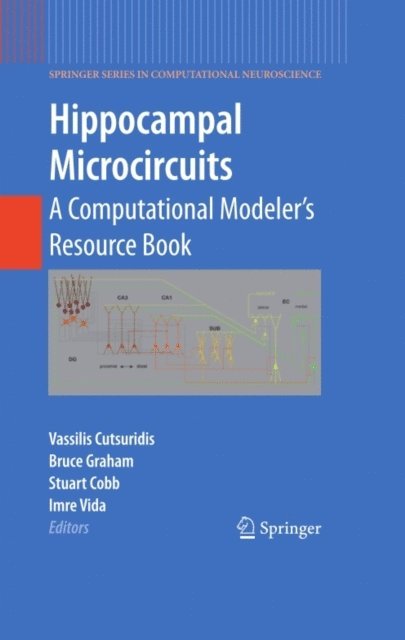
Hippocampal Microcircuits
A Computational Modeler''s Resource Book
Av Imre Vida, Stuart Cobb m. fl.
E-bok, 2010
2925 kr
Lägg i varukorg
Rich in detail, Hippocampal Microcircuits: A Computational Modeler’s Resource Book provides succinct and focused reviews of experimental results. It is an unparalleled resource of data and methodology that will be invaluable to anyone wishing to develop computational models of the microcircuits of …
Hippocampal Microcircuits
A Computational Modeler's Resource Book
Av Vassilis Cutsuridis, Bruce P. Graham m. fl.
Inbunden, 2019
3054 kr
Lägg i varukorg
This is the 2nd edition of a very well received and popular book that reflects the current state-of-the-art of the ongoing research avenues concerning the hippocampus and processing units bridging the gap between single cell activity, network activity and global brain function. It aims to provide a …
Hippocampal Microcircuits
A Computational Modeler''s Resource Book
Av Imre Vida, Stuart Cobb m. fl.
E-bok, 2019
4066 kr
Lägg i varukorg
This is the 2nd edition of a very well received and popular book that reflects the current state-of-the-art of the ongoing research avenues concerning the hippocampus and processing units bridging the gap between single cell activity, network activity and global brain function. It aims to provide a …
Das Problem Des Aufstieges
Gesellschaftsphilosophische Untersuchung
Av Imre Vida
Inbunden, 1933
1272 kr
Lägg i varukorg
Dieser Titel aus dem De Gruyter-Verlagsarchiv ist digitalisiert worden, um ihn der wissenschaftlichen Forschung zugänglich zu machen. Da der Titel erstmals im Nationalsozialismus publiziert wurde, ist er in besonderem Maße in seinem historischen Kontext zu betrachten. Mehr erfahren Sie hier .