Ingo Rohrer – författare
996 kr
Skickas inom 10-15 vardagar
1 310 kr
Läs direkt efter köp
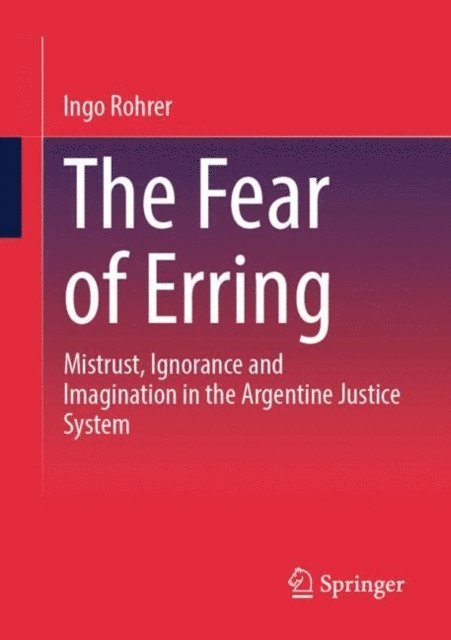
The Fear of Erring, a combination of thick ethnography and an ethnopoetic storyline, illustrates how mistrust, ignorance, and imagination govern the everyday work of personnel in Argentina''s criminal justice system. The book shows that Argentina''s justice system faces public suspicion and a tense atmosphere of competition and mutual mistrust among employees. It provides evidence of widespread fear among legal professionals of being deceived and making erroneous decisions based on manipulated information. Rational methods of generating knowledge often hit their limits, confronting employees with impenetrable ignorance. The detailed description of bureaucratic life demonstrates that legal professionals resort to imagination and speculation, yielding insights into their moral positioning. By focusing on these imaginaries, the book reveals unnoticed routines and functions of the justice system that shape legal processes, decision-making, and the institution''s image. The book''s discussion on mistrust, ignorance, and imagination extends beyond Argentina, addressing key questions about social cohesion, knowledge bases, and perspectives on the past and future in current social and global debates.
545 kr
Skickas inom 10-15 vardagar
687 kr
Läs direkt efter köp
409 kr
Skickas inom 10-15 vardagar
412 kr
Läs direkt efter köp
Postkoloniale Ansätze in der Ethnologie zeichnen sich durch eine kritische Reflexion der eigenen Wissenschaftsgeschichte aus und denken dabei theoretische und methodologische Ansätze des Faches weiter. Sie laden dazu ein, sich kritisch mit der Verstrickung der Disziplin in koloniale Prozesse und der Aufrechterhaltung von ungleichen Machtstrukturen auseinanderzusetzen. Postkoloniale Ansätze hinterfragen die Autorität ethnologischer Wissenskonstruktion und die damit verbundene Repräsentation des kulturell „Anderen“ sowie des „Eigenen“. Darüber hinaus lenkt eine postkoloniale Ethnologie den Blick auf transkulturelle Verflechtungen, etwa lokale Interpretationen globaler Symbole und Praktiken. Damit destabilisiert sie vermeintlich „universale“ Erklärungsmuster und Konzepte, verortet sie in Zeit und Raum.
Die Beiträge in diesem, Judith Schlehe gewidmeten Sammelband veranschaulichen, welche fruchtbaren Implikationen ein postkolonialer Impetus für die ethnologische Forschung, Theorie und Praxis bereithalten kann. Angelehnt an die von Judith Schlehe entwickelte „Tandem“-Forschung stellen die AutorInnen in ihren eigenen Studien kollaborative und kulturell reziproke Prozesse vor. Sie zeigen alternative Deutungen zu „westlichen“ Sichtweisen auf und verdeutlichen deren Relevanz für das Fach.