Ioannis Vlahavas – författare
Visar alla böcker från författaren Ioannis Vlahavas. Handla med fri frakt och snabb leverans.
9 produkter
9 produkter
Inbunden, Engelska, 1998
1 654 kr
Skickas inom 10-15 vardagar
Knowledge base systems are an integration of conventional database systems with artificial intelligence techniques. They provide inference capabilities to the database system by encapsulating the knowledge of the application domain within the database. Knowledge is the most valuable of all corporate resources that must be captured, stored, re-used and continuously improved, in much the same way as database systems were important in the previous decade. Flexible, extensible, and yet efficient knowledge base systems are needed to capture the increasing demand for knowledge-based applications which will become a significant market in the next decade. Knowledge can be expressed in many static and dynamic forms, the most prominent being domain objects, their relationships, and their rules of evolution and transformation. It is important to express and seamlessly use all types of knowledge in a single knowledge base system. This work presents in detail features that a knowledge base system should have in order to fulfill the above requirements.It covers in detail the following topics: integration of deductive, production, and active rules in sequential database systems; integration and inter-operation of multiple rule types into the same knowledge base system; and parallel rule matching and execution, for deductive, production, and active rules, in parallel export, knowledge base, and database systems.
Inbunden, Engelska, 1998
1 654 kr
Skickas inom 10-15 vardagar
Constraint Logic Programming (CLP), an area of extreme research interest in recent years, extends the semantics of Prolog in such a way that the combinatorial explosion, a characteristic of most problems in the field of Artificial Intelligence, can be tackled efficiently. By employing solvers dedicated to each domain instead of the unification algorithm, CLP drastically reduces the search space of the problem, which leads to increased efficiency in the execution of logic programs. CLP offers the possibility of solving complex combinatorial problems in an efficient way, and at the same time maintains the advantages offered by the declarativeness of logic programming. The aim of this book is to present parallel and constraint logic programming, offering a basic understanding of the two fields to the reader who is new to the area. The first part of the book gives an introduction to the fundamental aspects of conventional logic programming which is necessary for understanding the parts that follow. The second part includes an introduction to parallel logic programming, architectures and implementations proposed in the area.Finally, the third part presents the principles of constraint logic programming. The last two parts also include descriptions of the supporting facilities for the two paradigms in two popular systems; ECLIPSe and SICStus. These platforms have been selected mainly because they offer both parallel and constraint features. Annotated and explained examples are also included in the relevant parts, offering a practical experience to the reader. The authors felt that a book of this kind should provide some theoretical background necessary for the understanding of the covered logic programming paradigms, and a quick start for the reader interested in writing parallel and constraint logic programming programs. However it is outside the scope of this book to provide a deep theoretical background of the two areas. In that sense, this book is addressed to a public interested in obtaining a knowledge of the domain, without spending the time and effort to understand the extensive theoretical work done in the field - namely postgraduate and advanced undergraduate students in the area of logic programming.This book is appropriate for an advanced level course on logic programming or constraints, and as a reference for practitioners and researchers in industry.
Inbunden, Engelska, 2009
1 654 kr
Skickas inom 10-15 vardagar
The ever expanding abundance of information and computing power enables - searchers and users to tackle highly interesting issues, such as applications prov- ing personalized access and interactivity to multimodal information based on user preferences and semantic concepts or human-machine interface systems utilizing information on the affective state of the user. The general focus of the AIAI conf- ence is to provide insights on how AI can be implemented in real world applications. This volume contains papers selected for presentation at the 5th IFIP Conf- ence on Artificial Intelligence Applications & Innovations (AIAI 2009) being held from 23rd till 25th of April, in Thessaloniki, Greece. The IFIP AIAI 2009 conf- ence is co-organized by the Aristotle University of Thessaloniki, by the University of Macedonia Thessaloniki and by the Democritus University of Thrace. AIAI 2009 is the official conference of the WG12.5 "Artificial Intelligence Appli- tions" working group of IFIP TC12 the International Federation for Information Processing Technical Committee on Artificial Intelligence (AI). It is a conference growing and maintaining high standards of quality. The p- pose of the 5th IFIP AIAI Conference is to bring together researchers, engineers and practitioners interested in the technical advances and business / industrial - plications of intelligent systems. AIAI 2009 is not only focused in providing - sights on how AI can be implemented in real world applications, but it also covers innovative methods, tools and ideas of AI on architectural and algorithmic level.
Häftad, Engelska, 2010
1 654 kr
Skickas inom 10-15 vardagar
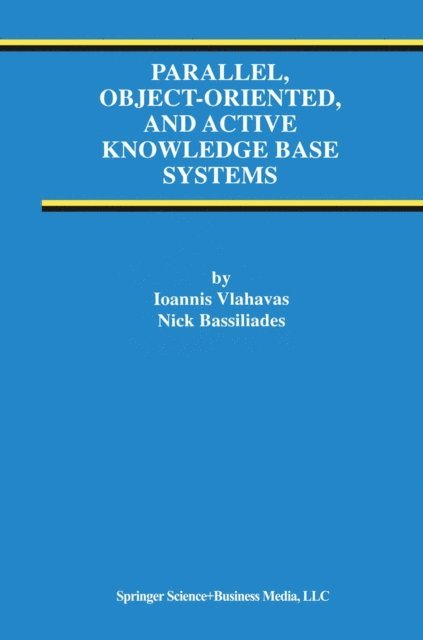
Knowledge Base Systems are an integration of conventional database systems with Artificial Intelligence techniques. They provide inference capabilities to the database system by encapsulating the knowledge of the application domain within the database. Knowledge is the most valuable of all corporate resources that must be captured, stored, re-used and continuously improved, in much the same way as database systems were important in the previous decade. Flexible, extensible, and yet efficient Knowledge Base Systems are needed to capture the increasing demand for knowledge-based applications which will become a significant market in the next decade. Knowledge can be expressed in many static and dynamic forms; the most prominent being domain objects, their relationships, and their rules of evolution and transformation. It is important to express and seamlessly use all types of knowledge in a single Knowledge Base System. Parallel, Object-Oriented, and Active Knowledge Base Systems presents in detail features that a Knowledge Base System should have in order to fulfill the above requirements.Parallel, Object-Oriented, and Active Knowledge Base Systems covers in detail the following topics: Integration of deductive, production, and active rules in sequential database systems. Integration and inter-operation of multiple rule types into the same Knowledge Base System. Parallel rule matching and execution, for deductive, production, and active rules, in parallel Export, Knowledge Base, and Database Systems. In-depth description of a Parallel, Object-Oriented, and Active Knowledge Base System that integrates all rule paradigms into a single database system without hindering performance. Parallel, Object-Oriented, and Active Knowledge Base Systems is intended as a graduate-level text for a course on Knowledge Base Systems and as a reference for researchers and practitioners in the areas of database systems, knowledge base systems and Artificial Intelligence.
Del 296 - IFIP Advances in Information and Communication Technology
Artificial Intelligence Applications and Innovations
Proceedings of the 5th IFIP Conference on Artificial Intelligence Applications and Innovations (AIAI'2009), April 23-25, 2009, Thessaloniki, Greece
Häftad, Engelska, 2010
1 654 kr
Skickas inom 10-15 vardagar
The ever expanding abundance of information and computing power enables - searchers and users to tackle highly interesting issues, such as applications prov- ing personalized access and interactivity to multimodal information based on user preferences and semantic concepts or human-machine interface systems utilizing information on the affective state of the user. The general focus of the AIAI conf- ence is to provide insights on how AI can be implemented in real world applications. This volume contains papers selected for presentation at the 5th IFIP Conf- ence on Artificial Intelligence Applications & Innovations (AIAI 2009) being held from 23rd till 25th of April, in Thessaloniki, Greece. The IFIP AIAI 2009 conf- ence is co-organized by the Aristotle University of Thessaloniki, by the University of Macedonia Thessaloniki and by the Democritus University of Thrace. AIAI 2009 is the official conference of the WG12.5 "Artificial Intelligence Appli- tions" working group of IFIP TC12 the International Federation for Information Processing Technical Committee on Artificial Intelligence (AI). It is a conference growing and maintaining high standards of quality. The p- pose of the 5th IFIP AIAI Conference is to bring together researchers, engineers and practitioners interested in the technical advances and business / industrial - plications of intelligent systems. AIAI 2009 is not only focused in providing - sights on how AI can be implemented in real world applications, but it also covers innovative methods, tools and ideas of AI on architectural and algorithmic level.
Häftad, Engelska, 2012
1 654 kr
Skickas inom 10-15 vardagar
Constraint Logic Programming (CLP), an area of extreme research interest in recent years, extends the semantics of Prolog in such a way that the combinatorial explosion, a characteristic of most problems in the field of Artificial Intelligence, can be tackled efficiently. By employing solvers dedicated to each domain instead of the unification algorithm, CLP drastically reduces the search space of the problem, which leads to increased efficiency in the execution of logic programs. CLP offers the possibility of solving complex combinatorial problems in an efficient way, and at the same time maintains the advantages offered by the declarativeness of logic programming. The aim of this book is to present parallel and constraint logic programming, offering a basic understanding of the two fields to the reader new to the area. The first part of the book gives an introduction to the fundamental aspects of conventional logic programming which is necessary for understanding the parts that follow. The second part includes an introduction to parallel logic programming, architectures and implementations proposed in the area. Finally, the third part presents the principles of constraint logic programming. The last two parts also include descriptions of the supporting facilities for the two paradigms in two popular systems; ECLIPSe and SICStus. These platforms have been selected mainly because they offer both parallel and constraint features. Annotated and explained examples are also included in the relevant parts, offering a valuable guide and a first practical experience to the reader. Finally, applications of the covered paradigms are presented. The authors felt that a book of this kind should provide some theoretical background necessary for the understanding of the covered logic programming paradigms, and a quick start for the reader interested in writing parallel and constraint logic programming programs. However it is outside the scope of this book to provide a deep theoretical background of the two areas. In that sense, this book is addressed to a public interested in obtaining a knowledge of the domain, without spending the time and effort to understand the extensive theoretical work done in the field &endash; namely postgraduate and advanced undergraduate students in the area of logic programming. This book fills a gap in the current bibliography, since there is no comprehensive book of this level that covers the areas of conventional, parallel, and constraint logic programming. Parallel and Constraint Logic Programming: An Introduction to Logic, Parallelism and Constraints is appropriate for an advanced level course on Logic Programming or Constraints, and as a reference for practitioners and researchers in industry.
Inbunden, Engelska, 2004
1 147 kr
Skickas inom 5-8 vardagar
Inbunden, Engelska, 2008
2 279 kr
Skickas inom 5-8 vardagar
Häftad, Engelska, 2012
556 kr
Skickas inom 10-15 vardagar
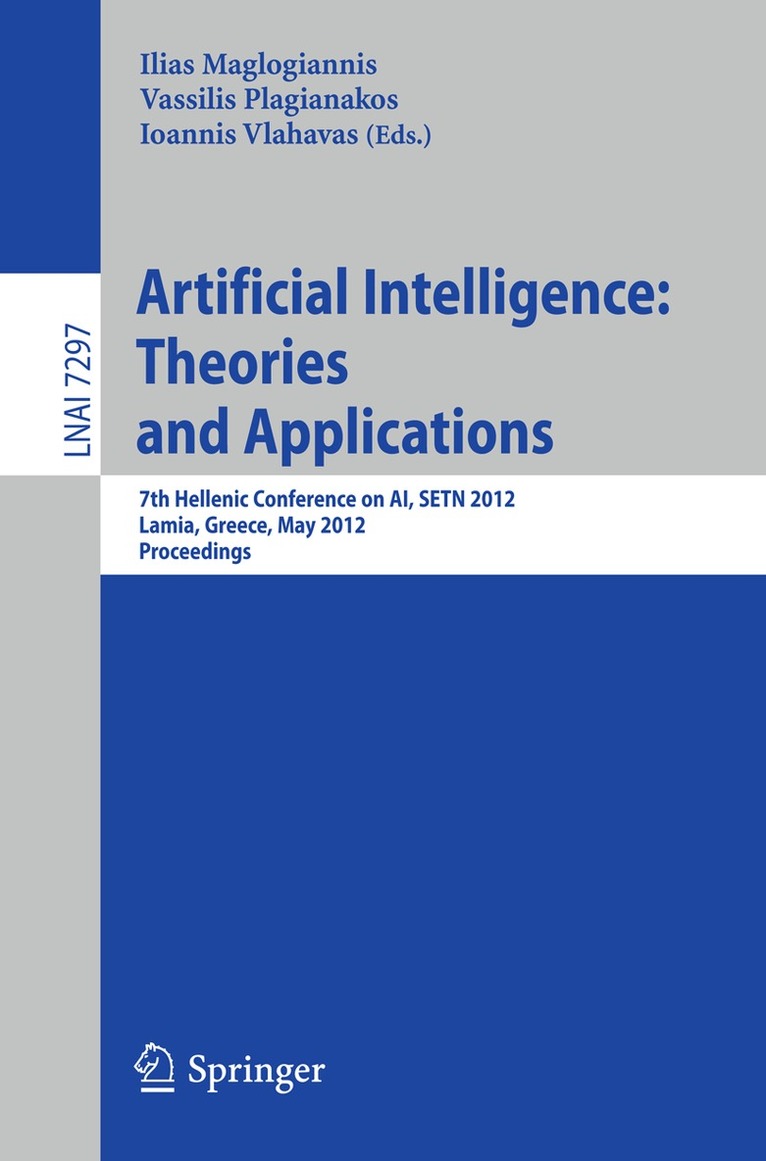
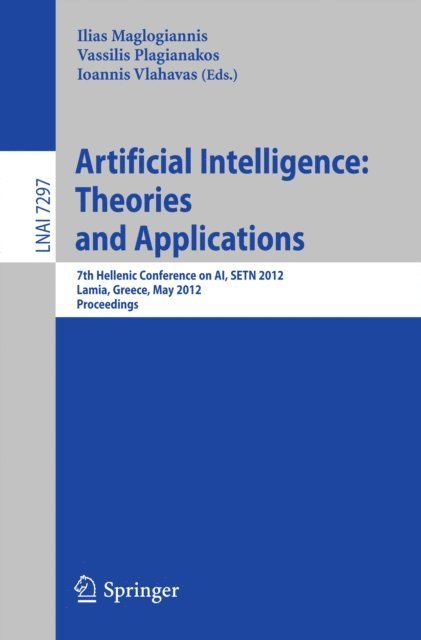
This book constitutes the proceedings of the 7th Hellenic Conference on Artificial Intelligence, SETN 2012, held in Lamia, Greece, in May 2012. The 47 contributions included in this volume were carefully reviewed and selected from 81 submissions. They deal with emergent topics of artificial intelligence and come from the SETN main conference as well as from the following special sessions on advancing translational biological research through the incorporation of artificial intelligence methodologies; artificial intelligence in bioinformatics; intelligent annotation of digital content; intelligent, affective, and natural interfaces; and unified multimedia knowledge representation and processing.