Ionut Florescu - Böcker
Visar alla böcker från författaren Ionut Florescu. Handla med fri frakt och snabb leverans.
5 produkter
5 produkter
1 438 kr
Skickas inom 7-10 vardagar
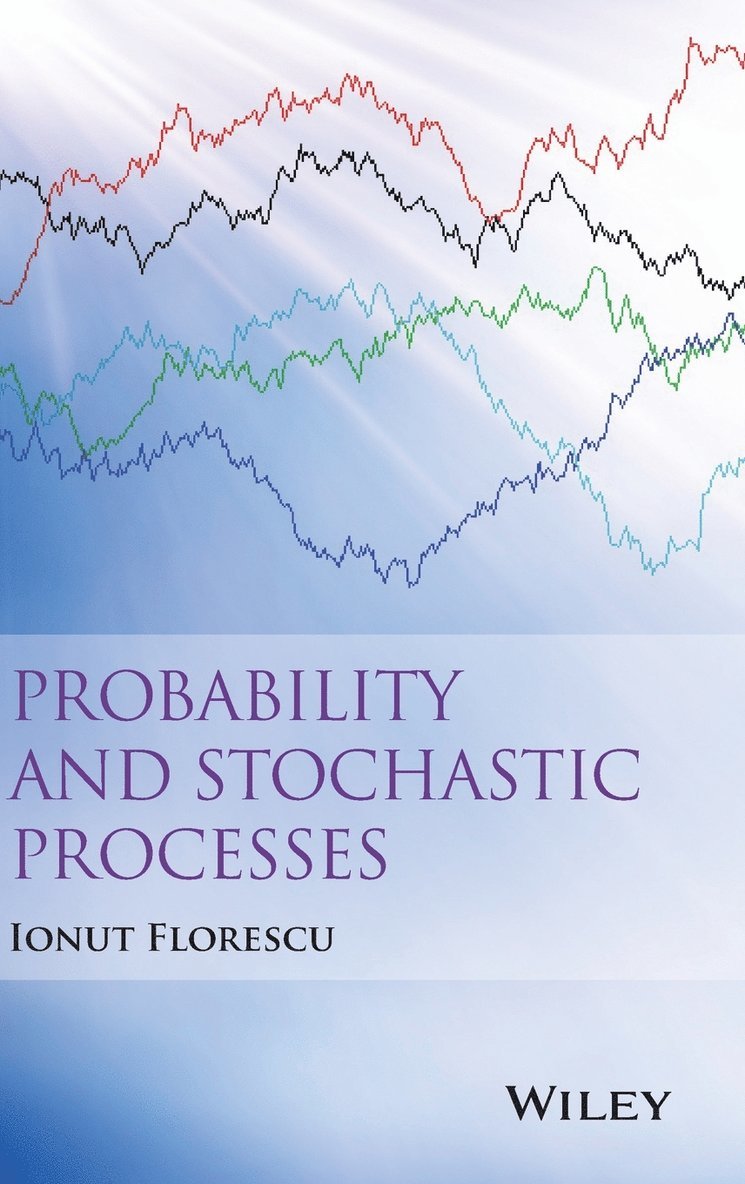
A comprehensive and accessible presentation of probability and stochastic processes with emphasis on key theoretical concepts and real-world applications With a sophisticated approach, Probability and Stochastic Processes successfully balances theory and applications in a pedagogical and accessible format. The book’s primary focus is on key theoretical notions in probability to provide a foundation for understanding concepts and examples related to stochastic processes. Organized into two main sections, the book begins by developing probability theory with topical coverage on probability measure; random variables; integration theory; product spaces, conditional distribution, and conditional expectations; and limit theorems. The second part explores stochastic processes and related concepts including the Poisson process, renewal processes, Markov chains, semi-Markov processes, martingales, and Brownian motion. Featuring a logical combination of traditional and complex theories as well as practices, Probability and Stochastic Processes also includes: Multiple examples from disciplines such as business, mathematical finance, and engineeringChapter-by-chapter exercises and examples to allow readers to test their comprehension of the presented materialA rigorous treatment of all probability and stochastic processes concepts An appropriate textbook for probability and stochastic processes courses at the upper-undergraduate and graduate level in mathematics, business, and electrical engineering, Probability and Stochastic Processes is also an ideal reference for researchers and practitioners in the fields of mathematics, engineering, and finance.
1 666 kr
Skickas inom 7-10 vardagar
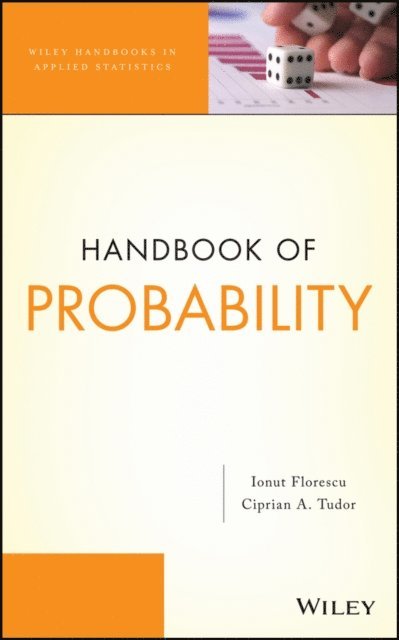
THE COMPLETE COLLECTION NECESSARY FOR A CONCRETE UNDERSTANDING OF PROBABILITYWritten in a clear, accessible, and comprehensive manner, the Handbook of Probability presents the fundamentals of probability with an emphasis on the balance of theory, application, and methodology. Utilizing basic examples throughout, the handbook expertly transitions between concepts and practice to allow readers an inclusive introduction to the field of probability. The book provides a useful format with self-contained chapters, allowing the reader easy and quick reference. Each chapter includes an introduction, historical background, theory and applications, algorithms, and exercises. The Handbook of Probability offers coverage of: Probability Space Probability MeasureRandom VariablesRandom Vectors in RnCharacteristic FunctionMoment Generating FunctionGaussian Random VectorsConvergence TypesLimit TheoremsThe Handbook of Probability is an ideal resource for researchers and practitioners in numerous fields, such as mathematics, statistics, operations research, engineering, medicine, and finance, as well as a useful text for graduate students.
Del 4 - Wiley Handbooks in Financial Engineering and Econometrics
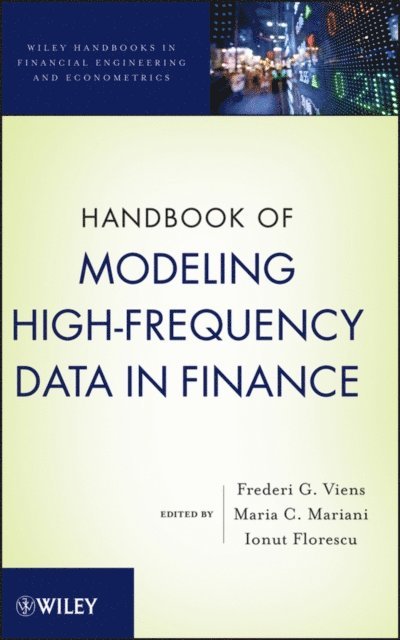
Handbook of Modeling High-Frequency Data in Finance
Inbunden, Engelska, 2012
1 859 kr
Skickas inom 7-10 vardagar
CUTTING-EDGE DEVELOPMENTS IN HIGH-FREQUENCY FINANCIAL ECONOMETRICS In recent years, the availability of high-frequency data and advances in computing have allowed financial practitioners to design systems that can handle and analyze this information. Handbook of Modeling High-Frequency Data in Finance addresses the many theoretical and practical questions raised by the nature and intrinsic properties of this data.A one-stop compilation of empirical and analytical research, this handbook explores data sampled with high-frequency finance in financial engineering, statistics, and the modern financial business arena. Every chapter uses real-world examples to present new, original, and relevant topics that relate to newly evolving discoveries in high-frequency finance, such as: Designing new methodology to discover elasticity and plasticity of price evolution Constructing microstructure simulation models Calculation of option prices in the presence of jumps and transaction costs Using boosting for financial analysis and trading The handbook motivates practitioners to apply high-frequency finance to real-world situations by including exclusive topics such as risk measurement and management, UHF data, microstructure, dynamic multi-period optimization, mortgage data models, hybrid Monte Carlo, retirement, trading systems and forecasting, pricing, and boosting. The diverse topics and viewpoints presented in each chapter ensure that readers are supplied with a wide treatment of practical methods.Handbook of Modeling High-Frequency Data in Finance is an essential reference for academics and practitioners in finance, business, and econometrics who work with high-frequency data in their everyday work. It also serves as a supplement for risk management and high-frequency finance courses at the upper-undergraduate and graduate levels.
Del 9 - Wiley Handbooks in Financial Engineering and Econometrics
Handbook of High-Frequency Trading and Modeling in Finance
Inbunden, Engelska, 2016
1 627 kr
Skickas inom 7-10 vardagar
Reflecting the fast pace and ever-evolving nature of the financial industry, the Handbook of High-Frequency Trading and Modeling in Finance details how high-frequency analysis presents new systematic approaches to implementing quantitative activities with high-frequency financial data.Introducing new and established mathematical foundations necessary to analyze realistic market models and scenarios, the handbook begins with a presentation of the dynamics and complexity of futures and derivatives markets as well as a portfolio optimization problem using quantum computers. Subsequently, the handbook addresses estimating complex model parameters using high-frequency data. Finally, the handbook focuses on the links between models used in financial markets and models used in other research areas such as geophysics, fossil records, and earthquake studies. The Handbook of High-Frequency Trading and Modeling in Finance also features:• Contributions by well-known experts within the academic, industrial, and regulatory fields• A well-structured outline on the various data analysis methodologies used to identify new trading opportunities• Newly emerging quantitative tools that address growing concerns relating to high-frequency data such as stochastic volatility and volatility tracking; stochastic jump processes for limit-order books and broader market indicators; and options markets• Practical applications using real-world data to help readers better understand the presented materialThe Handbook of High-Frequency Trading and Modeling in Finance is an excellent reference for professionals in the fields of business, applied statistics, econometrics, and financial engineering. The handbook is also a good supplement for graduate and MBA-level courses on quantitative finance, volatility, and financial econometrics.Ionut Florescu, PhD, is Research Associate Professor in Financial Engineering and Director of the Hanlon Financial Systems Laboratory at Stevens Institute of Technology. His research interests include stochastic volatility, stochastic partial differential equations, Monte Carlo Methods, and numerical methods for stochastic processes. Dr. Florescu is the author of Probability and Stochastic Processes, the coauthor of Handbook of Probability, and the coeditor of Handbook of Modeling High-Frequency Data in Finance, all published by Wiley.Maria C. Mariani, PhD, is Shigeko K. Chan Distinguished Professor in Mathematical Sciences and Chair of the Department of Mathematical Sciences at The University of Texas at El Paso. Her research interests include mathematical finance, applied mathematics, geophysics, nonlinear and stochastic partial differential equations and numerical methods. Dr. Mariani is the coeditor of Handbook of Modeling High-Frequency Data in Finance, also published by Wiley.H. Eugene Stanley, PhD, is William Fairfield Warren Distinguished Professor at Boston University. Stanley is one of the key founders of the new interdisciplinary field of econophysics, and has an ISI Hirsch index H=128 based on more than 1200 papers. In 2004 he was elected to the National Academy of Sciences.Frederi G. Viens, PhD, is Professor of Statistics and Mathematics and Director of the Computational Finance Program at Purdue University. He holds more than two dozen local, regional, and national awards and he travels extensively on a world-wide basis to deliver lectures on his research interests, which range from quantitative finance to climate science and agricultural economics. A Fellow of the Institute of Mathematics Statistics, Dr. Viens is the coeditor of Handbook of Modeling High-Frequency Data in Finance, also published by Wiley.
1 390 kr
Skickas inom 7-10 vardagar
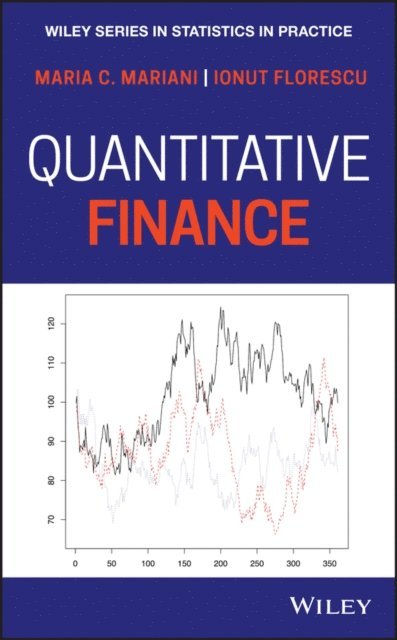
Presents a multitude of topics relevant to the quantitative finance community by combining the best of the theory with the usefulness of applicationsWritten by accomplished teachers and researchers in the field, this book presents quantitative finance theory through applications to specific practical problems and comes with accompanying coding techniques in R and MATLAB, and some generic pseudo-algorithms to modern finance. It also offers over 300 examples and exercises that are appropriate for the beginning student as well as the practitioner in the field.The Quantitative Finance book is divided into four parts. Part One begins by providing readers with the theoretical backdrop needed from probability and stochastic processes. We also present some useful finance concepts used throughout the book. In part two of the book we present the classical Black-Scholes-Merton model in a uniquely accessible and understandable way. Implied volatility as well as local volatility surfaces are also discussed. Next, solutions to Partial Differential Equations (PDE), wavelets and Fourier transforms are presented. Several methodologies for pricing options namely, tree methods, finite difference method and Monte Carlo simulation methods are also discussed. We conclude this part with a discussion on stochastic differential equations (SDE’s). In the third part of this book, several new and advanced models from current literature such as general Lvy processes, nonlinear PDE's for stochastic volatility models in a transaction fee market, PDE's in a jump-diffusion with stochastic volatility models and factor and copulas models are discussed. In part four of the book, we conclude with a solid presentation of the typical topics in fixed income securities and derivatives. We discuss models for pricing bonds market, marketable securities, credit default swaps (CDS) and securitizations. Classroom-tested over a three-year period with the input of students and experienced practitionersEmphasizes the volatility of financial analyses and interpretationsWeaves theory with application throughout the bookUtilizes R and MATLAB software programsPresents pseudo-algorithms for readers who do not have access to any particular programming systemSupplemented with extensive author-maintained web site that includes helpful teaching hints, data sets, software programs, and additional content Quantitative Finance is an ideal textbook for upper-undergraduate and beginning graduate students in statistics, financial engineering, quantitative finance, and mathematical finance programs. It will also appeal to practitioners in the same fields.