I.P. Martini – författare
Visar alla böcker från författaren I.P. Martini. Handla med fri frakt och snabb leverans.
4 produkter
4 produkter
E-bok
PDF, Engelska, 20071 967 kr
Läs direkt efter köp
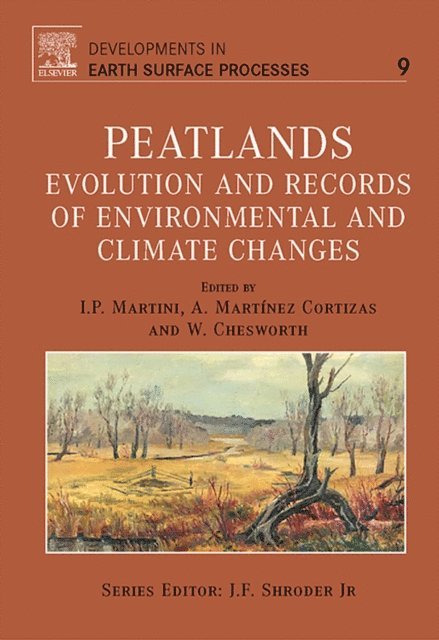
In the past two decades there has been considerable work on global climatic change and its effect on the ecosphere, as well as on local and global environmental changes triggered by human activities. From the tropics to the Arctic, peatlands have developed under various geological conditions, and they provide good records of global and local changes since the Late Pleistocene.The objectives of the book are to analyze topics such as geological evolution of major peatlands basins; peatlands as self sustaining ecosystems; chemical environment of peatlands: water and peat chemistry; peatlands as archives of environmental changes; influence of peatlands on atmosphere: circular complex interactions; remote sensing studies of peatlands; peatlands as a resource; peatlands degradation, restoration, plus more.* Presents an interdisciplinary approach, with an emphasis on Earth Science, and addresses the need for intergration between subdisciplines and the developing of new approaches* Synthesizes the evolutionary, ecological, and chemical characteristics of major peatlands, as well as focuses on the environmental changes, from climate changes to surface ares changes due to human activities* Covers topical studies of worldwide interest and provides examples from many different countries
E-bok
PDF, Engelska, 20112 977 kr
Läs direkt efter köp
The various chapters of this book have been written by researchers who are still working in the Canadian Inland Seas region. The chapters synthesize what is known about these seas, yet much still is to be learnt. It is hoped that this collection of information will serve as a springboard for future, much needed, studies in this fascinating, diverse region, and will stimulate comparative analyses with other subarctic and arctic basins of the world. The Canadian Inland Seas are the only remnants, albeit cold, of the ancient cratonic marine basins which occupied central North America throughout the Paleozoic and part of the Mesozoic. Precambrian rocks and gently dipping Paleozoic sedimentary rocks underlie the seas. The area is also close to the centers of Pleistocene glaciations. The coastal areas represent an emerged landscape of the post-glacial Tyrrell sea, as the region has been isostatically uplifted to about 350 meters since glacial times. A total of 56 fish species inhabit Hudson Bay and James Bay. Seals, whales and one of the largest and southernmost populations of polar bears inhabit the seas as well. The coastal areas are important habitats for migratory bird populations, some of which migrate from as far away as Southern Argentina.The ostic environment has preserved these regions relatively unchanged by man, with only a major harbour at Churchill, Manitoba, which is active for part of the year, and a second large, rail-terminal settlement in the south at Moosonee, Ontario. A few, small, native Indian and Inuit villages dot the coasts. The seas are being affected indirectly by the damming of rivers for the generation of hydroelectric power, and by drainage diversions towards the man-made reservoirs. A major project is being completed in Quebec east of James Bay, but other rivers in Ontario and Manitoba have been dammed as well. Undoubtedly freshwater is one of the more important resources of the area, however its exploitation needs careful thought because of the possible long-range effects on the environment, particularly the coastal marshes, which sustain much of the eastern American intercontinental migratory avifauna. Other resources occur in the regions, primarily minerals and perhaps petroleum. For the most part however, such resources remain to be discovered.
Del 9 - Developments in Earth Surface Processes
Peatlands
Evolution and Records of Environmental and Climate Changes
Inbunden, Engelska, 2006
2 934 kr
Skickas inom 5-8 vardagar
In the past two decades there has been considerable work on global climatic change and its effect on the ecosphere, as well as on local and global environmental changes triggered by human activities. From the tropics to the Arctic, peatlands have developed under various geological conditions, and they provide good records of global and local changes since the Late Pleistocene.The objectives of the book are to analyze topics such as geological evolution of major peatlands basins; peatlands as self sustaining ecosystems; chemical environment of peatlands: water and peat chemistry; peatlands as archives of environmental changes; influence of peatlands on atmosphere: circular complex interactions; remote sensing studies of peatlands; peatlands as a resource; peatlands degradation, restoration, plus more.* Presents an interdisciplinary approach, with an emphasis on Earth Science, and addresses the need for intergration between subdisciplines and the developing of new approaches* Synthesizes the evolutionary, ecological, and chemical characteristics of major peatlands, as well as focuses on the environmental changes, from climate changes to surface ares changes due to human activities* Covers topical studies of worldwide interest and provides examples from many different countries
E-bok
PDF, Engelska, 2013979 kr
Läs direkt efter köp
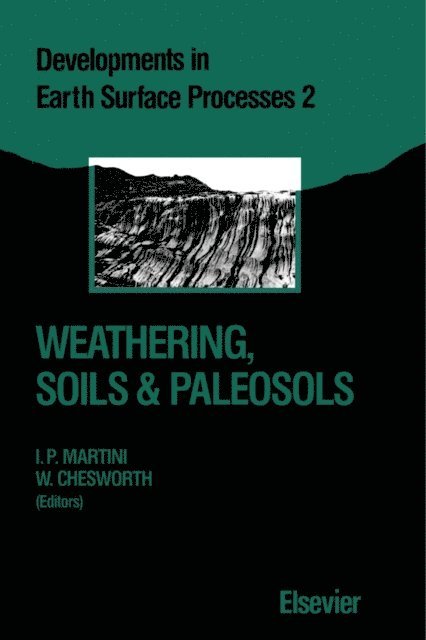
For the past 200 years, geological scientists have used the present as a key to unlocking the past. This volume continues the tradition by exploring the processes of weathering and soil formation as indicators of the present environment of the Earth''s land surface. Examined are the various ways in which this information can be used to interpret past environments which have produced the soils now preserved as paleosols. Because the surface environment of the earth may now be undergoing rapid change (the greenhouse effect), the book is a timely one for those researchers looking for evidence of analogous changes in the Earth''s past. The work is divided into three major sections. The first deals with fundamental considerations of weathering, clay mineralogy and diagenesis. The second deals with the formation of soils from various starting materials and in various surficial environments. And the final section is an interpretation of paleosols. This volume provides valuable reading material for graduate and senior-undergraduate courses.