Isabel Schwinge – författare
Visar alla böcker från författaren Isabel Schwinge. Handla med fri frakt och snabb leverans.
3 produkter
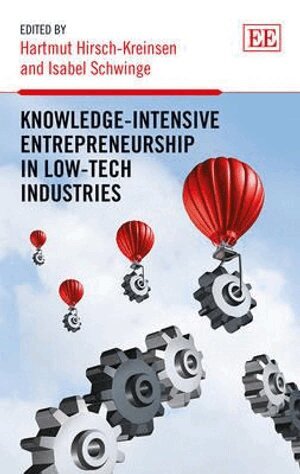
Knowledge-Intensive Entrepreneurship in Low-Tech Industries
Av Hartmut Hirsch-Kreinsen, Isabel Schwinge
Inbunden, 2014
1913 kr
Lägg i varukorg
This book contributes to the discussion about the relevance of knowledge-intensive entrepreneurship for industrial innovation in the context of traditional low-technology industries.There is a widespread assumption that low-tech industries offer limited opportunities for entrepreneurial activity …
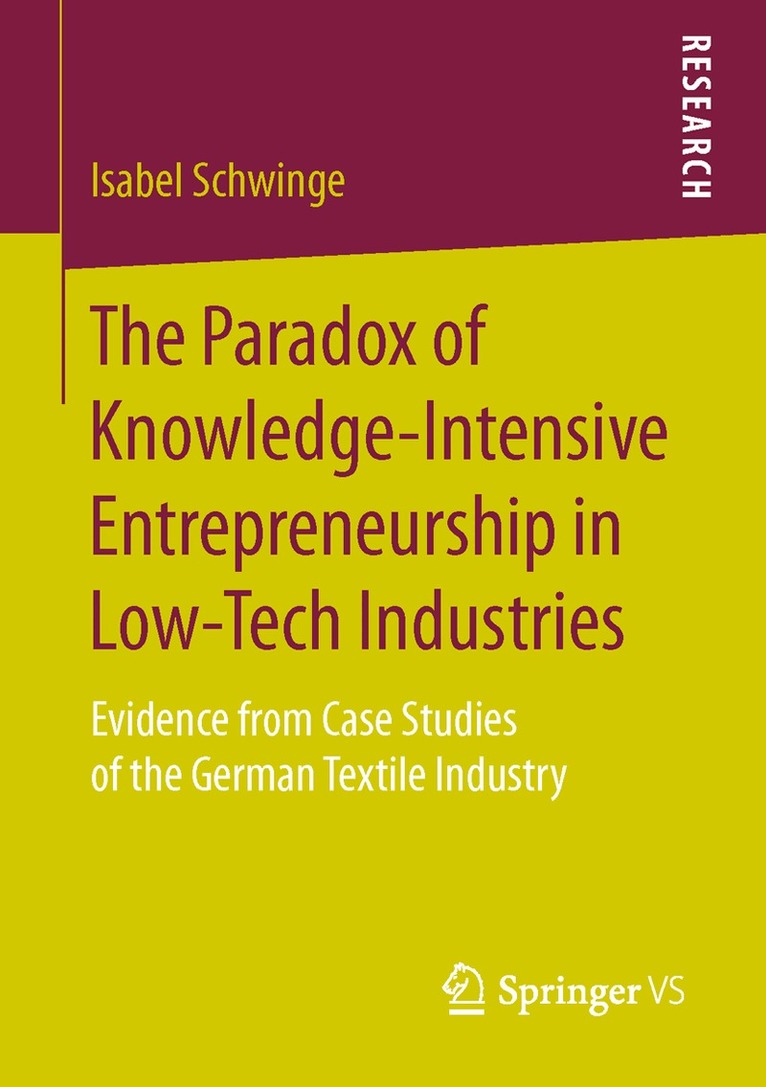
Paradox of Knowledge-Intensive Entrepreneurship in Low-Tech Industries
Evidence from Case Studies of the German Textile Industry
Häftad, 2015
552 kr
Lägg i varukorg
This book presents the first multidimensional investigation of KIE in the context of low-tech industries and gives insights in paradox conditions and specific mechanisms, using the example of the German textile industry. Therefore, the author solves conceptual inconsistencies and develops an …
Paradox of Knowledge-Intensive Entrepreneurship in Low-Tech Industries
Evidence from Case Studies of the German Textile Industry
E-bok, 2015
734 kr
Lägg i varukorg
This book presents the first multidimensional investigation of KIE in the context of low-tech industries and gives insights in paradox conditions and specific mechanisms, using the example of the German textile industry. Therefore, the author solves conceptual inconsistencies and develops an …