Isabella Bakker - Böcker
Visar alla böcker från författaren Isabella Bakker. Handla med fri frakt och snabb leverans.
5 produkter
5 produkter
2 306 kr
Skickas inom 10-15 vardagar
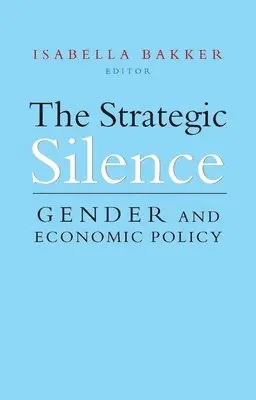
Questioning Financial Governance from a Feminist Perspective brings together feminist economists and feminist political economists from different countries located in North America and Europe to analyze the ‘strategic silence’ about gender in fiscal and monetary policy, and financial regulation. This silence reflects a set of assumptions that the key instruments of financial governance are gender-neutral. This often masks the ways in which financial governance operates to the disadvantage of women and reinforces gender inequality. This book examines both the transformations in the governance of finance that predate the financial crisis, as well as some dimension of the crisis itself. The transformations increasingly involved private as well as public forms of power, along with institutions of state and civil society, operating at the local, national, regional and global levels. An important aspect of these transformations has been the creation of policy rules (often enacted in laws) that limit the discretion of national policy makers with respect to fiscal, monetary, and financial sector policies. These policy rules tend to have inscribed in them a series of biases that have gender (as well as class and race-based) outcomes. The biases identified by the authors in the various chapters are the deflationary bias, male breadwinner bias, and commodification bias, adding two new biases: risk bias and creditor bias. The originality of the book is that its primary focus is on macroeconomic policies (fiscal and monetary) and financial governance from a feminist perspective with a focus on the gross domestic product and its fluctuations and growth, paid employment and inflation, the budget surplus/deficit, levels of government expenditure and tax revenue, and supply of money. The central findings are that the key instruments of financial governance are not gender neutral. Each chapter considers examples of financial governance, and how it relates to the gender order, including divisions of labour, and relations of power and privilege.This book is key reading for anyone studying feminist economics, and should also be of interest to those researching macroeconomics, political economics and women’s studies.
758 kr
Skickas inom 10-15 vardagar
Questioning Financial Governance from a Feminist Perspective brings together feminist economists and feminist political economists from different countries located in North America and Europe to analyze the ‘strategic silence’ about gender in fiscal and monetary policy, and financial regulation. This silence reflects a set of assumptions that the key instruments of financial governance are gender-neutral. This often masks the ways in which financial governance operates to the disadvantage of women and reinforces gender inequality. This book examines both the transformations in the governance of finance that predate the financial crisis, as well as some dimension of the crisis itself. The transformations increasingly involved private as well as public forms of power, along with institutions of state and civil society, operating at the local, national, regional and global levels. An important aspect of these transformations has been the creation of policy rules (often enacted in laws) that limit the discretion of national policy makers with respect to fiscal, monetary, and financial sector policies. These policy rules tend to have inscribed in them a series of biases that have gender (as well as class and race-based) outcomes. The biases identified by the authors in the various chapters are the deflationary bias, male breadwinner bias, and commodification bias, adding two new biases: risk bias and creditor bias. The originality of the book is that its primary focus is on macroeconomic policies (fiscal and monetary) and financial governance from a feminist perspective with a focus on the gross domestic product and its fluctuations and growth, paid employment and inflation, the budget surplus/deficit, levels of government expenditure and tax revenue, and supply of money. The central findings are that the key instruments of financial governance are not gender neutral. Each chapter considers examples of financial governance, and how it relates to the gender order, including divisions of labour, and relations of power and privilege.This book is key reading for anyone studying feminist economics, and should also be of interest to those researching macroeconomics, political economics and women’s studies.
2 306 kr
Skickas inom 10-15 vardagar
Seeking to extend our understanding of the contemporary global political economy, this book provides an important and original introduction to the current theoretical debates about social reproduction and argues for the necessity of linking social reproduction to specific contexts of power and production.It illustrates the analytic value of the concept of social reproduction through a series of case studies that examine the implications of how labor power is reproduced and how lives outside of work are lived. The issues examined in countries including the Ukraine, Chile, Spain, Nepal, India and Indonesia, consist of:Human trafficking and sex workWomen and workMigration, labor and gender inequalityMicro-credit programs and investing in womenHealth, biological reproduction and assisted reproductive technologies The book lends a unique perspective to the understandings of transformation in the global political economy precisely because of its simultaneous focus on the caring and provisioning of the everyday and its relationships to policies and decisions made at the national and international levels of both formal and informal institutions.With its multi-disciplinary approach, this book will be indispensable to students and scholars of International Political Economy, Development Studies, Gender or Women’s Studies, International Studies, Globalization and International Relations.
676 kr
Skickas inom 10-15 vardagar
Seeking to extend our understanding of the contemporary global political economy, this book provides an important and original introduction to the current theoretical debates about social reproduction and argues for the necessity of linking social reproduction to specific contexts of power and production.It illustrates the analytic value of the concept of social reproduction through a series of case studies that examine the implications of how labor power is reproduced and how lives outside of work are lived. The issues examined in countries including the Ukraine, Chile, Spain, Nepal, India and Indonesia, consist of:Human trafficking and sex workWomen and workMigration, labor and gender inequalityMicro-credit programs and investing in womenHealth, biological reproduction and assisted reproductive technologies The book lends a unique perspective to the understandings of transformation in the global political economy precisely because of its simultaneous focus on the caring and provisioning of the everyday and its relationships to policies and decisions made at the national and international levels of both formal and informal institutions.With its multi-disciplinary approach, this book will be indispensable to students and scholars of International Political Economy, Development Studies, Gender or Women’s Studies, International Studies, Globalization and International Relations.
328 kr
Skickas inom 10-15 vardagar
Most treatments of economic change harbour a conceptual silence: the refusal to recognise that global restructuring is occurring on a gendered terrain.This book's unique contribution to the literature on restructuring and adjustment lies in its application of feminist scholarship to macroeconomics.The contributors focus on these conceptual silences, examining macroeconomic methods and policies in order to propose new research strategies to deliver a more gender-aware economics.