Isabella Sandwell - Böcker
Visar alla böcker från författaren Isabella Sandwell. Handla med fri frakt och snabb leverans.
4 produkter
4 produkter
1 531 kr
Skickas inom 5-8 vardagar
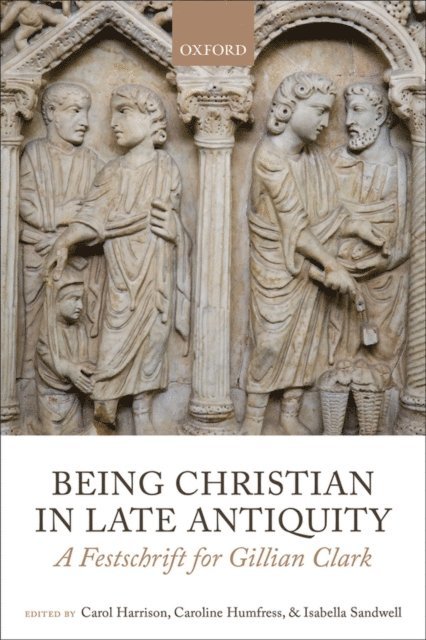
What do we mean when we talk about 'being Christian' in Late Antiquity? This volume brings together sixteen world-leading scholars of ancient Judaism, Christianity and, Greco-Roman culture and society to explore this question, in honour of the ground-breaking scholarship of Professor Gillian Clark. After an introduction to the volume's dedicatee and themes by Averil Cameron, the papers in Section I, `Being Christian through Reading, Writing and Hearing', analyse the roles that literary genre, writing, reading, hearing and the literature of the past played in the formation of what it meant to be Christian. The essays in Section II move on to explore how late antique Christians sought to create, maintain and represent Christian communities: communities that were both 'textually created' and 'enacted in living realities'. Finally in Section III, 'The Particularities of Being Christian', the contributions examine what it was to be Christian from a number of different ways of representing oneself, each of which raises questions about certain kinds of 'particularities', for example, gender, location, education and culture. Bringing together primary source material from the early Imperial period up to the seventh century AD and covering both the Eastern and Western Empires, the papers in this volume demonstrate that what it meant to be Christian cannot simply be taken for granted. 'Being Christian' was part of a continual process of construction and negotiation, as individuals and Christian communities alike sought to relate themselves to existing traditions, social structures and identities, at the same time as questioning and critiquing the past(s) in their present.
323 kr
Skickas inom 7-10 vardagar
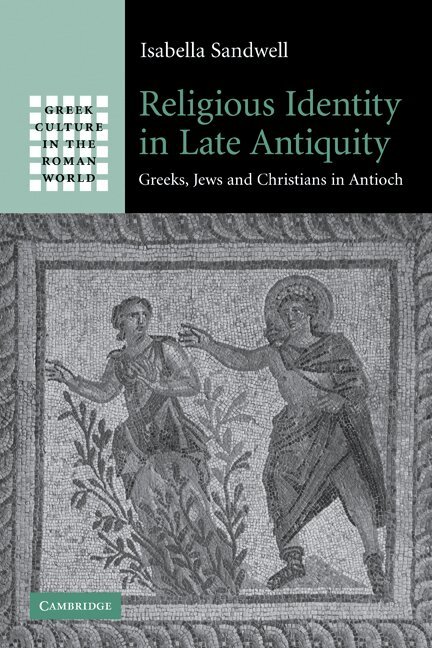
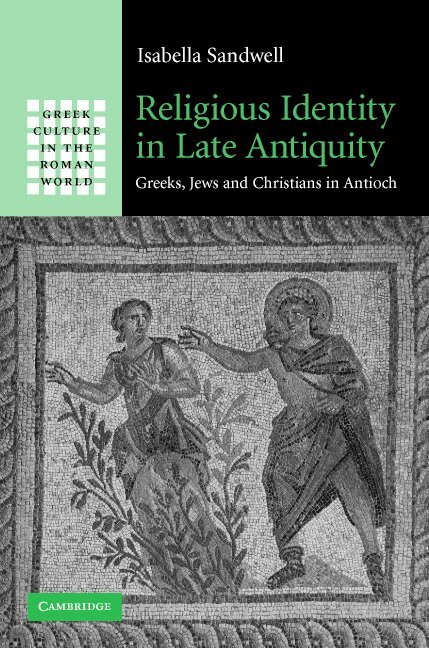
Studies of religious interaction in the fourth century AD have often assumed that the categories of 'pagan', 'Christian' and 'Jew' can be straightforwardly applied, and that we can assess the extent of Christianization in the Graeco-Roman period. In contrast, in this text, Dr Sandwell tackles the fundamental question of attitudes to religious identity by exploring how the Christian preacher John Chrysostom and the Graeco-Roman orator Libanius wrote about and understood issues of religious allegiance. By comparing the approaches of these men, who were living and working in Antioch at approximately the same time, she strives to get inside the process of religious interaction in a way not normally possible due to the dominance of Christian sources. In so doing she develops approaches to the study of Libanius' religion, the impact of John Chrysostom's preaching on his audiences and the importance of religious identity to fourth-century individuals.
1 258 kr
Skickas inom 7-10 vardagar
Studies of religious interaction in the fourth century AD have often assumed that the categories of 'pagan', 'Christian' and 'Jew' can be straightforwardly applied, and that we can assess the extent of Christianization in the Graeco-Roman period. In contrast, in this text, Dr Sandwell tackles the fundamental question of attitudes to religious identity by exploring how the Christian preacher John Chrysostom and the Graeco-Roman orator Libanius wrote about and understood issues of religious allegiance. By comparing the approaches of these men, who were living and working in Antioch at approximately the same time, she strives to get inside the process of religious interaction in a way not normally possible due to the dominance of Christian sources. In so doing she develops approaches to the study of Libanius' religion, the impact of John Chrysostom's preaching on his audiences and the importance of religious identity to fourth-century individuals.
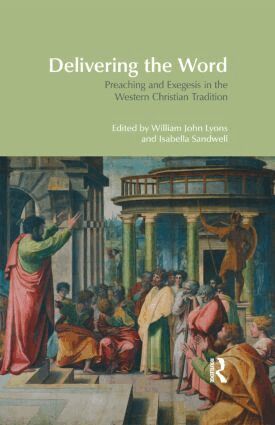
Delivering the Word
Preaching and Exegesis in the Western Christian Tradition
Inbunden, Engelska, 2011
2 098 kr
Skickas inom 10-15 vardagar
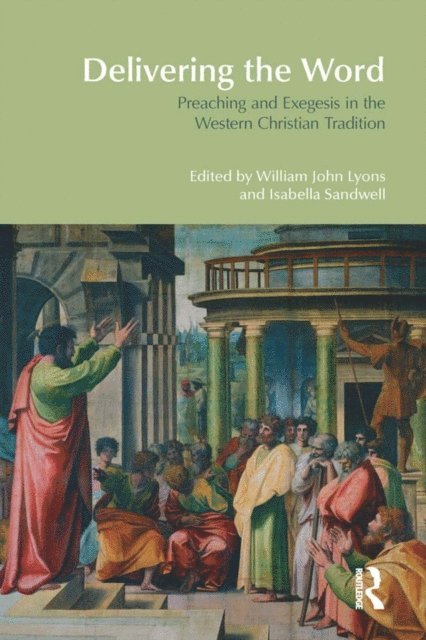
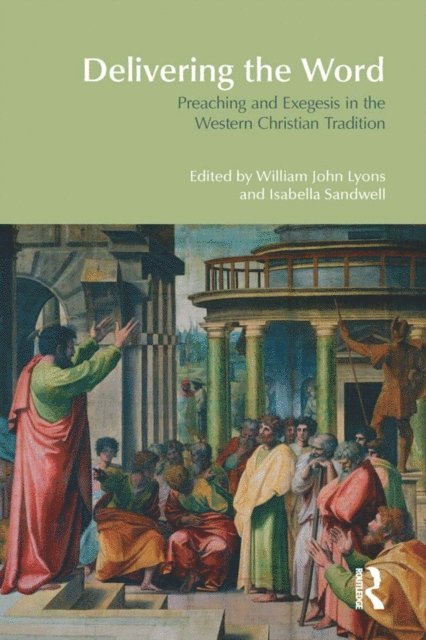
Biblical texts have been used consistently in sermons throughout Christian history. Preachers have transformed the texts into an aural experience, using them to evangelize, educate, edify, exhort, or even terrify, their audiences. Sermons have enabled Scripture to be communicated to people from a wide range of social backgrounds. 'Delivering the Word' examines the power of preaching and its reception across two millennia of homilies: from St Paul, Origen, Chrysostom, Augustine and Hildegard of Bingen to Jonathan Edwards, Samuel Taylor Coleridge, Aimee Semple McPherson, and Chris Brain. In its exploration of the impact of the sermon on the interpretation of Scripture, 'Delivering the Word' will be of interest to students of biblical and religious studies.