Isabelle Piot-Lepetit – författare
Visar alla böcker från författaren Isabelle Piot-Lepetit. Handla med fri frakt och snabb leverans.
4 produkter
4 produkter
Inbunden, Engelska, 2011
1 837 kr
Skickas inom 10-15 vardagar
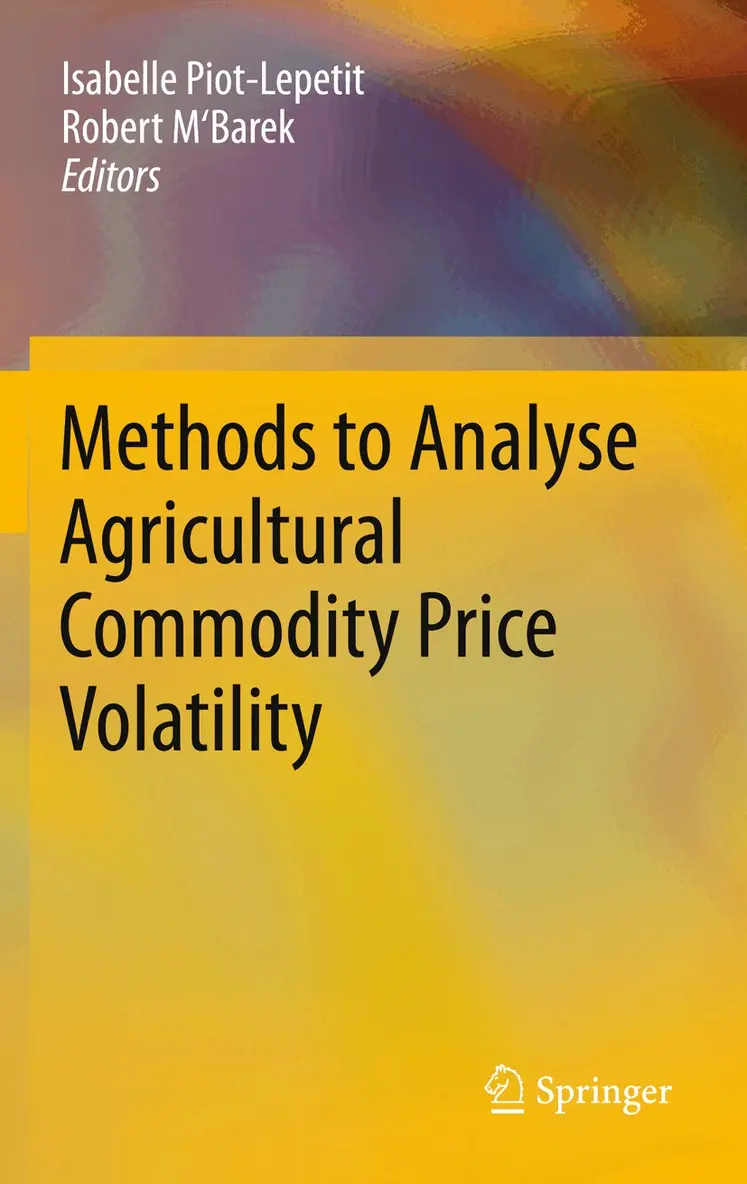
This book examines the issue of price volatility in agricultural commodities markets and how this phenomenon has evolved in recent years. The factors underlying the price spike of 2007-08 appear to be global and macroeconomic in nature, including the rapid growth in demand by developing countries, the international financial crisis, and exchange rate movements. Some of these factors are new, appearing as influences on price volatility only in the last decade. Although volatility has always been a feature of agricultural commodity markets, the evidence suggests that volatility has increased in certain commodity markets. A growing problem is that agricultural price shocks and volatility disrupt agricultural markets, economic incentives and incomes. With increased globalization and integration of financial and energy markets with agricultural commodity markets, the relationships between markets are expanding and becoming more complex. When a crisis such as a regional drought, food safety scare or a financial crisis hits a particular market, policy-makers often do not know the extent to which it will impact on other markets and affect producer, consumer and trader decisions. Including contributions from experts at the World Bank, the Food and Agriculture Organization of the United Nations, the USDA, and the European Commission, the research developed throughout the chapters of this book is based on current methodologies that can be used to analyze price volatility and provide directions for understanding this volatility and the development of new agricultural policies. The book highlights the challenges facing policy makers in dealing with the changing nature of agricultural commodities markets, and offers recommendations for anticipating price movements and managing their consequences. It will be a practical guide for both present and future policy-makers in deciding on potential price-stabilizing interventions, and will also serve as a useful resource for researchers and students in agricultural economics.
E-bok
PDF, Engelska, 20112 366 kr
Läs direkt efter köp
This book examines the issue of price volatility in agricultural commodities markets and how this phenomenon has evolved in recent years. The factors underlying the price spike of 2007-08 appear to be global and macroeconomic in nature, including the rapid growth in demand by developing countries, the international financial crisis, and exchange rate movements. Some of these factors are new, appearing as influences on price volatility only in the last decade. Although volatility has always been a feature of agricultural commodity markets, the evidence suggests that volatility has increased in certain commodity markets. A growing problem is that agricultural price shocks and volatility disrupt agricultural markets, economic incentives and incomes. With increased globalization and integration of financial and energy markets with agricultural commodity markets, the relationships between markets are expanding and becoming more complex. When a crisis such as a regional drought, food safety scare or a financial crisis hits a particular market, policy-makers often do not know the extent to which it will impact on other markets and affect producer, consumer and trader decisions. Including contributions from experts at the World Bank, the Food and Agriculture Organization of the United Nations, the USDA, and the European Commission, the research developed throughout the chapters of this book is based on current methodologies that can be used to analyze price volatility and provide directions for understanding this volatility and the development of new agricultural policies. The book highlights the challenges facing policy makers in dealing with the changing nature of agricultural commodities markets, and offers recommendations for anticipating price movements and managing their consequences. It will be a practical guide for both present and future policy-makers in deciding on potential price-stabilizing interventions, and will also serve as a useful resource for researchers and students in agricultural economics.
Häftad, Engelska, 2014
1 837 kr
Skickas inom 10-15 vardagar
This book examines the issue of price volatility in agricultural commodities markets and how this phenomenon has evolved in recent years. The factors underlying the price spike of 2007-08 appear to be global and macroeconomic in nature, including the rapid growth in demand by developing countries, the international financial crisis, and exchange rate movements. Some of these factors are new, appearing as influences on price volatility only in the last decade. Although volatility has always been a feature of agricultural commodity markets, the evidence suggests that volatility has increased in certain commodity markets. A growing problem is that agricultural price shocks and volatility disrupt agricultural markets, economic incentives and incomes. With increased globalization and integration of financial and energy markets with agricultural commodity markets, the relationships between markets are expanding and becoming more complex. When a crisis such as a regional drought, food safety scare or a financial crisis hits a particular market, policy-makers often do not know the extent to which it will impact on other markets and affect producer, consumer and trader decisions. Including contributions from experts at the World Bank, the Food and Agriculture Organization of the United Nations, the USDA, and the European Commission, the research developed throughout the chapters of this book is based on current methodologies that can be used to analyze price volatility and provide directions for understanding this volatility and the development of new agricultural policies. The book highlights the challenges facing policy makers in dealing with the changing nature of agricultural commodities markets, and offers recommendations for anticipating price movements and managing their consequences. It will be a practical guide for both present and future policy-makers in deciding on potential price-stabilizing interventions, and will also serve as a useful resource for researchers and students in agricultural economics.
E-bok
PDF, 20174 351 kr
Läs direkt efter köp
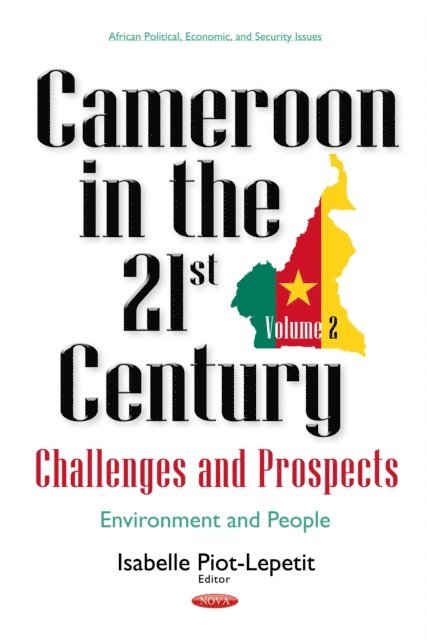
Cameroon, or officially the Republic of Cameroon, is a country with vast natural resources and a population of 22.8 million people. It is also culturally and geographically very diverse. Due to its geographical and cultural diversity, Cameroon is often referred to as "e;Africa in miniature."e; This country is currently considered a lower-middle income country by the World Bank with social indicators and levels of poverty which are below those for comparator countries. However, the Government of Cameroon aims to achieve the state of a higher middle-income country by 2035. There exists huge potential for economic growth and poverty reduction in Cameroon. The aim of the book is to provide an overview of the main issues, challenges, and prospects faced by Cameroon. The book is composed of conceptual and empirical studies of Cameroonian scholars gathered together in order to provide descriptions and explanations of main issues as well as policy recommendations to support decisions-makers. These considerations are those of Cameroonians for Cameroon.The book is organized into two volumes. The first one entitled "e;Governance and Businesses"e; is devoted to issues relating to public governance, investment climate, insecurity, globalization, business development, and activities that are sources of employment in Cameroon. The second volume entitled "e;Environment and People"e; deals with issues concerning the management of cross cutting economic services, the conservation of forests, the sustainable development of agricultural activities, the role of women, the immobility of workers, problems of development and poverty alleviation, millennium development goals, the performance of microfinance institutions, multilingualism and education in Cameroon.