Isabelle Thomas-Fogiel – författare
Visar alla böcker från författaren . Handla med fri frakt och snabb leverans.
5 produkter
5 produkter
Inbunden, Engelska, 2011
786 kr
Skickas inom 5-8 vardagar
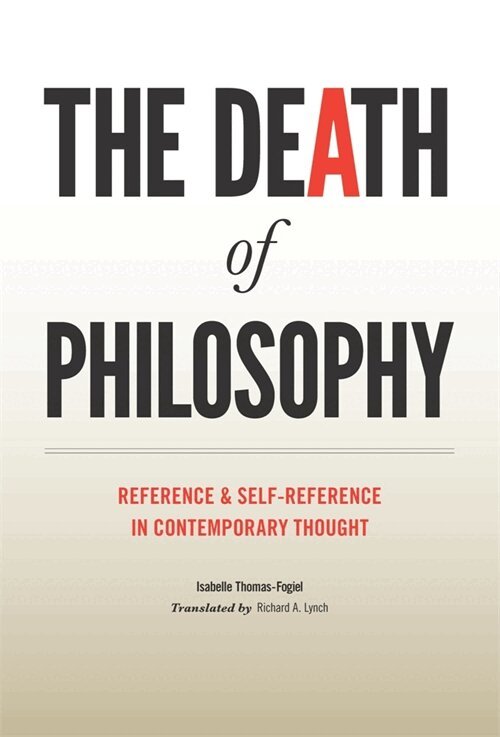
Philosophers debate the death of philosophy as much as they debate the death of God. Kant claimed responsibility for both philosophy's beginning and end, while Heidegger argued it concluded with Nietzsche. In the twentieth century, figures as diverse as John Austin and Richard Rorty have proclaimed philosophy's end, with some even calling for the advent of "postphilosophy." In an effort to make sense of these conflicting positions--which often say as much about the philosopher as his subject--Isabelle Thomas-Fogiel undertakes the first systematic treatment of "the end of philosophy," while also recasting the history of western thought itself. Thomas-Fogiel begins with postphilosophical claims such as scientism, which she reveals to be self-refuting, for they subsume philosophy into the branches of the natural sciences. She discovers similar issues in Rorty's skepticism and strands of continental thought. Revisiting the work of late-nineteenth and early-twentieth-century philosophers, when the split between analytical and continental philosophy began, Thomas-Fogiel finds both traditions followed the same path--the road of reference--which ultimately led to self-contradiction.This phenomenon, whether valorized or condemned, has been understood as the death of philosophy. Tracing this pattern from Quine to Rorty, from Heidegger to Levinas and Habermas, Thomas-Fogiel reveals the self-contradiction at the core of their claims while also carving an alternative path through self-reference. Trained under the French philosopher Bernard Bourgeois, she remakes philosophy in exciting new ways for the twenty-first century.
E-bok
Engelska, 20111 222 kr
Läs direkt efter köp
Many philosophers have heralded the death of philosophy. Kant claimed responsibility for both its beginning and end, while Heidegger argued it concluded with Nietzsche. In the twentieth century, figures as diverse as John Austin and Richard Rorty have proclaimed philosophy's end, with some even calling for the advent of "postphilosophy." Transcending the analytical and continental divide, the death of philosophy is a topic as debated as the death of God. In an effort to make sense of all these conflicting positions-which often say as much about the philosopher as the subject itself-Isabelle Thomas-Fogiel offers the first systematic treatment of "the end of philosophy" and, in the process, recasts the history of western thought.Thomas-Fogiel begins with postphilosophical claims such as scientism, which, by subsuming philosophy into the branches of the natural sciences, she reveals to be self-refuting. She discovers similar issues in Rorty's skepticism and strands of continental thought. Revisiting the work of late-nineteenth and early-twentieth-century philosophers, when the split between analytical and continental philosophy began, Thomas-Fogiel finds both traditions followed the same paththe road of referencewhich ultimately led to self-contradiction. This phenomenon, whether valorized or condemned, has been understood as the death of philosophy. Tracing this pattern from Quine to Rorty, from Heidegger to Levinas and Habermas, Thomas-Fogiel reveals the self-contradiction at the core of their claims while also divining a new path through self-reference that breathes much-needed life into the discipline. Trained under the French philosopher Bernard Bourgeois and a major, upcoming scholar in the field, Thomas-Fogiel remakes philosophy in exciting ways for the next century.
E-bok
Franska, 2000370 kr
Läs direkt efter köp
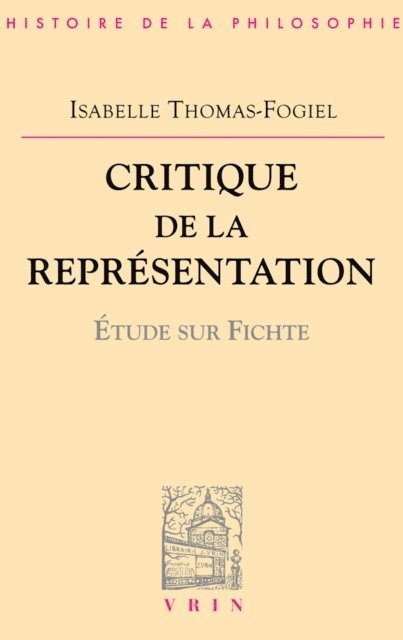
La philosophie la plus contemporaine s’articule autour de la critique de la représentation et dénonce dans la métaphysique classique la volonté d’unir dans le seul concept de « représenter » la multiplicité des dimensions de la pensée. L’idéalisme allemand est l’un des autres moments de la crise de la représentation, l’une des figures les plus radicales de sa critique. C’est, sur la base d’une étude de la philosophie de Fichte, ce que cet ouvrage vise à démontrer. En effet Fichte substitue à la pensée comme représentation (Kant), la pensée comme acte, à la notion de connaissance, celle de savoir, à la notion de figuration, celle de réflexion.Dépasser la dimension traditionnellement spéculaire de la pensée et, pour ce faire, passer de la connaissance au savoir, de la validité objective à la vérité réflexive, de l’objectivation qui limite à la raison qui infinitise, tel est donc le sens de cette philosophie qu’il devient loisible de comparer aux figures les plus actuelles de la critique de la représentation.Isabelle Thomas-Fogiel est maître de conférences à l’Université de Paris I.
600 kr
Tillfälligt slut
Häftad, Franska
709 kr
Tillfälligt slut