Israr Qureshi – författare
Visar alla böcker från författaren Israr Qureshi. Handla med fri frakt och snabb leverans.
7 produkter
7 produkter
1 839 kr
Kommande
The De Gruyter Handbook of Social Entrepreneurship Research responds to a growing need within scholarship and practice to better understand social entrepreneurship as a complex, evolving, and context-sensitive field. Bringing together diverse voices and perspectives, it moves beyond narrow definitions to highlight the plurality, interdisciplinarity, and global scope of contemporary research. Rather than seeking conceptual closure, the volume maps the field’s intellectual trajectories and offers a comprehensive yet accessible entry point into key debates, while prefiguring a more integrated and reflexive research agenda.A key contribution lies in its focus on digitally enabled social entrepreneurship. By examining how sociotechnical infrastructures—such as platforms, data systems, and digital networks—shape participation, coordination, and value creation, the handbook highlights technology as both an opportunity and a source of new tensions around inclusion, governance, and ethics. This lens offers a timely understanding of how digitalisation is transforming the ways social value is created and sustained.This handbook also foregrounds marginalised and Global South contexts as sites of both empirical insight and theoretical innovation. By engaging with issues of inequality, institutional complexity, and community agency, it broadens the scope of the field and advances more plural and contextually grounded perspectives.
1 854 kr
Skickas inom 10-15 vardagar
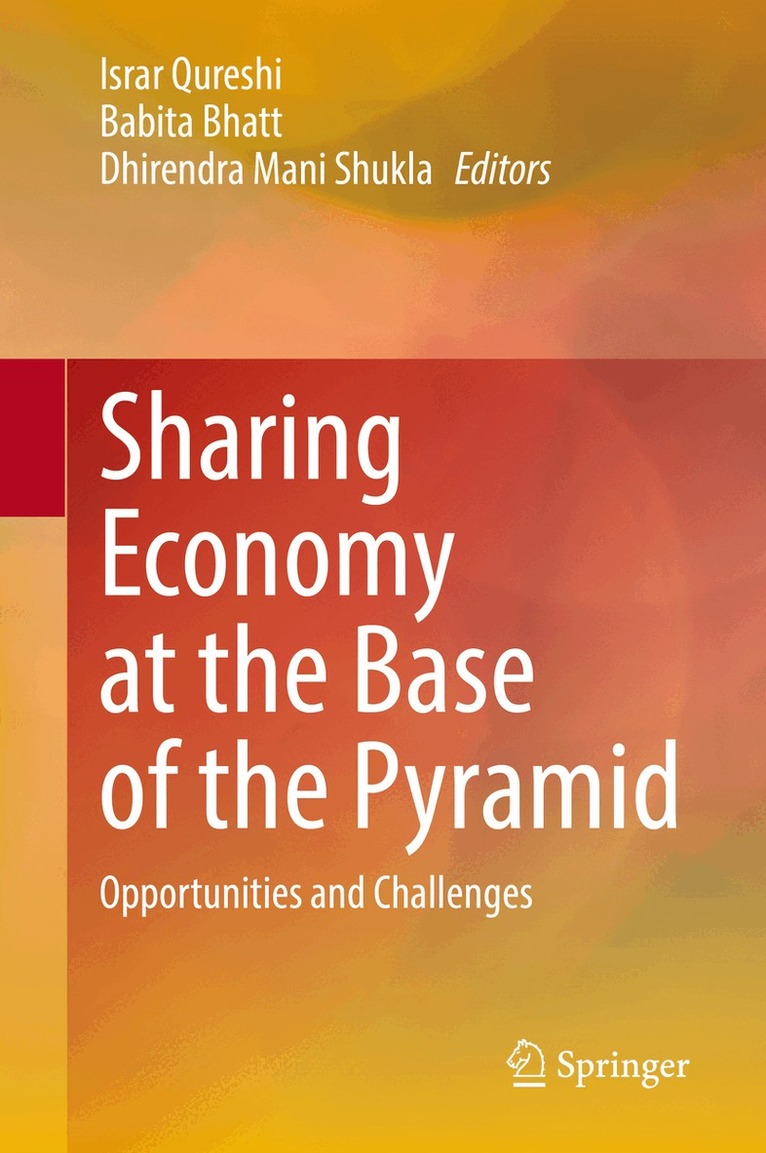
This book explores how the sharing economy models present opportunities and also pose challenges in achieving sustainable development at the base of the pyramid. Through a 3S Framework (sharing, socialization, and social intermediation) and Reformative-Transformative classification, this book demonstrates how sharing economy models offer the potential for more inclusive and sustainable development.The book includes case studies on sharing economy models that offer products and services for free or at prices more affordable than traditional options, while also finding ways toward economic sustainability and inclusive growth. This book identifies how local resources, community social capital, and bricolage could be leveraged in the development of sharing economy models that take into account the specificities of particular communities while ensuring that the solutions can be quickly modified and replicated. Further, this book highlights that sharing economy modelsleverage the digital revolution to take advantage of cheaper computational capacity and global connectivity, while rapidly adapting to engage with those that have less digital literacy at the base of the pyramid.This edited book aims to present analyses of sharing economy models at the base of the pyramid, identifying characteristics that can be particularly important for sustainable development and barriers that would need to be overcome to realize its full potential. The chapters in this book are contributed by a wide range of academics and scholars who are experts in the field.
1 854 kr
Skickas inom 10-15 vardagar
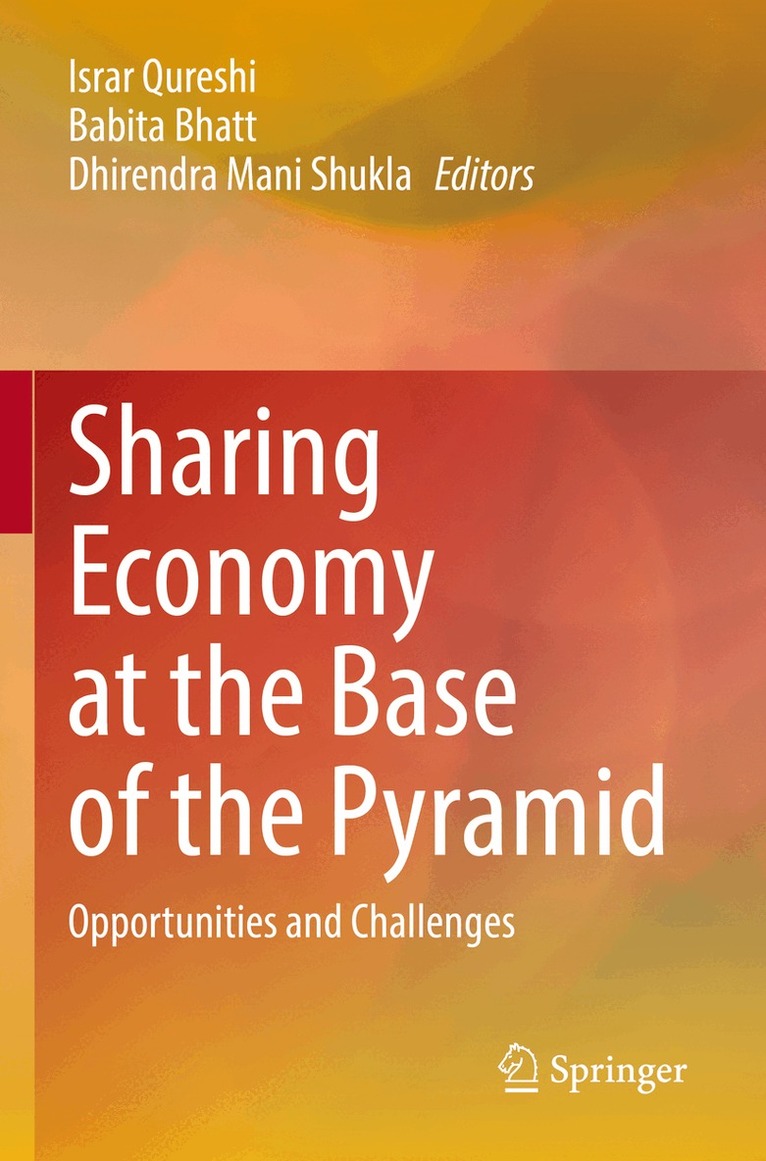
This book explores how the sharing economy models present opportunities and also pose challenges in achieving sustainable development at the base of the pyramid. Through a 3S Framework (sharing, socialization, and social intermediation) and Reformative-Transformative classification, this book demonstrates how sharing economy models offer the potential for more inclusive and sustainable development.The book includes case studies on sharing economy models that offer products and services for free or at prices more affordable than traditional options, while also finding ways toward economic sustainability and inclusive growth. This book identifies how local resources, community social capital, and bricolage could be leveraged in the development of sharing economy models that take into account the specificities of particular communities while ensuring that the solutions can be quickly modified and replicated. Further, this book highlights that sharing economy modelsleverage the digital revolution to take advantage of cheaper computational capacity and global connectivity, while rapidly adapting to engage with those that have less digital literacy at the base of the pyramid.This edited book aims to present analyses of sharing economy models at the base of the pyramid, identifying characteristics that can be particularly important for sustainable development and barriers that would need to be overcome to realize its full potential. The chapters in this book are contributed by a wide range of academics and scholars who are experts in the field.
Causes and Symptoms of Socio-Cultural Polarization
Role of Information and Communication Technologies
Inbunden, Engelska, 2022
1 854 kr
Skickas inom 10-15 vardagar
This book explores cultural polarization resultant decline in social cohesion in society and how information and communication technologies exacerbate the cultural polarization through phenomenon such as “echo chambers” of information that damage the quality of online discourse.
Causes and Symptoms of Socio-Cultural Polarization
Role of Information and Communication Technologies
Häftad, Engelska, 2023
1 854 kr
Skickas inom 10-15 vardagar
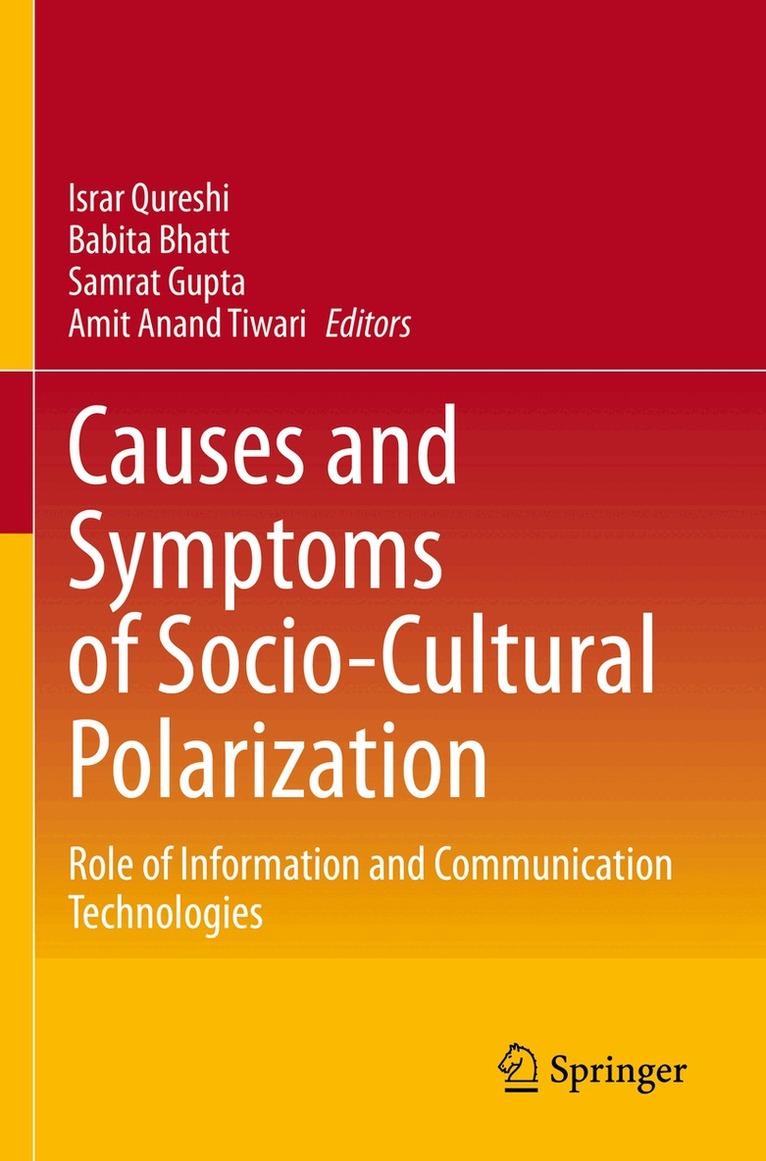
This book explores cultural polarization resultant decline in social cohesion in society and how information and communication technologies exacerbate the cultural polarization through phenomenon such as “echo chambers” of information that damage the quality of online discourse.
2 117 kr
Skickas inom 10-15 vardagar
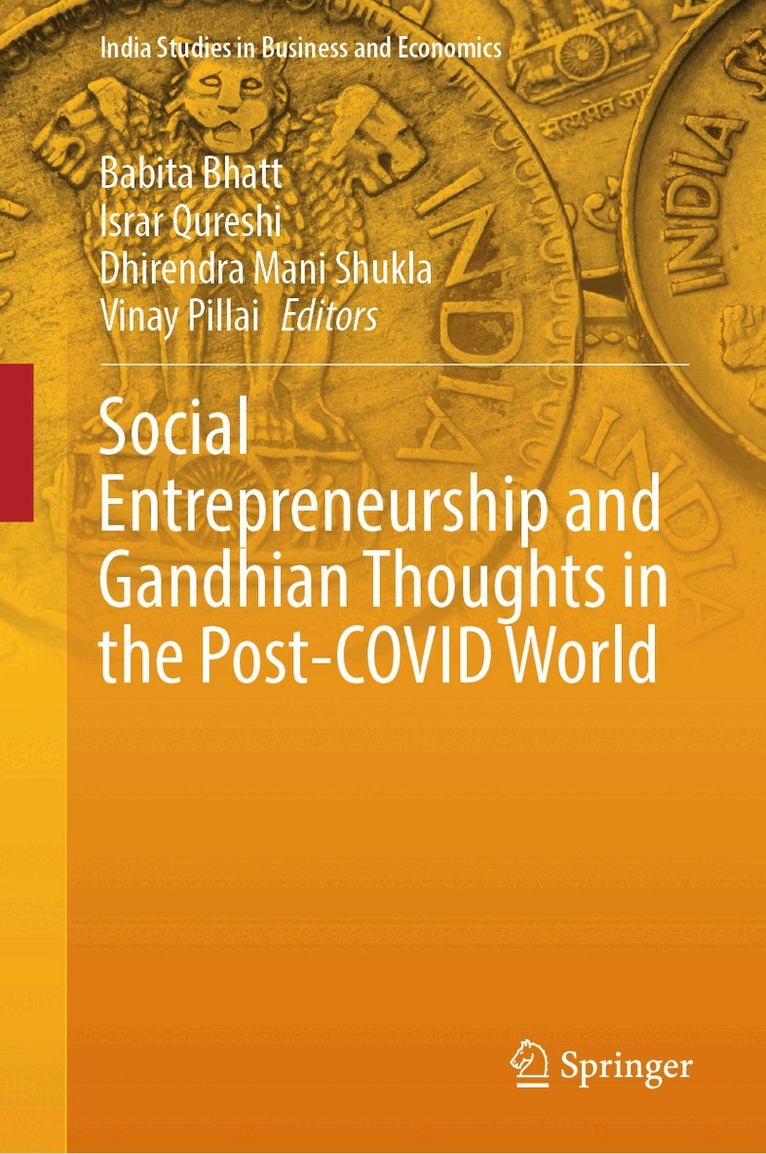
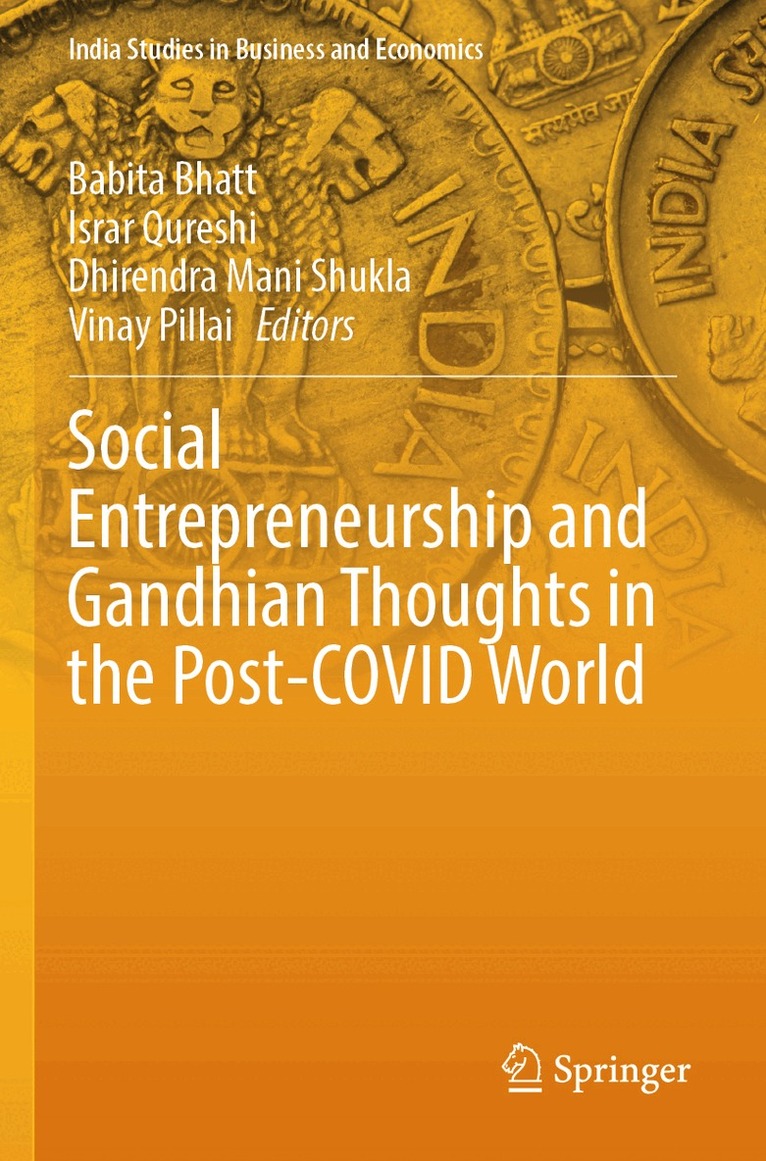
In this edited book, we provide foundational tenets of Gandhian perspective, and present examples of social organizations that are aiming to insulate themselves by adopting community and village-centered approaches to restructuring socially-embedded economic activities that align with Gandhian principles. These cases highlight the relevance of Gandhi's thoughts in the field of social entrepreneurship. We examine key principles such as Sarvodaya (the welfare of all), Antodaya (the upliftment of the weakest), self-sufficiency, self-reliance, Nai Talim (holistic education), and Trusteeship. We explore how social organizations implement these principles to promote resilience and well-being at the community level.The COVID-19 pandemic revealed unsustainable practices in the world, including disrupted supply chains, contagious effects of integrated global economy that ignore the local self-reliance, and unsustainable internal displacement that make cities dependent on rural labor and rural population dependent on urban areas for jobs. These issues show that there are systemic problems with how our society and market are structured. The traditional way of development that focuses on profit maximization and unlimited wants has caused problems like inequality, resource depletion, and disproportionate wealth accumulation. Unlimited growth in a limited world has led us to social, economic, and ecological crises. However, degrowth, as an approach has been criticized for wanting to go back to pre-industrial times. In this context, Gandhi's ideas offer alternatives. Gandhi promotes moderation in how market activities are structured and how individual consumption practices are followed. This can help reduce the negative impact of economic activities on people and the planet, and move towards a more structured and inclusive economy.
2 117 kr
Skickas inom 10-15 vardagar
In this edited book, we provide foundational tenets of Gandhian perspective, and present examples of social organizations that are aiming to insulate themselves by adopting community and village-centered approaches to restructuring socially-embedded economic activities that align with Gandhian principles. These cases highlight the relevance of Gandhi's thoughts in the field of social entrepreneurship. We examine key principles such as Sarvodaya (the welfare of all), Antodaya (the upliftment of the weakest), self-sufficiency, self-reliance, Nai Talim (holistic education), and Trusteeship. We explore how social organizations implement these principles to promote resilience and well-being at the community level.The COVID-19 pandemic revealed unsustainable practices in the world, including disrupted supply chains, contagious effects of integrated global economy that ignore the local self-reliance, and unsustainable internal displacement that make cities dependent on rural labor and rural population dependent on urban areas for jobs. These issues show that there are systemic problems with how our society and market are structured. The traditional way of development that focuses on profit maximization and unlimited wants has caused problems like inequality, resource depletion, and disproportionate wealth accumulation. Unlimited growth in a limited world has led us to social, economic, and ecological crises. However, degrowth, as an approach has been criticized for wanting to go back to pre-industrial times. In this context, Gandhi's ideas offer alternatives. Gandhi promotes moderation in how market activities are structured and how individual consumption practices are followed. This can help reduce the negative impact of economic activities on people and the planet, and move towards a more structured and inclusive economy.