Ivan L. Cameron – författare
Visar alla böcker från författaren Ivan L. Cameron. Handla med fri frakt och snabb leverans.
5 produkter
5 produkter
Inbunden, Engelska, 2006
2 695 kr
Skickas inom 10-15 vardagar
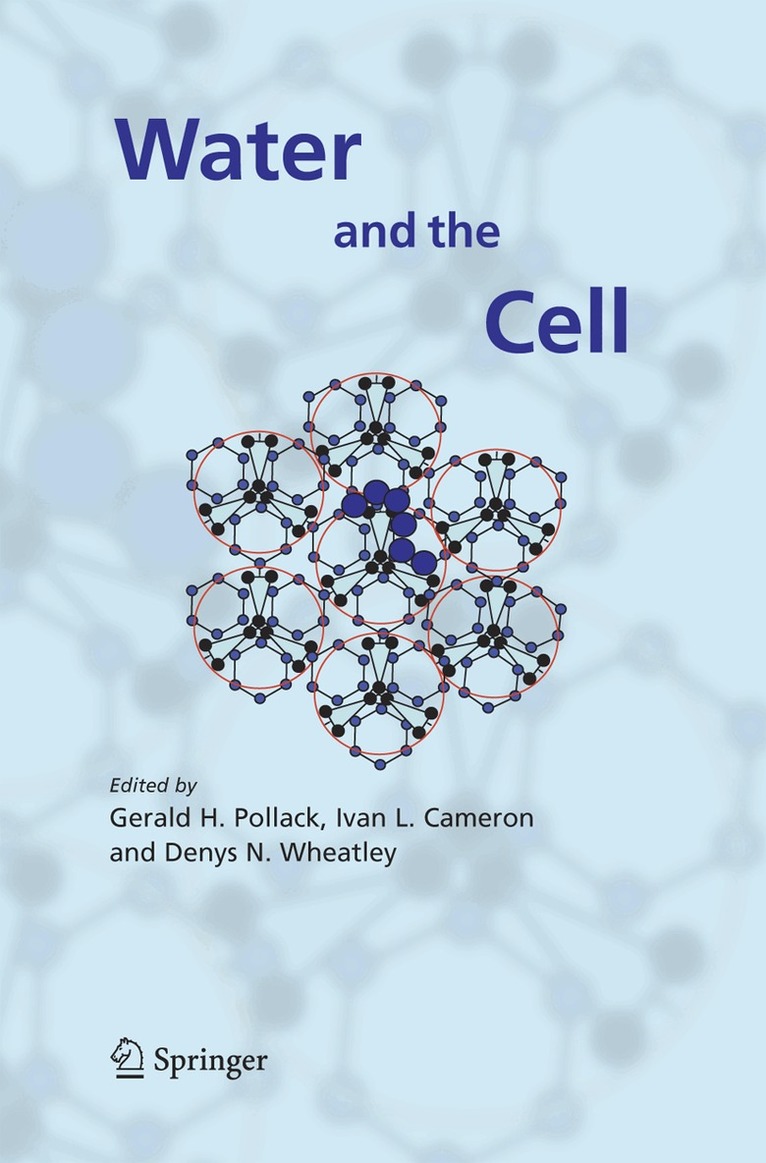
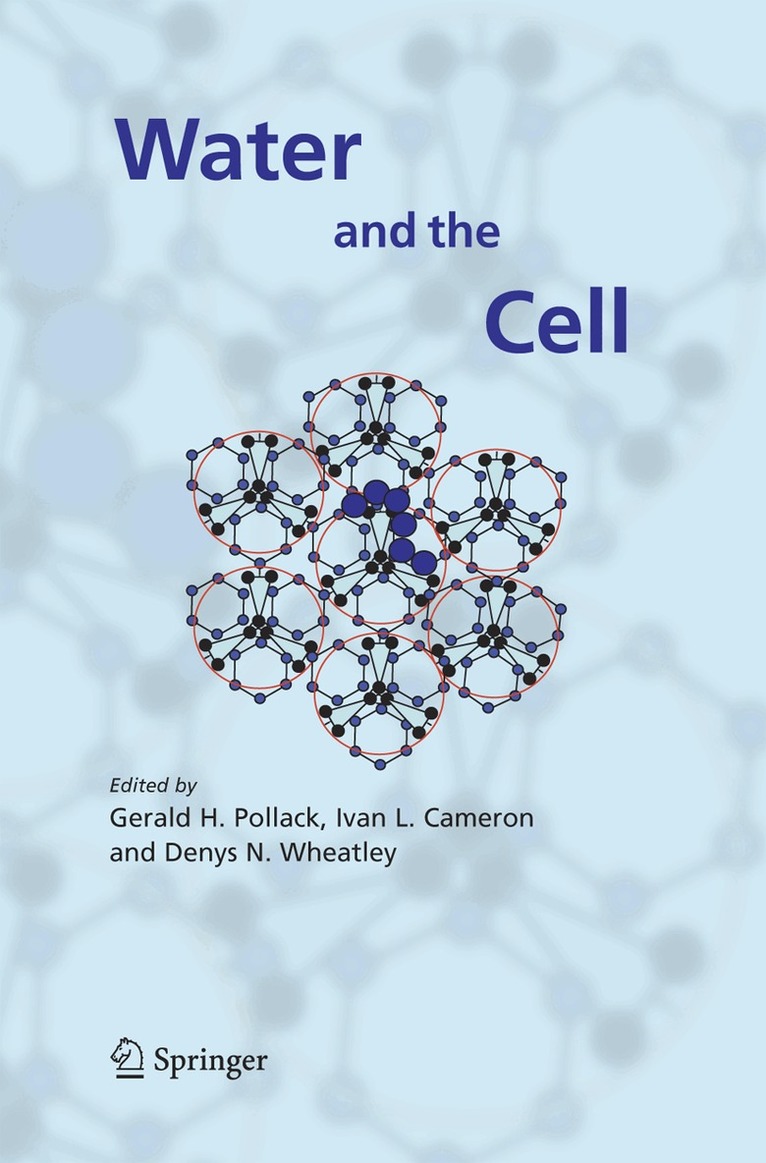
This edited volume deals with the state of water in the vicinity of biological interfaces, both intracellular and extracellular. This issue is of critical importance, for the cell is extremely crowded with interfaces, and as a result practically all cell water is interfacial. The character, or state, of this water may therefore be central to cell function. What is meant by the ‘state of water?’ Few would question that water coming out of a household tap is a liquid, but water in an ice cube is something altogether different: it is a solid that floats on tap water (also known as bulk water). It is water in the solid state. The fact that ice floats is an indication that it is less dense than water. Clearly, the physical properties are different. Water molecules below 0 C form a crystal. In this crystal, the two positively charged hydrogen atoms of water bind to the double negative charges of oxygen atoms of two adjacent water molecules. The resulting crystal lattice is arranged in such a way as to be less dense than tap water, and constituent water molecules are also less mobile.
E-bok
PDF, Engelska, 20073 451 kr
Läs direkt efter köp
This edited volume deals with the state of water in the vicinity of biological interfaces, both intracellular and extracellular. This issue is of critical importance, for the cell is extremely crowded with interfaces, and as a result practically all cell water is interfacial. The character, or state, of this water may therefore be central to cell function. What is meant by the ‘state of water?’ Few would question that water coming out of a household tap is a liquid, but water in an ice cube is something altogether different: it is a solid that floats on tap water (also known as bulk water). It is water in the solid state. The fact that ice floats is an indication that it is less dense than water. Clearly, the physical properties are different. Water molecules below 0 C form a crystal. In this crystal, the two positively charged hydrogen atoms of water bind to the double negative charges of oxygen atoms of two adjacent water molecules. The resulting crystal lattice is arranged in such a way as to be less dense than tap water, and constituent water molecules are also less mobile.
E-bok
PDF, Engelska, 2013783 kr
Läs direkt efter köp
Cell Synchrony: Studies in Biosynthetic Regulation focuses on the processes, principles, applications, methodologies, and approaches involved in biosynthetic regulation, including chromosome replication, cellular biosynthesis, and enzyme synthesis. The selection first takes a look at the theory of synchronous cultures, synchronous replication of the chromosome in Bacillus subtilis, and chromosome replication in Escherichia coli. Discussions focus on attempts to characterize the physical state of replicating DNA, cell division and the regulation of chromosome replication, regulation of sequential chromosome synthesis, synchrony of chromosome replication, and determination of the cell doubling-time distribution function from the decay of synchronization. The text then examines nuclear events in synchronously dividing yeast cultures, periodic enzyme synthesis in synchronous cultures of yeast, and light-induced synchronous sporulation of a myxomycete. Topics include periodicity of enzyme synthesis, use of synchronous cultures for studying cellular biosynthesis, and cytological observations on synchronously dividing cultures. The book explores the effects of temperature on the mitotic cycle of normal and synchronized mammalian cells; behavior of sulfhydryl groups in synchronous division; and morphogenetic and macromolecular aspects of synchronized Tetrahymena. The selection is highly recommended for researchers interested in biosynthetic regulation.
E-bok
PDF, Engelska, 2013783 kr
Läs direkt efter köp
Cellular and Molecular Renewal in the Mammalian Body concerns the dynamic nature of body constituents at the molecular, organelle, and cellular level of structural organization. Each chapter of this book deals with cellular and molecular renewal, proliferation, and loss, focusing on the body''s major macromolecular classes, such as DNA, RNA, proteins, lipids, and carbohydrates. Other topics discussed include the subcellular renewal, DNA stability, regulation of cell proliferation, and changes in mitotic rates. The intracellular sites of RNA synthesis, proteins of the nucleus, and epithelial-mesenchymal interactions are also elaborated. This text likewise covers the brown adipose tissue, histochemistry of polysaccharides, and calcification. This publication is beneficial to students and investigators intending to acquire knowledge of the dynamic nature of body constituents and its influence to the analysis and experimentation of normal, disease, and repair processes within the body.
Häftad, Engelska, 2010
2 776 kr
Skickas inom 10-15 vardagar
This edited volume deals with the state of water in the vicinity of biological interfaces, both intracellular and extracellular. This issue is of critical importance, for the cell is extremely crowded with interfaces, and as a result practically all cell water is interfacial. The character, or state, of this water may therefore be central to cell function. What is meant by the ‘state of water?’ Few would question that water coming out of a household tap is a liquid, but water in an ice cube is something altogether different: it is a solid that floats on tap water (also known as bulk water). It is water in the solid state. The fact that ice floats is an indication that it is less dense than water. Clearly, the physical properties are different. Water molecules below 0 C form a crystal. In this crystal, the two positively charged hydrogen atoms of water bind to the double negative charges of oxygen atoms of two adjacent water molecules. The resulting crystal lattice is arranged in such a way as to be less dense than tap water, and constituent water molecules are also less mobile.