Ivan R. Scales - Böcker
Visar alla böcker från författaren Ivan R. Scales. Handla med fri frakt och snabb leverans.
3 produkter
3 produkter
752 kr
Skickas inom 10-15 vardagar
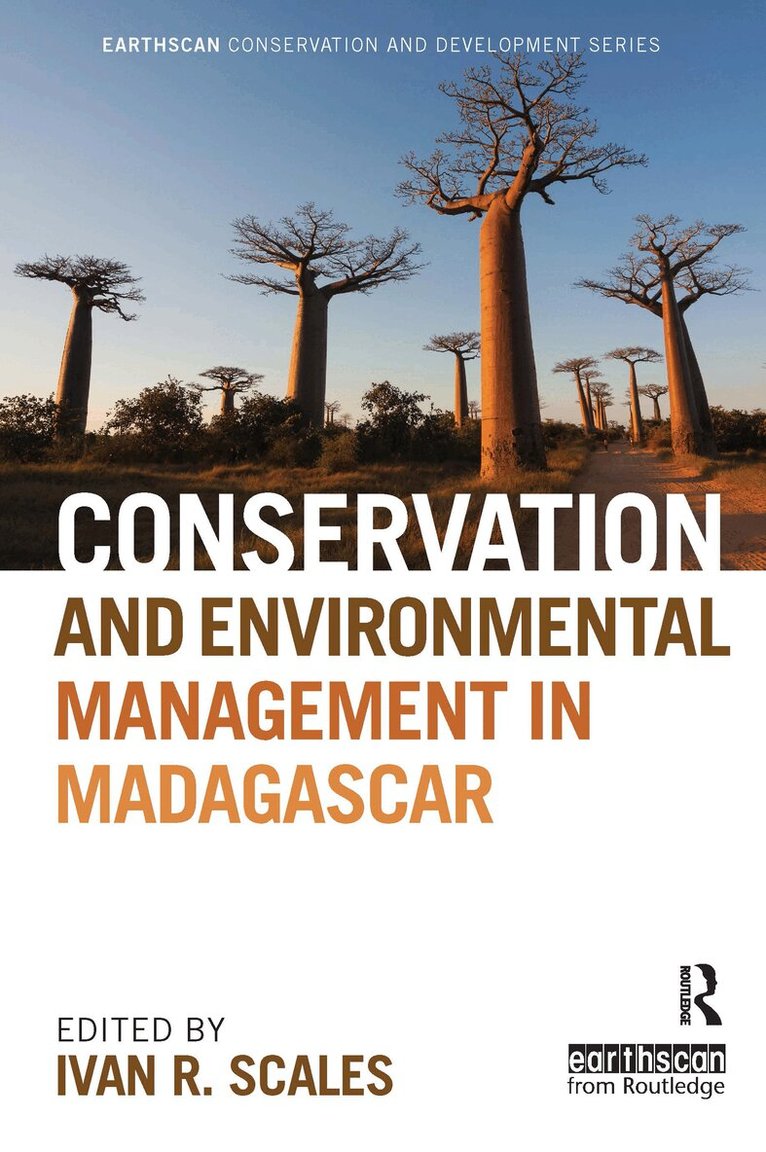
Madagascar is one of the most biologically diverse places on the planet, the result of 160 million years of isolation from the African mainland. More than 80% of its species are not found anywhere else on Earth. However, this highly diverse flora and fauna is threatened by habitat loss and fragmentation, and the island has been classified as one of the world’s highest conservation priorities. Drawing on insights from geography, anthropology, sustainable development, political science and ecology, this book provides a comprehensive assessment of the status of conservation and environmental management in Madagascar. It describes how conservation organisations have been experimenting with new forms of protected areas, community-based resource management, ecotourism, and payments for ecosystem services. But the country must also deal with pressing human needs. The problems of poverty, development, environmental justice, natural resource use and biodiversity conservation are shown to be interlinked in complex ways. Authors address key questions, such as who are the winners and losers in attempts to conserve biodiversity? And what are the implications of new forms of conservation for rural livelihoods and environmental justice?
2 289 kr
Skickas inom 10-15 vardagar
Madagascar is one of the most biologically diverse places on the planet, the result of 160 million years of isolation from the African mainland. More than 80% of its species are not found anywhere else on Earth. However, this highly diverse flora and fauna is threatened by habitat loss and fragmentation, and the island has been classified as one of the world’s highest conservation priorities. Drawing on insights from geography, anthropology, sustainable development, political science and ecology, this book provides a comprehensive assessment of the status of conservation and environmental management in Madagascar. It describes how conservation organisations have been experimenting with new forms of protected areas, community-based resource management, ecotourism, and payments for ecosystem services. But the country must also deal with pressing human needs. The problems of poverty, development, environmental justice, natural resource use and biodiversity conservation are shown to be interlinked in complex ways. Authors address key questions, such as who are the winners and losers in attempts to conserve biodiversity? And what are the implications of new forms of conservation for rural livelihoods and environmental justice?
835 kr
Skickas inom 7-10 vardagar
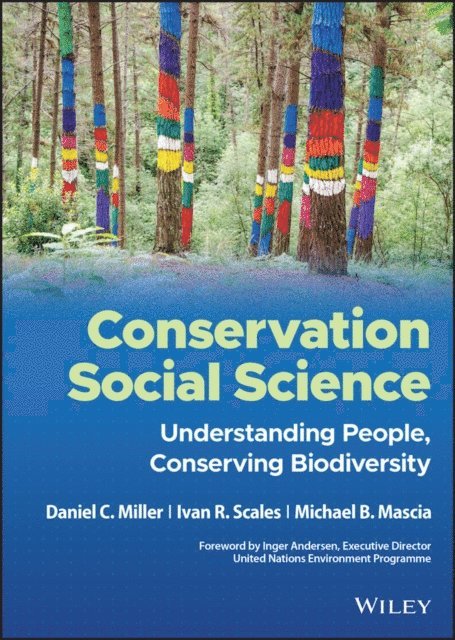
Groundbreaking book that examines the essential contribution of the social sciences to understanding and conserving biodiversity across the globe Authored by leading scholars at the nexus of social science and biodiversity conservation, Conservation Social Science addresses the growing realization that biodiversity conservation is, at heart, a social phenomenon. Threats to biological diversity are influenced by a wide range of political, economic and cultural factors. The conservation of biodiversity is conceived and carried out by people. Biodiversity conservation is a manifestation of human beliefs and values. Choices about which species and habitats to conserve, how to prioritize efforts, and how to conserve them are inherently social − with consequences not just for wildlife but also human lives and livelihoods. Key topics covered in this thought-provoking text include: An introduction to key social science disciplines and how each field specifically relates to biodiversity conservationHow to make social sciences an integral part of conservation strategies and initiativesHow social science theories and analytic approaches can explain and help predict patterns of human behaviorHow biodiversity conservation as a ubiquitous societal phenomenon can provide insights into human society in generalConservation Social Science is an essential, one-of-a-kind survey of novel approaches to explaining and fostering more effective, just, and enduring conservation of biodiversity. It is academically rigorous and comprehensive in scope, yet sufficiently nontechnical and concise to be accessible to a global audience of students, faculty, and environmental professionals and policymakers.