Iván Zoltán Dénes - Böcker
Visar alla böcker från författaren Iván Zoltán Dénes. Handla med fri frakt och snabb leverans.
3 produkter
3 produkter
1 147 kr
Skickas inom 5-8 vardagar
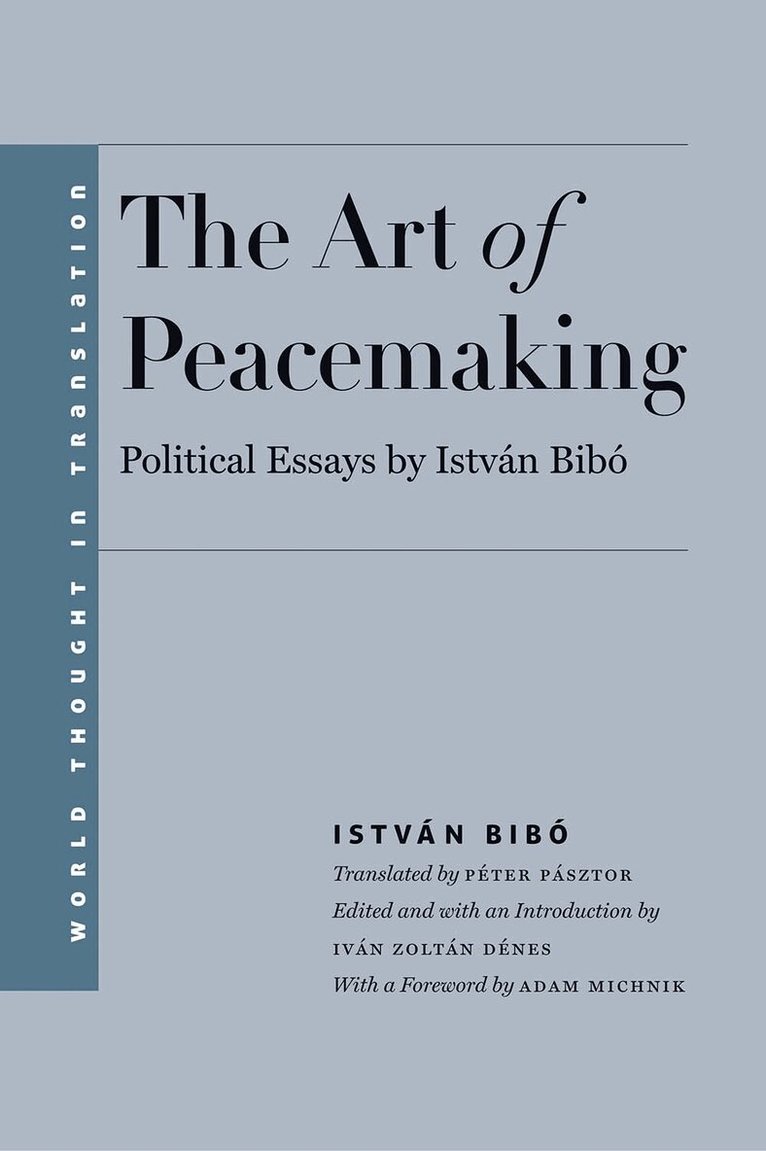
István Bibó (1911–1979) was a Hungarian lawyer, political thinker, prolific essayist, and minister of state for the Hungarian national government during the Hungarian Revolution of 1956. This magisterial compendium of Bibó’s essays introduces English-speaking audiences to the writings of one of the foremost theorists and psychologists of twentieth-century European politics and culture. Elegantly translated by Péter Pásztor and with a scholarly introduction by Iván Zoltán Dénes, the essays in this volume address the causes and fallout of European political crises, postwar changes in the balance of power among countries, and nation-building processes.
2 280 kr
Skickas inom 10-15 vardagar
1 658 kr
Skickas inom 10-15 vardagar
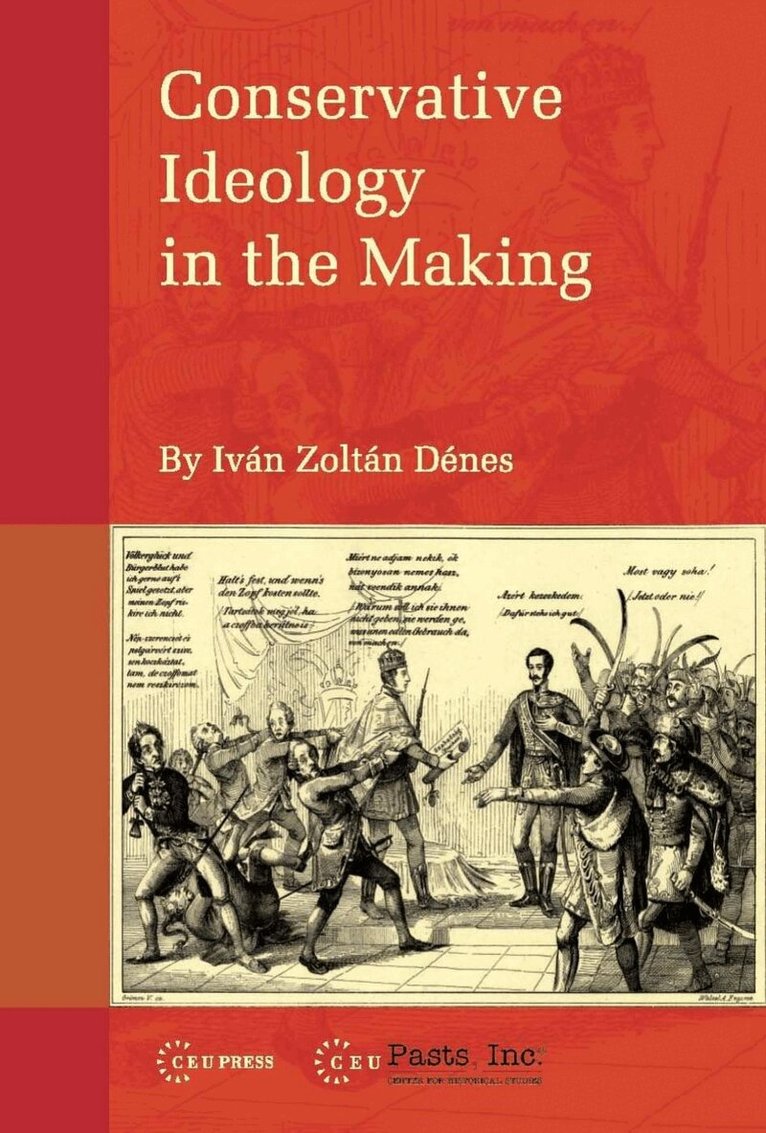
The fifty years or so preceding the watershed of 1848–49 witnessed the emergence of liberal nationalism in Hungary, along with a transmutation of conservatism which appeared then as a party and an ideological system in the political arena. The specific features of the conservatism, combining the protection of the status quo with some reform measures, its strategic vision, conceptual system, argumentation, assessment criteria and values require an in depth exploration and analysis. Different conservative groups were in the background or in opposition from 1848 to 1918, while in the period between the two World Wars, they constituted the overwhelming majority of ruling parties. During the one-party system, from 1949 to 1989, the liberals and conservatives—like all other political groups—were illegal, a status from which they could later emerge upon the change of the political system. The inheritance of the autocratic system frozen up and undigested by the one-party state was thawed after the peaceful regime change, the constitutional revolution and its discrete components began to be reactivated, including the enemy images of earlier discourses. "Liberal" and "conservative" had become state-party stigmas in line with fascist, reactionary, rightist, and bourgeois. In reaction to that, at first conservative then liberal, intellectual fashions and renascences unfolded in the 1980s. The attempts by liberal and conservative advocates to find predecessors did not favor an objective approach.The first step toward objectivity is establishing distance from the different kinds of enemy images and their political idioms. This is a pressing need because, although several pioneering works have appeared on different variants of the Hungarian liberalisms and conservatisms, there are no serious unbiased syntheses. This work is urgent because the political poles of the constitutional revolution and the ensuing period have up till now been described in terms of different conspiracy theories.