Ivonne Meybohm – författare
Visar alla böcker från författaren Ivonne Meybohm. Handla med fri frakt och snabb leverans.
2 produkter
2 produkter
E-bok
PDF, Tyska, 20131 504 kr
Läs direkt efter köp
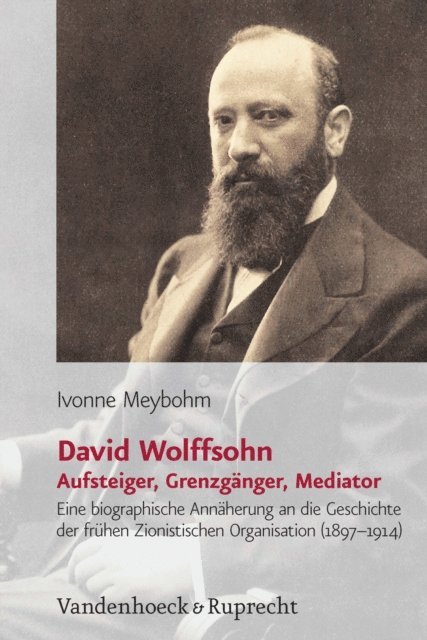
David Wolffsohn (1850s – 1914) was the closest assistant to Theodor Herzl and became his successor in the presidency of the World Zionist Organization in 1905. Using him as an example, this study shows how the World Zionist Organization, an internally quarelled, financially and politically uninfluential, loose affiliation in its modest beginnings finally succeeded in acting historically powerful.The study does not present a classical type of biography but an entangled history of a person and an institution, for which Meybohm chose the term »integrated biography«. By combining the methodological approaches of the new cultural history, social-, political and economic history, person as well as institution will be thoroughly analyzed. The multiperspectivity also covers Wolffsohns network, which includes his colleagues, supporters and opponents. It contextualizes the Zionist organization with other contemporaneous national movements as well as international emancipation movements, such as social democracy or the international women''s movement.Besides domestic and foreign politics, especially the Zionist commercial politics will be analyzed for it is as uninvestigated by recent scholarship as the life and work of Wolffsohn himself.The results of this integrated biography challenge earlier scholarship of Zionism which mostly presents a teleological reading of Zionist history based on the successful founding of the state of Israel in 1948. In contrast to this, using the example of Wolffsohn''s biography, it is possible to show, that the long range success of this extraordinary project could not be forseen in the beginning.
Del 2 - Zivilisationen und Geschichte / Civilizations and History / Civilisations et Histoire
Erziehung zum Zionismus
Der Juedische Wanderbund "Blau-Weiß" als Versuch einer praktischen Umsetzung des Programms der Juedischen Renaissance
Inbunden, Tyska, 2009
318 kr
Tillfälligt slut
Der Jüdische Wanderbund Blau-Weiß (1912-1926) war die erste und größte jüdische Jugendbewegung im Deutschen Reich. Methodisch-praktisch lehnte er sich an die deutsche Jugendbewegung an, inhaltlich-theoretisch an Martin Bubers Programm einer Jüdischen Renaissance. Inoffizielles ideologisch-pädagogisches Ziel war die ‘Erziehung zum Zionismus’, um langfristig Nachwuchs für die Zionistische Organisation zu gewinnen, der tatsächlich nach Palästina einwandern würde. Anhand der publizistischen Organe der Bewegung werden in dieser Studie das Erziehungsprogramm der Frühzeit der Bewegung (1912-1918) analysiert und Anspruch und Wirklichkeit des Versuches, eine zionistische Identität zu ‘erfinden’, miteinander verglichen. Anhand des Blau-Weiß lässt sich beispielhaft zeigen, wie sehr die deutschen Zionisten in der deutschen Kultur verwurzelt waren und wie schwer die Stiftung einer nationalen Identität im Einzelfall sein konnte.