
Ivy Krull – författare
Visar alla böcker från författaren Ivy Krull. Handla med fri frakt och snabb leverans.
3 produkter
3 produkter
Häftad, Engelska, 2018
581 kr
Skickas inom 5-8 vardagar
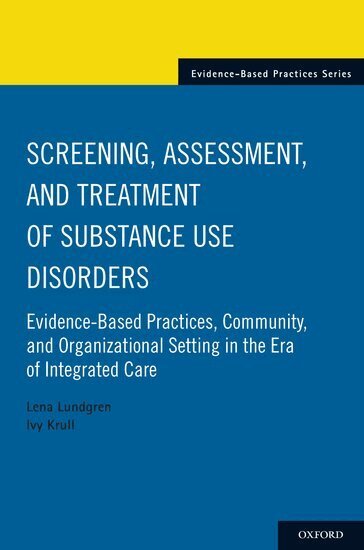
There is a clear and pressing need for health professionals, including social workers, to be trained in evidence-based practices (EBPs) in the area of substance use disorders (SUD). The Substance Abuse and Mental Health Services Administration (SAMHSA) and other national organizations and government agencies have all put out reports calling for this vital need, though there remains a significant shortage of properly trained clinicians. The aim of this book is to provide an integrated perspective on addiction treatment on the evidence-base of psychosocial and medication-assisted treatment for substance use disorder. The volume is unique in that it critically examines the evidence base of both psychosocial and pharmacological treatment practices targeting a profession of social work audience. It is also one of few that (1) incorporates evidence both from the United States and internationally, and (2) presents a methodology that permits the authors to systematically review a large number of empirically based studies in an organized and easy-to-read manner. Additionally, the text incorporates a health disparities perspective and describes implementation barriers at the organizational, community, and policy levels. It can be used in policy, human behavior, and clinical practice both nationally and internationally.
E-bok
PDF, Engelska, 2018533 kr
Läs direkt efter köp
There is a clear and pressing need for health professionals, including social workers, to be trained in evidence-based practices (EBPs) in the area of substance use disorders (SUD). The Substance Abuse and Mental Health Services Administration (SAMHSA) and other national organizations and government agencies have all put out reports calling for this vital need, though there remains a significant shortage of properly trained clinicians. The aim of this book is to provide an integrated perspective on addiction treatment on the evidence-base of psychosocial and medication-assisted treatment for substance use disorder. The volume is unique in that it critically examines the evidence base of both psychosocial and pharmacological treatment practices targeting a profession of social work audience. It is also one of few that (1) incorporates evidence both from the United States and internationally, and (2) presents a methodology that permits the authors to systematically review a large number of empirically based studies in an organized and easy-to-read manner. Additionally, the text incorporates a health disparities perspective and describes implementation barriers at the organizational, community, and policy levels. It can be used in policy, human behavior, and clinical practice both nationally and internationally.
E-bok
Engelska, 2018533 kr
Läs direkt efter köp
There is a clear and pressing need for health professionals, including social workers, to be trained in evidence-based practices (EBPs) in the area of substance use disorders (SUD). The Substance Abuse and Mental Health Services Administration (SAMHSA) and other national organizations and government agencies have all put out reports calling for this vital need, though there remains a significant shortage of properly trained clinicians. The aim of this book is to provide an integrated perspective on addiction treatment on the evidence-base of psychosocial and medication-assisted treatment for substance use disorder. The volume is unique in that it critically examines the evidence base of both psychosocial and pharmacological treatment practices targeting a profession of social work audience. It is also one of few that (1) incorporates evidence both from the United States and internationally, and (2) presents a methodology that permits the authors to systematically review a large number of empirically based studies in an organized and easy-to-read manner. Additionally, the text incorporates a health disparities perspective and describes implementation barriers at the organizational, community, and policy levels. It can be used in policy, human behavior, and clinical practice both nationally and internationally.