J Dianne Garner – författare
1 575 kr
Skickas inom 3-6 vardagar
2 417 kr
Skickas inom 10-15 vardagar
708 kr
Skickas inom 10-15 vardagar
602 kr
Skickas inom 5-8 vardagar
677 kr
Skickas inom 10-15 vardagar
557 kr
Skickas inom 5-8 vardagar
786 kr
Skickas inom 10-15 vardagar
395 kr
Skickas inom 10-15 vardagar
772 kr
Skickas inom 10-15 vardagar
2 417 kr
Skickas inom 10-15 vardagar
922 kr
Skickas inom 5-8 vardagar
613 kr
Skickas inom 10-15 vardagar
397 kr
Skickas inom 10-15 vardagar
Geriatric Case Practice in Nursing Homes
2 759 kr
Skickas inom 3-6 vardagar
Geriatric Case Practice in Nursing Homes
1 777 kr
Skickas inom 3-6 vardagar
454 kr
Läs direkt efter köp
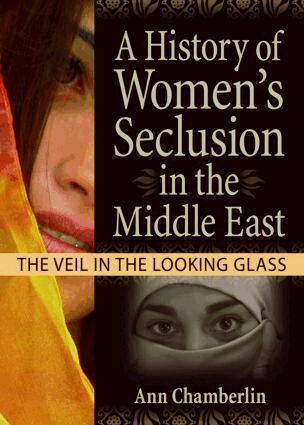
Learn how the seclusion of women can be used as a feminist defense against exploitationand as an empowering forceInternationally acclaimed author Ann Chamberlin’s book, A History of Women’s Seclusion in the Middle East: The Veil in the Looking Glass is a critical interdisciplinary examination of the practice of seclusion of women throughout the Middle East from its beginnings. This challenging exploration discusses the reasons that seclusion may not be as oppressive as is presently generally accepted, and, in fact, may be an empowering force for women in both the West and East. Readers are taken on a controversial, belief-bending journey deep into the surprising origins and diverse aspects of female seclusion to find solid evidence of its surprising use as a defense against monolithic cultural exploitation. The author uses her extensive knowledge of Middle Eastern culture, language, and even archeology to provide a convincing assertion challenging the Western view that seclusion was and is a result of women’s oppression. A History of Women’s Seclusion in the Middle East goes beyond standard feminist rhetoric to put forth shocking notions on the real reasons behind women’s seclusion and how it has been used to counteract cultural exploitation. The book reviews written evidence, domestic and sacred architecture, evolution, biology, the clan, the environment for seclusion, trade, capital and land, slavery, honor, and various other aspects in a powerful feminist argument that seclusion is actually a valuable empowering force of protection from the influence of today’s society. The text includes thirty black and white figures with useful descriptions to illustrate and enhance reader understanding of concepts.A History of Women’s Seclusion in the Middle East discusses at length:
prehistoric evidence of seclusion the sense of honor in the Middle East a balanced look at the Islamic religion the true nature of the harem the reasons for the oppression by the Taliban the positive aspects of ’veiling’ seclusion as a defense against capitalist exploitation and other challenging perspectives!A History of Women’s Seclusion in the Middle East is thought-provoking, insightful reading for all interested in women’s history, feminism, and the history and culture of the Middle East.
454 kr
Läs direkt efter köp
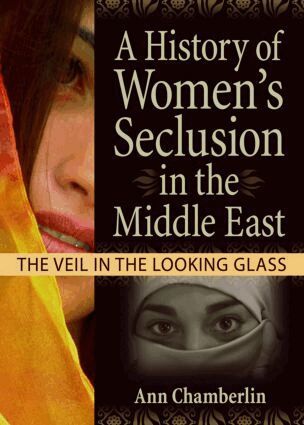
Learn how the seclusion of women can be used as a feminist defense against exploitationand as an empowering forceInternationally acclaimed author Ann Chamberlin’s book, A History of Women’s Seclusion in the Middle East: The Veil in the Looking Glass is a critical interdisciplinary examination of the practice of seclusion of women throughout the Middle East from its beginnings. This challenging exploration discusses the reasons that seclusion may not be as oppressive as is presently generally accepted, and, in fact, may be an empowering force for women in both the West and East. Readers are taken on a controversial, belief-bending journey deep into the surprising origins and diverse aspects of female seclusion to find solid evidence of its surprising use as a defense against monolithic cultural exploitation. The author uses her extensive knowledge of Middle Eastern culture, language, and even archeology to provide a convincing assertion challenging the Western view that seclusion was and is a result of women’s oppression. A History of Women’s Seclusion in the Middle East goes beyond standard feminist rhetoric to put forth shocking notions on the real reasons behind women’s seclusion and how it has been used to counteract cultural exploitation. The book reviews written evidence, domestic and sacred architecture, evolution, biology, the clan, the environment for seclusion, trade, capital and land, slavery, honor, and various other aspects in a powerful feminist argument that seclusion is actually a valuable empowering force of protection from the influence of today’s society. The text includes thirty black and white figures with useful descriptions to illustrate and enhance reader understanding of concepts.A History of Women’s Seclusion in the Middle East discusses at length:
prehistoric evidence of seclusion the sense of honor in the Middle East a balanced look at the Islamic religion the true nature of the harem the reasons for the oppression by the Taliban the positive aspects of ’veiling’ seclusion as a defense against capitalist exploitation and other challenging perspectives!A History of Women’s Seclusion in the Middle East is thought-provoking, insightful reading for all interested in women’s history, feminism, and the history and culture of the Middle East.
433 kr
Läs direkt efter köp
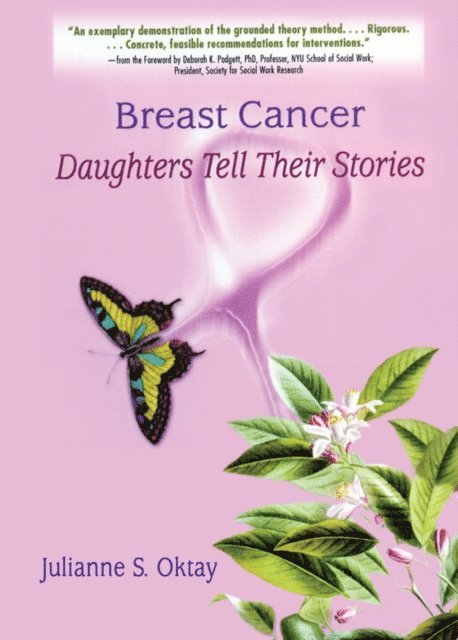
I will always and forever feel I have a ''hole'' in my life where my mother once existed.I think, when you have to think about the fact you might have to take care of your parents someday and juggle kids at the same timeIt''s a scary proposition.We had open communication during and before the breast cancer. But then after the breast cancer, I was often afraid to bring things up, in trying to protect Mom.This insightful book tells the stories of women whose mothers had breast cancer. It uses their own voices to express the common fears and expectations of daughters in the periods before and during their mothers'' illnesses, involving genetic risks, death and dying, and changes in their relationships. The case studies, tables and figures, and two appendices will benefit health professionals and counselors, while the poignant narratives will help mothers and daughters better understand their experiences with breast cancer.I was kind of surprised to be alive and free of cancer at age 42, when at this point my mother was crippled by metastases. When I get to be 43the age at which my mother died, or maybe when I get to 44it''s like, ''what do I do?'' I have this life that I didn''t expect to have.Breast Cancer: Daughters Tell Their Stories presents the results of a qualitative, grounded theory study of breast cancer survivors, providing in-depth information about an aspect of breast cancer that has been previously overlooked. The book examines the daughters'' experiences through four phasesthe period prior to mother''s illness, the period during mother''s illness and treatment, the period following mother''s death (if mother dies), and the long-term impact. From this study, recommendations are compiled for providing or improving services for tomorrow''s daughters.The radical mastectomy left her scarred and disfigured below her nightgown. It was bruised and nasty looking. That was kind of scary. I think that has terrified me since. Sometimes I''ll have pains in my left breast and that''s what I visualize. It''s terrifying.I''m not really obsessed about dying of cancer. I''m more along the line of, ''If this is going to happen to me, and there''s a chance it''s going to, I''m gonna survive. I''m not going to die from it.From an empathetic perspective, this book reveals how many daughters react to and deal with their mothers'' diagnoses, depending on their age and family situation at the time of their mothers'' illnesses. It shows how daughters can gain a more accurate idea of their level of risk by providing educational materials and developing new strategies for communication. It also helps breast cancer survivors see how their illnesses can shape their daughters'' future outlook, offering new inspiration for resolving and preventing family crises.
433 kr
Läs direkt efter köp
I will always and forever feel I have a ''hole'' in my life where my mother once existed.I think, when you have to think about the fact you might have to take care of your parents someday and juggle kids at the same timeIt''s a scary proposition.We had open communication during and before the breast cancer. But then after the breast cancer, I was often afraid to bring things up, in trying to protect Mom.This insightful book tells the stories of women whose mothers had breast cancer. It uses their own voices to express the common fears and expectations of daughters in the periods before and during their mothers'' illnesses, involving genetic risks, death and dying, and changes in their relationships. The case studies, tables and figures, and two appendices will benefit health professionals and counselors, while the poignant narratives will help mothers and daughters better understand their experiences with breast cancer.I was kind of surprised to be alive and free of cancer at age 42, when at this point my mother was crippled by metastases. When I get to be 43the age at which my mother died, or maybe when I get to 44it''s like, ''what do I do?'' I have this life that I didn''t expect to have.Breast Cancer: Daughters Tell Their Stories presents the results of a qualitative, grounded theory study of breast cancer survivors, providing in-depth information about an aspect of breast cancer that has been previously overlooked. The book examines the daughters'' experiences through four phasesthe period prior to mother''s illness, the period during mother''s illness and treatment, the period following mother''s death (if mother dies), and the long-term impact. From this study, recommendations are compiled for providing or improving services for tomorrow''s daughters.The radical mastectomy left her scarred and disfigured below her nightgown. It was bruised and nasty looking. That was kind of scary. I think that has terrified me since. Sometimes I''ll have pains in my left breast and that''s what I visualize. It''s terrifying.I''m not really obsessed about dying of cancer. I''m more along the line of, ''If this is going to happen to me, and there''s a chance it''s going to, I''m gonna survive. I''m not going to die from it.From an empathetic perspective, this book reveals how many daughters react to and deal with their mothers'' diagnoses, depending on their age and family situation at the time of their mothers'' illnesses. It shows how daughters can gain a more accurate idea of their level of risk by providing educational materials and developing new strategies for communication. It also helps breast cancer survivors see how their illnesses can shape their daughters'' future outlook, offering new inspiration for resolving and preventing family crises.
858 kr
Läs direkt efter köp
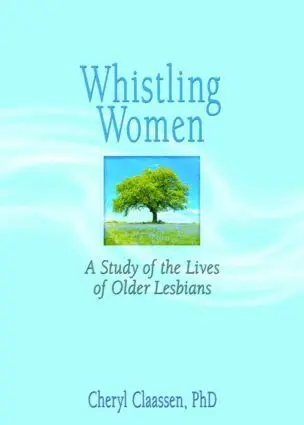
Gain first-hand knowledge of how today''s lesbians aged 60 and over survived the 20th century! I didn’t know we were lesbians. We lived together 13 years! Whistling Women is a unique, candid collection of the life experiences of 44 lesbians between 62 and 82 years of age. This book explores new ground with interviews about their memories, feelings, and thoughts on a diversity of perspectivesfrom growing up during the Depression and World War II, to retirement and old age at the height of the gay liberation movement. This unprecedented resource captures a first-person view of lesbian history and documents the struggles and achievements of the women who lived it. All my schooling was women-orientedso I was able to see what women and girls could give to each other. In Whistling Women, these older women share their views on:
childhood and young adulthoodfamily, social factors, religion, schooling marriagehusbands, children, divorce lesbian relationshipscoming out/closet relationships, role playing, butch and fem practices conventional politicsparty affiliation, activities, concerns, degree of feminism work and moneyfinancial arrangements, home ownership, investment properties life after 60retirement, health, activities, communities and much more!I dated. I went along. I did it because basically it was the thing to do. But I had crushes on girls. Whistling Women offers you unprecedented statistics on these women and comparisons with statistics gathered in other analyses on lesbian and heterosexual women. This research includes studies of:
socioeconomic class in childhood, mid-life, and at retirement level of education of participants number and duration of long-term relationshipsboth heterosexual marriages and lesbian lover relationships age of first lesbian relationship retirement statisticsyear retired, age at retirement economic resources after retirement (compared to general US population)If we had these things in the 1950s [gay bookstores and publications], how different life would be for a lot of people. But we had to pave the way. This book is significant for sociologists, gay and lesbian researchers, and gerontologists, as well as anyone interested in women’s history. It also presents recollections of lesbian/mixed barssome famousstarting in the 1930s, memories of the notorious Greenwich Village, the early development of lesbian social groups, and lesbian friendships with gay men. Whistling Girls identifies many of the organizations that cater specifically to older lesbians, such as OLOC (Old Lesbians Organizing for Change) and SOL (Slightly Older Lesbians).
858 kr
Läs direkt efter köp
Gain first-hand knowledge of how today''s lesbians aged 60 and over survived the 20th century! I didn’t know we were lesbians. We lived together 13 years! Whistling Women is a unique, candid collection of the life experiences of 44 lesbians between 62 and 82 years of age. This book explores new ground with interviews about their memories, feelings, and thoughts on a diversity of perspectivesfrom growing up during the Depression and World War II, to retirement and old age at the height of the gay liberation movement. This unprecedented resource captures a first-person view of lesbian history and documents the struggles and achievements of the women who lived it. All my schooling was women-orientedso I was able to see what women and girls could give to each other. In Whistling Women, these older women share their views on:
childhood and young adulthoodfamily, social factors, religion, schooling marriagehusbands, children, divorce lesbian relationshipscoming out/closet relationships, role playing, butch and fem practices conventional politicsparty affiliation, activities, concerns, degree of feminism work and moneyfinancial arrangements, home ownership, investment properties life after 60retirement, health, activities, communities and much more!I dated. I went along. I did it because basically it was the thing to do. But I had crushes on girls. Whistling Women offers you unprecedented statistics on these women and comparisons with statistics gathered in other analyses on lesbian and heterosexual women. This research includes studies of:
socioeconomic class in childhood, mid-life, and at retirement level of education of participants number and duration of long-term relationshipsboth heterosexual marriages and lesbian lover relationships age of first lesbian relationship retirement statisticsyear retired, age at retirement economic resources after retirement (compared to general US population)If we had these things in the 1950s [gay bookstores and publications], how different life would be for a lot of people. But we had to pave the way. This book is significant for sociologists, gay and lesbian researchers, and gerontologists, as well as anyone interested in women’s history. It also presents recollections of lesbian/mixed barssome famousstarting in the 1930s, memories of the notorious Greenwich Village, the early development of lesbian social groups, and lesbian friendships with gay men. Whistling Girls identifies many of the organizations that cater specifically to older lesbians, such as OLOC (Old Lesbians Organizing for Change) and SOL (Slightly Older Lesbians).
740 kr
Läs direkt efter köp
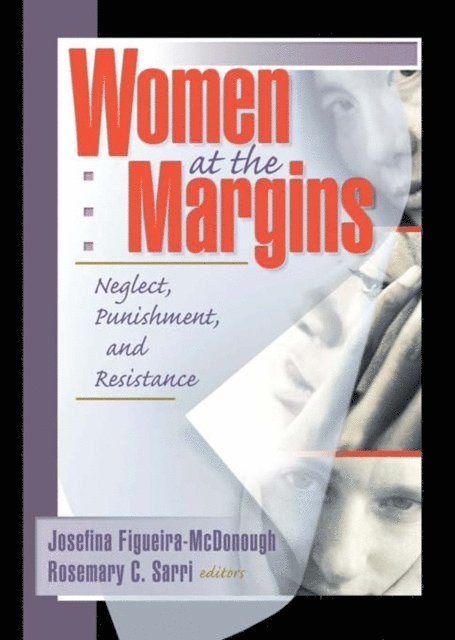
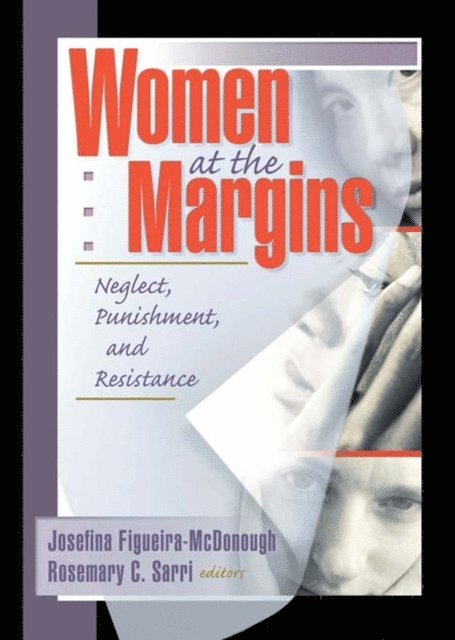
A compelling look at the crisis of disadvantaged women This powerful document takes a sobering look at the phenomenon of marginalized women pushed to the edges of society, holding on with the barest of hope and extraordinary bravery. Handicapped by the increasing societal inequality they face as an everyday fact of life, these women (and in many cases, their children) have been disconnected from the mainstream for reasons of age, race, gender, health, incarceration, domestic abuse, unwanted pregnancy, unemployment, and economic circumstance. They are poor in an affluent society, powerless in a powerful nation, and the suffering caused by their exclusion is poignant and troubling.Eloquently illustrated with poetry, art, and prose created by marginalized women, Women at the Margins: Neglect, Punishment, and Resistance makes a compelling argument for social change. The book offers a no-holds-barred look at how economic restructuring, welfare reform, neo-conservative ideology, and institutional exclusion have locked women into subservient, substandard roles, stripping them of their citizenship and rendering them expendable. Diverse authors track the life cycle of marginalized women, from teenage pregnancy to the lonliness of older women in poverty or prison.Women at the Margins: Neglect, Punishment, and Resistance addresses:
the effects of welfare reform the forgotten group: women in prison and jail low-income women and housing women marginalized by substance abuse, poverty, and incarceration teenage pregnancy children and their incarcerated mothers recidivism and reintegration women, law, and the justice system and much more!Women at the Margins: Neglect, Punishment, and Resistance acknowledges the long history of the inequality faced by women living in exclusion but focuses on the present with a hopeful but realistic eye toward the future. It is an indispensible resource for sociology, social work, legal and penal system professionals, and academics, and an essential read for everyone.740 kr
Läs direkt efter köp
A compelling look at the crisis of disadvantaged women This powerful document takes a sobering look at the phenomenon of marginalized women pushed to the edges of society, holding on with the barest of hope and extraordinary bravery. Handicapped by the increasing societal inequality they face as an everyday fact of life, these women (and in many cases, their children) have been disconnected from the mainstream for reasons of age, race, gender, health, incarceration, domestic abuse, unwanted pregnancy, unemployment, and economic circumstance. They are poor in an affluent society, powerless in a powerful nation, and the suffering caused by their exclusion is poignant and troubling.Eloquently illustrated with poetry, art, and prose created by marginalized women, Women at the Margins: Neglect, Punishment, and Resistance makes a compelling argument for social change. The book offers a no-holds-barred look at how economic restructuring, welfare reform, neo-conservative ideology, and institutional exclusion have locked women into subservient, substandard roles, stripping them of their citizenship and rendering them expendable. Diverse authors track the life cycle of marginalized women, from teenage pregnancy to the lonliness of older women in poverty or prison.Women at the Margins: Neglect, Punishment, and Resistance addresses:
the effects of welfare reform the forgotten group: women in prison and jail low-income women and housing women marginalized by substance abuse, poverty, and incarceration teenage pregnancy children and their incarcerated mothers recidivism and reintegration women, law, and the justice system and much more!Women at the Margins: Neglect, Punishment, and Resistance acknowledges the long history of the inequality faced by women living in exclusion but focuses on the present with a hopeful but realistic eye toward the future. It is an indispensible resource for sociology, social work, legal and penal system professionals, and academics, and an essential read for everyone.554 kr
Läs direkt efter köp
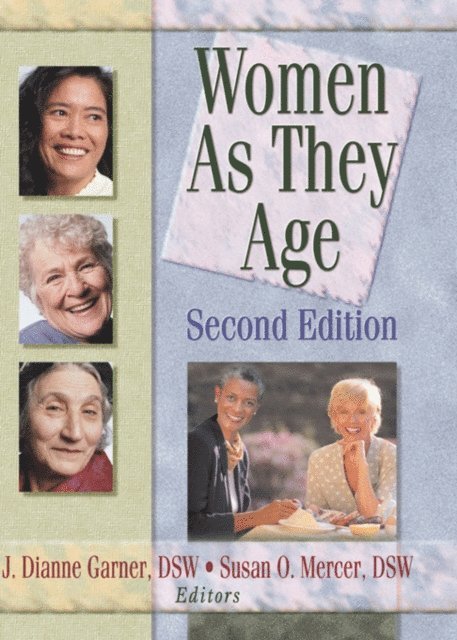
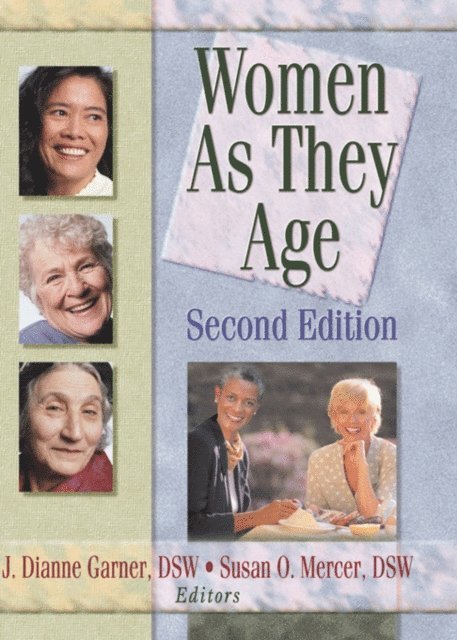
Explore the needs of older women and ways to provide for them!Written by women, about women, and for women, Women As They Age, Second Edition highlights the realities of being an aging woman in a youth-oriented, male-dominated society, in which socioeconomic and gender stratification are the norm.In the eleven years since the publication of the original Women as They Age, there has been a great deal of research on the subject. This second edition is inclusive and current, providing valuable information on the needs and accomplishments of our present and future older population. Here you''ll encounter women from the mainstream and minorities of all kinds, and come to a better understanding of their personal and family relationships, their sexuality, their concerns, and their feelings about death and dying. Public policies towards aging women are discussed, as are psychological and sociological perspectives. In its focus on older women, Women As They Age, Second Edition, highlights the challenges that these women present to professionals whose job it is, directly or indirectly, to provide assistance to the vast array of aging and aged women. This valuable multidisciplinary book--aimed at students, practitioners, administrators, and educators--addresses crucial issues in social work, nursing, psychology, sociology, gerontology, and economics. New subjects covered in this edition include:
grandmothers raising grandchildren long-term care for aging women the current status of public policy as it pertains to older women older women''s changing perspectives on sexuality new issues surrounding death and dyingWomen as They Age, Second Edition explores state-of-the-art and developmental perspectives across the professions of sociology, psychology, social work, and nursing. Also provided is a close examination of the unique issues facing older women--including public policy, employment discrimination, and social program adequacy and equity; the relationship of older women to family; sexuality and intimacy; and special concerns of minority women. This volume includes a practical resource guide that explores the services available to older women. While addressing the troublesome situations of older women worldwide, Women As They Age, Second Edition also celebrates their triumphs, accomplishments, and contributions.
554 kr
Läs direkt efter köp
Explore the needs of older women and ways to provide for them!Written by women, about women, and for women, Women As They Age, Second Edition highlights the realities of being an aging woman in a youth-oriented, male-dominated society, in which socioeconomic and gender stratification are the norm.In the eleven years since the publication of the original Women as They Age, there has been a great deal of research on the subject. This second edition is inclusive and current, providing valuable information on the needs and accomplishments of our present and future older population. Here you''ll encounter women from the mainstream and minorities of all kinds, and come to a better understanding of their personal and family relationships, their sexuality, their concerns, and their feelings about death and dying. Public policies towards aging women are discussed, as are psychological and sociological perspectives. In its focus on older women, Women As They Age, Second Edition, highlights the challenges that these women present to professionals whose job it is, directly or indirectly, to provide assistance to the vast array of aging and aged women. This valuable multidisciplinary book--aimed at students, practitioners, administrators, and educators--addresses crucial issues in social work, nursing, psychology, sociology, gerontology, and economics. New subjects covered in this edition include:
grandmothers raising grandchildren long-term care for aging women the current status of public policy as it pertains to older women older women''s changing perspectives on sexuality new issues surrounding death and dyingWomen as They Age, Second Edition explores state-of-the-art and developmental perspectives across the professions of sociology, psychology, social work, and nursing. Also provided is a close examination of the unique issues facing older women--including public policy, employment discrimination, and social program adequacy and equity; the relationship of older women to family; sexuality and intimacy; and special concerns of minority women. This volume includes a practical resource guide that explores the services available to older women. While addressing the troublesome situations of older women worldwide, Women As They Age, Second Edition also celebrates their triumphs, accomplishments, and contributions.
935 kr
Läs direkt efter köp
An updated, reader-friendly guide to feminist theory and therapy! Feminist Theories and Feminist Psychotherapies: Origins, Themes, and Diversity, Second Edition examines major feminist theoretical perspectives and links them to practical applications of feminist therapy. This book focuses on the evolution of feminist therapy and how histor
935 kr
Läs direkt efter köp
An updated, reader-friendly guide to feminist theory and therapy! Feminist Theories and Feminist Psychotherapies: Origins, Themes, and Diversity, Second Edition examines major feminist theoretical perspectives and links them to practical applications of feminist therapy. This book focuses on the evolution of feminist therapy and how histor
878 kr
Läs direkt efter köp
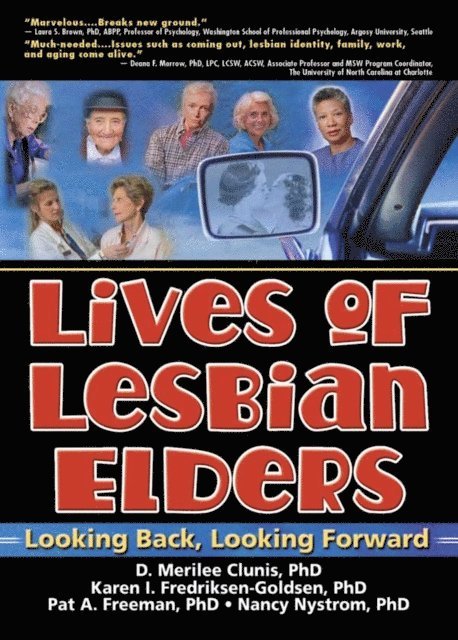
The untold history of lesbian life from those who have lived it! Lives of Lesbian Elders: Looking Back, Looking Forward illuminates the hopes, fears, issues, and concerns of gay women as they grow older. Based on interviews with 62 lesbians ranging in age from 55 to 95, this very special book provides a historical account of the shared experiences of the lesbian community that is so often invisible or ignored in contemporary society. The book gives voice to their thoughts and feelings on a wide range of issues, including coming out, identity and the meaning of life, the role of family and personal relationships, work and retirement, adversity, and individual sources of strength and resilience. Cast off and overlooked at best or victims of scorn and prejudice at worst, lesbians in the twentieth century lived dual lives, their full voices unhearduntil now. Lives of Lesbian Elders chronicles the life choices they made and their reasons for making them, set against the contexts of culture, politics, and the social mores of the eras in which they lived. Their stories of courage, resilience, resourcefulness, pride, and independence help restore lesbian history that has been forgotten, distorted, or disregarded and provide the information necessary to meet the future needs of aging lesbians. Lives of Lesbian Elders gives aging lesbians a chance to discuss their thoughts on a variety of topics, including:
Coming out You didn’t talk about it . . . Until two years ago, I never even referred to a lesbian or would I allow the word to pass my lips I used to sneak into libraries and read about homosexuality and back in that era, it was not classy . . . it was classified as a disorder of some type Identity The only difference between me and anybody else is that I just happen to be sleeping with a woman I think I grew up not really knowing who I was and, I think, probably fighting all my life trying to find out who I was Family I feel very connected with the lesbian community here . . . I guess I would call that family Many years ago, my sister said: ’I think when they’re ready, you need to explain to (the nieces) what a lesbian is, because I want them to hear the correct story . . . I want them to hear what it really is and not all these stupid rumors that go around’ Work I was going to become a youth minister at one point and it dawned on me in high school that there was no way the church was going to let me work with kids I didn’t really finish my career . . . I still have dreams about the military and about not finishing . . . It was my choice, but it wasn’t really my choice Aging and the Future I think financing, of course, is a real big problem for lesbian women I have a concern that if anything should happen to my partnerin growing olderof being isolated from the gay community . . . and much more! Lives of Lesbian Elders: Looking Back, Looking Forward also includes appendices that present demographic data on the women who were interviewed for the book, information on historical timelines, and suggested readings on lesbian history. The book is an invaluable addition to the growing collective history of lesbians in the United States.878 kr
Läs direkt efter köp
The untold history of lesbian life from those who have lived it! Lives of Lesbian Elders: Looking Back, Looking Forward illuminates the hopes, fears, issues, and concerns of gay women as they grow older. Based on interviews with 62 lesbians ranging in age from 55 to 95, this very special book provides a historical account of the shared experiences of the lesbian community that is so often invisible or ignored in contemporary society. The book gives voice to their thoughts and feelings on a wide range of issues, including coming out, identity and the meaning of life, the role of family and personal relationships, work and retirement, adversity, and individual sources of strength and resilience. Cast off and overlooked at best or victims of scorn and prejudice at worst, lesbians in the twentieth century lived dual lives, their full voices unhearduntil now. Lives of Lesbian Elders chronicles the life choices they made and their reasons for making them, set against the contexts of culture, politics, and the social mores of the eras in which they lived. Their stories of courage, resilience, resourcefulness, pride, and independence help restore lesbian history that has been forgotten, distorted, or disregarded and provide the information necessary to meet the future needs of aging lesbians. Lives of Lesbian Elders gives aging lesbians a chance to discuss their thoughts on a variety of topics, including:
Coming out You didn’t talk about it . . . Until two years ago, I never even referred to a lesbian or would I allow the word to pass my lips I used to sneak into libraries and read about homosexuality and back in that era, it was not classy . . . it was classified as a disorder of some type Identity The only difference between me and anybody else is that I just happen to be sleeping with a woman I think I grew up not really knowing who I was and, I think, probably fighting all my life trying to find out who I was Family I feel very connected with the lesbian community here . . . I guess I would call that family Many years ago, my sister said: ’I think when they’re ready, you need to explain to (the nieces) what a lesbian is, because I want them to hear the correct story . . . I want them to hear what it really is and not all these stupid rumors that go around’ Work I was going to become a youth minister at one point and it dawned on me in high school that there was no way the church was going to let me work with kids I didn’t really finish my career . . . I still have dreams about the military and about not finishing . . . It was my choice, but it wasn’t really my choice Aging and the Future I think financing, of course, is a real big problem for lesbian women I have a concern that if anything should happen to my partnerin growing olderof being isolated from the gay community . . . and much more! Lives of Lesbian Elders: Looking Back, Looking Forward also includes appendices that present demographic data on the women who were interviewed for the book, information on historical timelines, and suggested readings on lesbian history. The book is an invaluable addition to the growing collective history of lesbians in the United States.464 kr
Läs direkt efter köp
This collection delves deeply into the power of solitude in a richly detailed exploration of the lives of women writers! The essays in this fascinating volume combine literary theory, autobiography, performance, and criticism, while opening minds and expanding concepts of women''s roles both in the home and within academia along the way. Herspace: Women, Writing, and Solitude begins with a discussion of the importance of solitude to the works of a variety of writers, including Margaret Atwood, May Sarton, Virginia Woolf, Marguerite Duras, and Zora Neale Hurston, and then moves on to an examination of the actual solitary spaces of women writers. The book concludes with the stories of modern women asserting their right to a space of their own. These essays, full of pain and new growth, lessons learned and battles fought, resound with the honesty and courage the authors have found in the process of truly making their own homes. Herspace examines:
the stereotyped spinster solitude as a process and a journey women''s prison literature cars, empty nests, kitchen counters, and other found spaces for writing the meaning of a home of one''s own creating beauty in solitary settingsContributors to Herspace have made a conscious effort to integrate the personal with the academic, and the result is a volume of surprising intimacy, a window into the world of women writers past and present actively engaging solitude. From finding and defining the muse to the identity issues of home ownership, Herspace, which includes Jan Wellington''s essay What to Make of Missing Children (A Life Slipping into Fiction), (winner of the 2003 NCTE Donald Murray Prize for the best creative essay about teaching and/or writing published during the preceding year) provides you with the perspectives of women who are living these issues. As the editors write: The solitary space itself enables the writing process, protects it. And women, more than men, need this enabling protection. Women need to claim their own space, to bargain and plan and keep out of sight that solitary space in which to commune with their thoughts and feelings, to experience their creative process intimately. Herspace explores these women''s experiences, revealing the unique creativity that comes from solitude.