J. Donald Hughes - Böcker
Visar alla böcker från författaren J. Donald Hughes. Handla med fri frakt och snabb leverans.
8 produkter
8 produkter
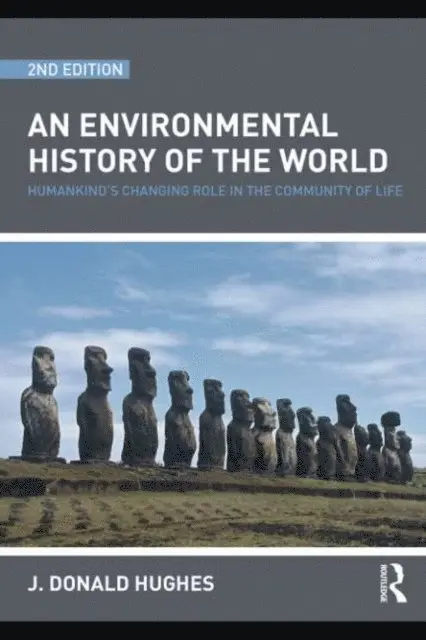
Environmental History of the World
Humankind's Changing Role in the Community of Life
Inbunden, Engelska, 2009
2 357 kr
Skickas inom 10-15 vardagar
This second edition of An Environmental History of the World continues to present a concise history, from ancient to modern times, of the interactions between human societies and the natural environment, including the other forms of life that inhabit our planet. Throughout their evolutionary history, humans have affected the natural environment, sometimes with a promise of sustainable balance, but also in a destructive manner. This book investigates the ways in which environmental changes, often the result of human actions, have caused historical trends in human societies. This process has happened in every historical period and in every part of the inhabited earth. The book is organized into ten chapters. The main chapters follow a chronological path through the history of mankind, in relationship to ecosystems around the world. The first explains what environmental history is, and argues for its importance in understanding the present state of the world's ecological problems. Chapters two through eight form the core of the historical analysis, each concentrating on a major period of human history (pre-civilized, early civilizations, classical, medieval, early modern, early and later twentieth century, and contemporary) that has been characterized by large-scale changes in the relationship between human societies and the biosphere, and each gives several case studies that illustrate significant patterns occurring at that time. The chapters covering contemporary times discuss the physical impacts of the huge growth in population and technology, and the human responses to these problems. Our moral obligations to nature and how we can achieve a sustainable balance between technology and the environment are also considered. This revised second edition takes account of new research and the course of history containing new sections on global warming, the response of New Orleans to the hurricanes Katrina and Rita, and the experience of the Dutch people in protecting their low-lying lands against the encroachments of rivers, lakes, and the North Sea. New material is also offered on the Pacific Islands, including the famous case of Easter Island.This is an original work that reaches further than other environmental histories. Rather than looking at humans and the environment as separate entities, this book places humans within the community of life. The relationship between environmental thought and actions, and their evolution, is discussed throughout. Little environmental or historical knowledge is assumed from the reader in this introduction to environmental history. We cannot reach a useful understanding of modern environmental problems without the aid of perspective provided by environmental history, with its illustrations of the ways in which past decisions helped or hindered the interaction between nature and culture. This book will be influential and timely to all interested in or researching the world in which we live.
Environmental History of the World
Humankind's Changing Role in the Community of Life
Häftad, Engelska, 2009
593 kr
Skickas inom 10-15 vardagar
This second edition of An Environmental History of the World continues to present a concise history, from ancient to modern times, of the interactions between human societies and the natural environment, including the other forms of life that inhabit our planet. Throughout their evolutionary history, humans have affected the natural environment, sometimes with a promise of sustainable balance, but also in a destructive manner. This book investigates the ways in which environmental changes, often the result of human actions, have caused historical trends in human societies. This process has happened in every historical period and in every part of the inhabited earth. The book is organized into ten chapters. The main chapters follow a chronological path through the history of mankind, in relationship to ecosystems around the world. The first explains what environmental history is, and argues for its importance in understanding the present state of the world's ecological problems. Chapters two through eight form the core of the historical analysis, each concentrating on a major period of human history (pre-civilized, early civilizations, classical, medieval, early modern, early and later twentieth century, and contemporary) that has been characterized by large-scale changes in the relationship between human societies and the biosphere, and each gives several case studies that illustrate significant patterns occurring at that time. The chapters covering contemporary times discuss the physical impacts of the huge growth in population and technology, and the human responses to these problems. Our moral obligations to nature and how we can achieve a sustainable balance between technology and the environment are also considered. This revised second edition takes account of new research and the course of history containing new sections on global warming, the response of New Orleans to the hurricanes Katrina and Rita, and the experience of the Dutch people in protecting their low-lying lands against the encroachments of rivers, lakes, and the North Sea. New material is also offered on the Pacific Islands, including the famous case of Easter Island.This is an original work that reaches further than other environmental histories. Rather than looking at humans and the environment as separate entities, this book places humans within the community of life. The relationship between environmental thought and actions, and their evolution, is discussed throughout. Little environmental or historical knowledge is assumed from the reader in this introduction to environmental history. We cannot reach a useful understanding of modern environmental problems without the aid of perspective provided by environmental history, with its illustrations of the ways in which past decisions helped or hindered the interaction between nature and culture. This book will be influential and timely to all interested in or researching the world in which we live.
684 kr
Skickas inom 7-10 vardagar
What is environmental history? It is a kind of history that seeks understanding of human beings as they have lived, worked, and thought in relationship to the rest of nature through the changes brought by time. In this new edition of his seminal student textbook, J. Donald Hughes provides a masterful overview of the thinkers, topics, and perspectives that have come to constitute the exciting discipline that is environmental history. He does so on a global scale, drawing together disparate trends from a rich variety of countries into a unified whole, illuminating trends and key themes in the process. Those already familiar with the discipline will find themselves invited to think about the subject in a new way. This new edition has been updated to reflect recent developments, trends, and new work in environmental history, as well as a brand new note on its possible future. Students and scholars new to environmental history will find the book both an indispensable guide and a rich source of inspiration for future work.
245 kr
Skickas
What is environmental history? It is a kind of history that seeks understanding of human beings as they have lived, worked, and thought in relationship to the rest of nature through the changes brought by time. In this new edition of his seminal student textbook, J. Donald Hughes provides a masterful overview of the thinkers, topics, and perspectives that have come to constitute the exciting discipline that is environmental history. He does so on a global scale, drawing together disparate trends from a rich variety of countries into a unified whole, illuminating trends and key themes in the process. Those already familiar with the discipline will find themselves invited to think about the subject in a new way. This new edition has been updated to reflect recent developments, trends, and new work in environmental history, as well as a brand new note on its possible future. Students and scholars new to environmental history will find the book both an indispensable guide and a rich source of inspiration for future work.
2 357 kr
Skickas inom 10-15 vardagar
Although the organizing principle of virtually every world history text is "development", the editor of this volume maintains that this traditional approach fails to address the issue of sustainability. By adopting the ecological process as their major theme, the authors show how the process of human interaction with the natural environment unfolded in the past, and offer perspective on the ecological crises in our world at the beginning of the 21st century. Topics range from broad regional studies that examine important aspects of the global environment that affect nations, to a study of the widespread influence of one important individual on his nation and beyond. The authors take different approaches, but all share the conviction that world history must take ecological process seriously, and they all recognize the ways in which the living and non-living systems of the earth have influenced the course of human affairs.
593 kr
Skickas inom 10-15 vardagar
Although the organizing principle of virtually every world history text is "development", the editor of this volume maintains that this traditional approach fails to address the issue of sustainability. By adopting the ecological process as their major theme, the authors show how the process of human interaction with the natural environment unfolded in the past, and offer perspective on the ecological crises in our world at the beginning of the 21st century. Topics range from broad regional studies that examine important aspects of the global environment that affect nations, to a study of the widespread influence of one important individual on his nation and beyond. The authors take different approaches, but all share the conviction that world history must take ecological process seriously, and they all recognize the ways in which the living and non-living systems of the earth have influenced the course of human affairs.
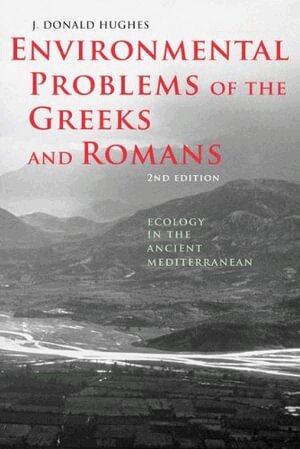
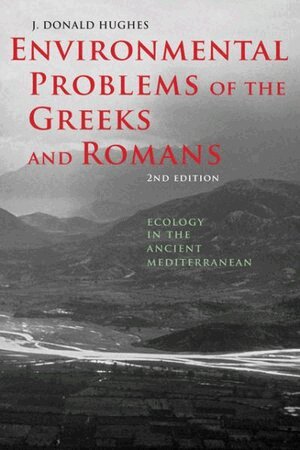
Environmental Problems of the Greeks and Romans
Ecology in the Ancient Mediterranean
Inbunden, Engelska, 2014
692 kr
Tillfälligt slut
In this dramatically revised and expanded second edition of the work entitled Pan's Travail, J. Donald Hughes examines the environmental history of the classical period and argues that the decline of ancient civilizations resulted in part from their exploitation of the natural world. Focusing on Greece and Rome, as well as areas subject to their influences, Hughes offers a detailed look at the impact of humans and their technologies on the ecology of the Mediterranean basin. Evidence of deforestation in ancient Greece, the remains of Roman aqueducts and mines, and paintings on centuries-old pottery that depict agricultural activities document ancient actions that resulted in detrimental consequences to the environment. Hughes compares the ancient world's environmental problems to other persistent social problems and discusses attitudes toward nature expressed in Greek and Latin literature. In addition to extensive revisions based on the latest research, this new edition includes photographs from Hughes' worldwide excursions, a new chapter on warfare and the environment, and an updated bibliography.
Environmental Problems of the Greeks and Romans
Ecology in the Ancient Mediterranean
Häftad, Engelska, 2014
374 kr
Skickas inom 7-10 vardagar
In this dramatically revised and expanded second edition of the work entitled Pan's Travail, J. Donald Hughes examines the environmental history of the classical period and argues that the decline of ancient civilizations resulted in part from their exploitation of the natural world. Focusing on Greece and Rome, as well as areas subject to their influences, Hughes offers a detailed look at the impact of humans and their technologies on the ecology of the Mediterranean basin. Evidence of deforestation in ancient Greece, the remains of Roman aqueducts and mines, and paintings on centuries-old pottery that depict agricultural activities document ancient actions that resulted in detrimental consequences to the environment. Hughes compares the ancient world's environmental problems to other persistent social problems and discusses attitudes toward nature expressed in Greek and Latin literature. In addition to extensive revisions based on the latest research, this new edition includes photographs from Hughes' worldwide excursions, a new chapter on warfare and the environment, and an updated bibliography.