J. Michael Greig - Böcker
Visar alla böcker från författaren J. Michael Greig. Handla med fri frakt och snabb leverans.
6 produkter
6 produkter
664 kr
Skickas inom 7-10 vardagar
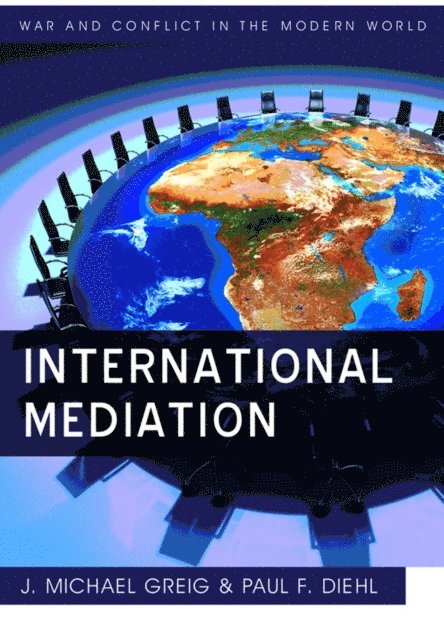
Conflicts in the international system, both among and within states, bring death, destruction, and human misery. Understanding how third parties use mediation to encourage settlements and establish a durable peace among belligerents is vital for managing these conflicts. Among many features, this book empirically examines the history of post-World War II mediation efforts to: Chart the historical changes in the types of conflicts that mediation addresses and the links between different mediation efforts across time.Explore the roles played by providers of mediation in the international system - namely, individuals, states, and organizations - in managing violent conflicts.Gauge the influence of self-interest and altruism as motivating forces that determine which conflicts are mediated and which are ignored.Evaluate what we know about the willingness of parties in conflict to accept mediation, when and why it is most effective, and discuss the future challenges facing mediators in the contemporary world. Drawing on a wide range of examples from the Oslo Accords and Good Friday Agreement to efforts to manage the civil wars in Burundi, Tajikistan, and Bosnia, this book is an indispensable guide to international mediation for students, practitioners, and general readers seeking to understand better how third parties can use mediation to deal with the globe’s trouble spots.
244 kr
Skickas inom 7-10 vardagar
Conflicts in the international system, both among and within states, bring death, destruction, and human misery. Understanding how third parties use mediation to encourage settlements and establish a durable peace among belligerents is vital for managing these conflicts. Among many features, this book empirically examines the history of post-World War II mediation efforts to: Chart the historical changes in the types of conflicts that mediation addresses and the links between different mediation efforts across time.Explore the roles played by providers of mediation in the international system - namely, individuals, states, and organizations - in managing violent conflicts.Gauge the influence of self-interest and altruism as motivating forces that determine which conflicts are mediated and which are ignored.Evaluate what we know about the willingness of parties in conflict to accept mediation, when and why it is most effective, and discuss the future challenges facing mediators in the contemporary world. Drawing on a wide range of examples from the Oslo Accords and Good Friday Agreement to efforts to manage the civil wars in Burundi, Tajikistan, and Bosnia, this book is an indispensable guide to international mediation for students, practitioners, and general readers seeking to understand better how third parties can use mediation to deal with the globe’s trouble spots.
1 953 kr
Skickas inom 10-15 vardagar
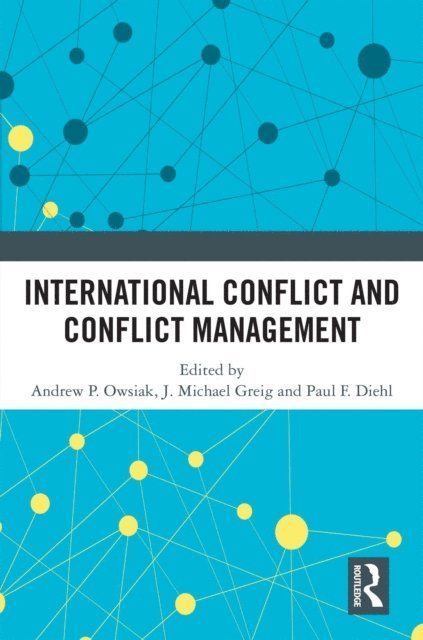
This book asks scholars to reexamine international conflict and its management—in order to move the field toward directly theorizing about and examining the interdependence between conflict events and conflict management attempts.Despite decades of work, research on international conflict and its management remains siloed in three fundamental ways. First, scholars do not thoroughly address international conflict dynamics within studies of conflict management, even though the former give rise to the latter. Second, existing work generally investigates one conflict management strategy (e.g., mediation) at the expense of others (e.g., adjudication). These strategies, however, are not independent of one another; they exist on a single menu from which potential third parties choose. Third parties therefore implicitly—if not explicitly—consider and select among the various strategies when deciding how to manage a conflict, thereby inviting and incorporating comparisons. Finally, researchers tend to treat conflict management efforts—even within the same conflict—as independent events, even though some efforts (e.g., adjudication or arbitration) follow and explicitly relate to other, earlier efforts (e.g., an earlier negotiation or mediation). In short, elements of sequencing and interaction influence conflict management, even as scholars rarely consider such elements.This book will be of great value to scholars and researchers of Political Science, International Relations and Conflict Management and Resolution. The chapters in this book were originally published as a special issue of International Interactions.
576 kr
Skickas inom 10-15 vardagar
This book asks scholars to reexamine international conflict and its management—in order to move the field toward directly theorizing about and examining the interdependence between conflict events and conflict management attempts.Despite decades of work, research on international conflict and its management remains siloed in three fundamental ways. First, scholars do not thoroughly address international conflict dynamics within studies of conflict management, even though the former give rise to the latter. Second, existing work generally investigates one conflict management strategy (e.g., mediation) at the expense of others (e.g., adjudication). These strategies, however, are not independent of one another; they exist on a single menu from which potential third parties choose. Third parties therefore implicitly—if not explicitly—consider and select among the various strategies when deciding how to manage a conflict, thereby inviting and incorporating comparisons. Finally, researchers tend to treat conflict management efforts—even within the same conflict—as independent events, even though some efforts (e.g., adjudication or arbitration) follow and explicitly relate to other, earlier efforts (e.g., an earlier negotiation or mediation). In short, elements of sequencing and interaction influence conflict management, even as scholars rarely consider such elements.This book will be of great value to scholars and researchers of Political Science, International Relations and Conflict Management and Resolution. The chapters in this book were originally published as a special issue of International Interactions.
688 kr
Skickas inom 7-10 vardagar
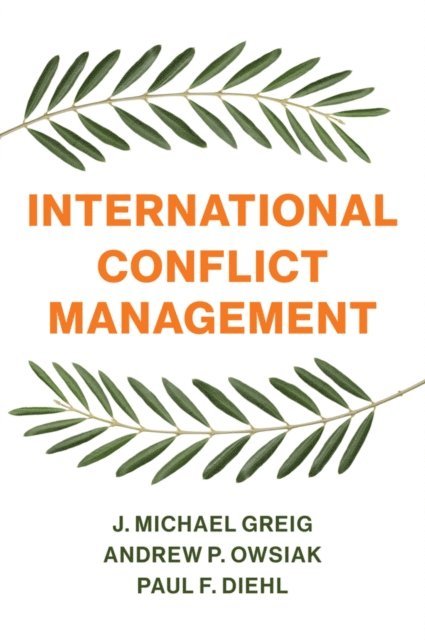
International conflict has long plagued the world, and it continues to do so. With many interstate and civil disputes experiencing no third-party attempts at conflict management, how can the international community mitigate the effects of and ultimately end such violence? Why, in so many cases, are early, “golden opportunities” for conflict management missed? In this book, J. Michael Greig, Andrew P. Owsiak, and Paul F. Diehl introduce the varied approaches and factors that promote the de-escalation and the peaceful management of conflict across the globe—from negotiation, mediation, arbitration, and adjudication to peace operations, sanctions, and military or humanitarian intervention. The history, characteristics and agents of each approach are examined in depth, using a wide range of case studies to illustrate successes and failures on the ground. Finally, the book investigates how the various tools interact—both logically and sequentially—to produce beneficial or deleterious effects.
257 kr
Skickas inom 7-10 vardagar
International conflict has long plagued the world, and it continues to do so. With many interstate and civil disputes experiencing no third-party attempts at conflict management, how can the international community mitigate the effects of and ultimately end such violence? Why, in so many cases, are early, “golden opportunities” for conflict management missed? In this book, J. Michael Greig, Andrew P. Owsiak, and Paul F. Diehl introduce the varied approaches and factors that promote the de-escalation and the peaceful management of conflict across the globe—from negotiation, mediation, arbitration, and adjudication to peace operations, sanctions, and military or humanitarian intervention. The history, characteristics and agents of each approach are examined in depth, using a wide range of case studies to illustrate successes and failures on the ground. Finally, the book investigates how the various tools interact—both logically and sequentially—to produce beneficial or deleterious effects.