J. Peter Euben - Böcker
Visar alla böcker från författaren J. Peter Euben. Handla med fri frakt och snabb leverans.
6 produkter
6 produkter
505 kr
Skickas inom 7-10 vardagar
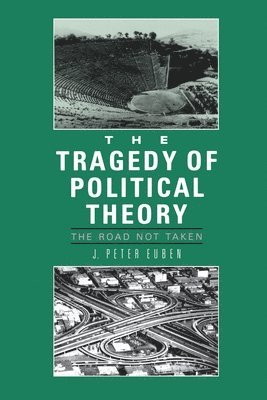
In this book J. Peter Euben argues that Greek tragedy was the context for classical political theory and that such theory read in terms of tragedy provides a ground for contemporary theorizing alert to the concerns of post-modernism, such as normalization, the dominance of humanism, and the status of theory. Euben shows how ancient Greek theater offered a place and occasion for reflection on the democratic culture it helped constitute, in part by confronting the audience with the otherwise unacknowledged principles of social exclusion that sustained its community. Euben makes his argument through a series of comparisons between three dramas (Aeschylus' Oresteia, Sophocles' Oedipus Tyrannos, and Euripides' Bacchae) and three works of classical political theory (Thucydides' History and Plato's Apology of Socrates and Republic) on the issues of justice, identity, and corruption.He brings his discussion to a contemporary American setting in a concluding chapter on Thomas Pynchon's The Crying of Lot 49 in which the road from Argos to Athens, built to differentiate a human domain from the undefined outside, has become a Los Angeles freeway desecrating the land and its people in a predatory urban sprawl.
439 kr
Skickas inom 7-10 vardagar
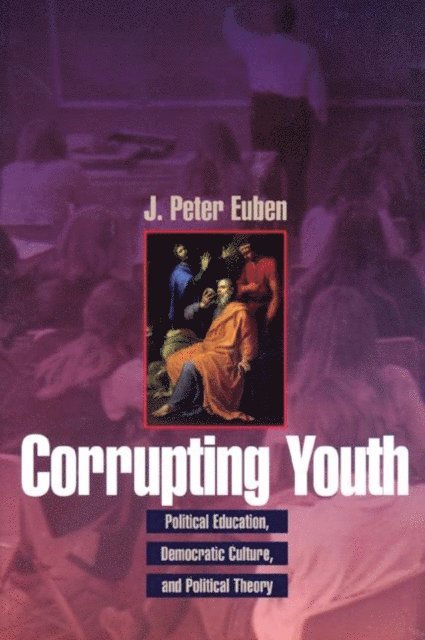
In Corrupting Youth, Peter Euben explores the affinities between Socratic philosophy and Athenian democratic culture as a way to think about issues of politics and education, both ancient and modern. The book moves skillfully between antiquity and the present, from ancient to contemporary political theory, and from Athenian to American democracy. It draws together important recent work by political theorists with the views of classical scholars in ways that shine new light on significant theoretical debates such as those over discourse ethics, rational choice, and political realism, and on political issues such as school vouchers and education reform. Euben not only argues for the generative capacity of classical texts and Athenian political thought, he demonstrates it by thinking with them to provide a framework for reflecting more deeply about socially divisive issues such as the war over the canon and the "politicization" of the university. Drawing on Aristophanes' Clouds, Sophocles' Antigone and Oedipus Tyrannos, and Plato's Apology of Socrates, Gorgias, and Protagoras, Euben develops a view of democratic political education.Arguing that Athenian democratic practices constituted a tradition of accountability and self-critique that Socrates expanded into a way of doing philosophy, Euben suggests a necessary reciprocity between political philosophy and radical democracy. By asking whether we can or should take "Socrates" out of the academy and put him back in front of a wider audience, Euben argues for anchoring contemporary higher education in appreciative yet skeptical encounter with the dramatic figure in Plato's dialogues.
433 kr
Skickas inom 7-10 vardagar
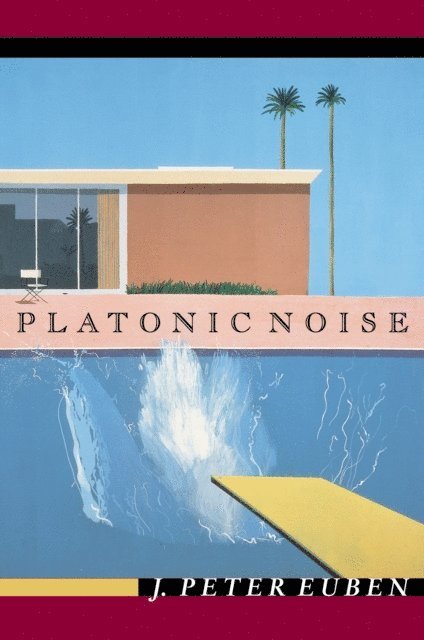
Platonic Noise brings classical and contemporary writings into conversation to enrich our experience of modern life and politics. Drawing on writers as diverse as Plato, Homer, Nietzsche, Borges, Don DeLillo, and Philip Roth, Peter Euben shows us the relevance of both popular literature and ancient Greek thought to current questions of loss, mourning, and democracy--all while arguing for the redeeming qualities of political and intellectual work and making an original case against presentism. Juxtaposing ancient and contemporary texts, politics, and culture, Euben reflects on a remarkable range of recent issues and controversies. He discusses Stoic cosmopolitanism and globalization, takes a critical look at Nietzsche's own efforts to make the Greeks speak to the issues of his day, examines a Greek tragedy through Hannah Arendt's eyes, compares the role of comedy in ancient Athens and contemporary America, analyzes political theory as a reaction to an acute sense of loss, and considers questions of agency and morality. Platonic Noise makes a case for reading political theory and politics through literature.Working as much through example as through explicit argument, Euben casts the literary memory of Athenian democracy as a crucial cultural resource and a presence in contemporary political and theoretical debates. In so doing, he reasserts the moral value of what we used to call participatory democracy and the practical value of seeing ourselves with the help of insights from long-gone Greeks.
674 kr
Skickas inom 10-15 vardagar
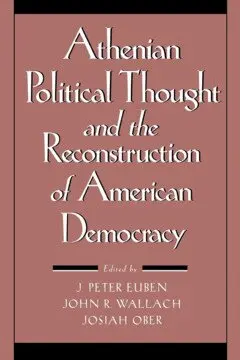
In the contemporary United States the image and experience of Athenian democracy has been appropriated to justify a profoundly conservative political and educational agenda. Such is the conviction expressed in this provocative book, which is certain to arouse widespread comment and discussion.What does it mean to be a citizen in a democracy? Indeed, how do we educate for democracy? These questions are addressed here by thirteen historians, classicists, and political theorists, who critically examine ancient Greek history and institutions, texts, and ideas in light of today's political practices and values. They do not idealize ancient Greek democracy. Rather, they use it, with all its faults, as a basis for measuring the strengths and shortcomings of American democracy. In the hands of the authors, ancient Greek sources become partners in an educational dialogue about democracy's past, one that goads us to think about the limitations of democracy's present and to imagine enriched possibilities for its future.The authors are diverse in their opinions and in their political and moral commitments. But they share the view that insulating American democracy from radical criticism encourages a dangerous complacency that Athenian political thought can disrupt.
474 kr
Skickas inom 10-15 vardagar
In the contemporary United States the image and experience of Athenian democracy has been appropriated to justify a profoundly conservative political and educational agenda. Such is the conviction expressed in this provocative book, which is certain to arouse widespread comment and discussion.What does it mean to be a citizen in a democracy? Indeed, how do we educate for democracy? These questions are addressed here by thirteen historians, classicists, and political theorists, who critically examine ancient Greek history and institutions, texts, and ideas in light of today's political practices and values. They do not idealize ancient Greek democracy. Rather, they use it, with all its faults, as a basis for measuring the strengths and shortcomings of American democracy. In the hands of the authors, ancient Greek sources become partners in an educational dialogue about democracy's past, one that goads us to think about the limitations of democracy's present and to imagine enriched possibilities for its future.The authors are diverse in their opinions and in their political and moral commitments. But they share the view that insulating American democracy from radical criticism encourages a dangerous complacency that Athenian political thought can disrupt.
403 kr
Skickas inom 7-10 vardagar
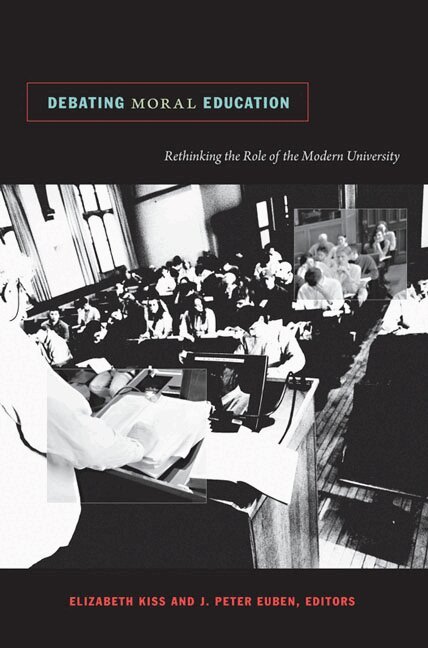
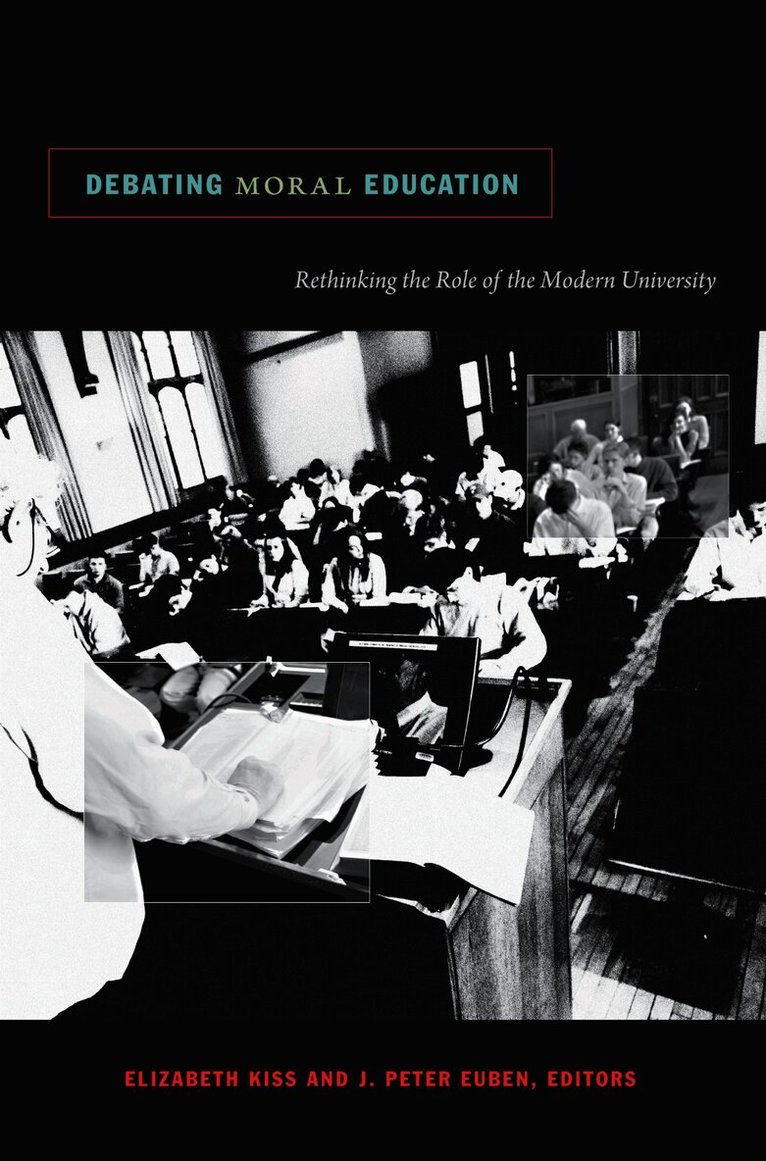
After decades of marginalization in the secularized twentieth-century academy, moral education has enjoyed a recent resurgence in American higher education, with the establishment of more than 100 ethics centers and programs on campuses across the country. Yet the idea that the university has a civic responsibility to teach its undergraduate students ethics and morality has been met with skepticism, suspicion, and even outright rejection from both inside and outside the academy. In this collection, renowned scholars of philosophy, politics, and religion debate the role of ethics in the university, investigating whether universities should proactively cultivate morality and ethics, what teaching ethics entails, and what moral education should accomplish. The essays quickly open up to broader questions regarding the very purpose of a university education in modern society. Editors Elizabeth Kiss and J. Peter Euben survey the history of ethics in higher education, then engage with provocative recent writings by Stanley Fish in which he argues that universities should not be involved in moral education. Stanley Hauerwas responds, offering a theological perspective on the university’s purpose. Contributors look at the place of politics in moral education; suggest that increasingly diverse, multicultural student bodies are resources for the teaching of ethics; and show how the debate over civic education in public grade-schools provides valuable lessons for higher education. Others reflect on the virtues and character traits that a moral education should foster in students-such as honesty, tolerance, and integrity-and the ways that ethical training formally and informally happens on campuses today, from the classroom to the basketball court. Debating Moral Education is a critical contribution to the ongoing discussion of the role and evolution of ethics education in the modern liberal arts university.Contributors. Lawrence Blum, Romand Coles, J. Peter Euben, Stanley Fish, Michael Allen Gillespie, Ruth W. Grant, Stanley Hauerwas, David A. Hoekema, Elizabeth Kiss, Patchen Markell, Susan Jane McWilliams, Wilson Carey McWilliams, J. Donald Moon, James Bernard Murphy, Noah Pickus, Julie A. Reuben, George Shulman, Elizabeth V. Spelman