J rgen Dinges – författare
Visar alla böcker från författaren J rgen Dinges. Handla med fri frakt och snabb leverans.
6 produkter
6 produkter
E-bok
Engelska, 20122 138 kr
Läs direkt efter köp
The chemistry of heterocycles is an important branch of organic chemistry. This is due to the fact that a large number of natural products, e. g. hormones, antibiotics, vitamins, etc. are composed of heterocyclic structures. Often, these compounds show beneficial properties and are therefore applied as pharmaceuticals to treat diseases or as insecticides, herbicides or fungicides in crop protection. This volume presents important agrochemicals. Each of the 21 chapters covers in a concise manner one class of heterocycles, clearly structured as follows: * Structural formulas of most important examples (market products) *Short background of history or discovery * Typical syntheses of important examples * Mode of action * Characteristic biological activity * Structure-activity relationship * Additional chemistry information (e.g. further transformations, alternative syntheses, metabolic pathways, etc.) * References A valuable one-stop reference source for researchers in academia and industry as well as for graduate students with career aspirations in the agrochemical chemistry.
E-bok
PDF, Engelska, 20122 138 kr
Läs direkt efter köp
The chemistry of heterocycles is an important branch of organic chemistry. This is due to the fact that a large number of natural products, e. g. hormones, antibiotics, vitamins, etc. are composed of heterocyclic structures. Often, these compounds show beneficial properties and are therefore applied as pharmaceuticals to treat diseases or as insecticides, herbicides or fungicides in crop protection. This volume presents important agrochemicals. Each of the 21 chapters covers in a concise manner one class of heterocycles, clearly structured as follows: * Structural formulas of most important examples (market products) *Short background of history or discovery * Typical syntheses of important examples * Mode of action * Characteristic biological activity * Structure-activity relationship * Additional chemistry information (e.g. further transformations, alternative syntheses, metabolic pathways, etc.) * References A valuable one-stop reference source for researchers in academia and industry as well as for graduate students with career aspirations in the agrochemical chemistry.
E-bok
Engelska, 20122 367 kr
Läs direkt efter köp
The chemistry of heterocycles is an important branch of organic chemistry. This is due to the fact that a large number of natural products, e. g. hormones, antibiotics, vitamins, etc. are composed of heterocyclic structures. Often, these compounds show beneficial properties and are therefore applied as pharmaceuticals to treat diseases or as insecticides, herbicides or fungicides in crop protection. This volume presents important pharmaceuticals. Each of the 20 chapters covers in a concise manner one class of heterocycles, clearly structuredas follows: * Structural formulas of most important examples (market products) * Short background of history or discovery * Typical syntheses of important examples * Mode of action * Characteristic biological activity * Structure-activity relationship * Additional chemistry information (e.g. further transformations, alternative syntheses, metabolic pathways, etc.) * References. A valuable one-stop reference source for researchers in academia and industry as well as for graduate students with career aspirations in the pharmaceutical chemistry.
E-bok
PDF, Engelska, 20122 367 kr
Läs direkt efter köp
The chemistry of heterocycles is an important branch of organic chemistry. This is due to the fact that a large number of natural products, e. g. hormones, antibiotics, vitamins, etc. are composed of heterocyclic structures. Often, these compounds show beneficial properties and are therefore applied as pharmaceuticals to treat diseases or as insecticides, herbicides or fungicides in crop protection. This volume presents important pharmaceuticals. Each of the 20 chapters covers in a concise manner one class of heterocycles, clearly structuredas follows: * Structural formulas of most important examples (market products) * Short background of history or discovery * Typical syntheses of important examples * Mode of action * Characteristic biological activity * Structure-activity relationship * Additional chemistry information (e.g. further transformations, alternative syntheses, metabolic pathways, etc.) * References. A valuable one-stop reference source for researchers in academia and industry as well as for graduate students with career aspirations in the pharmaceutical chemistry.
E-bok
Engelska, 20162 138 kr
Läs direkt efter köp
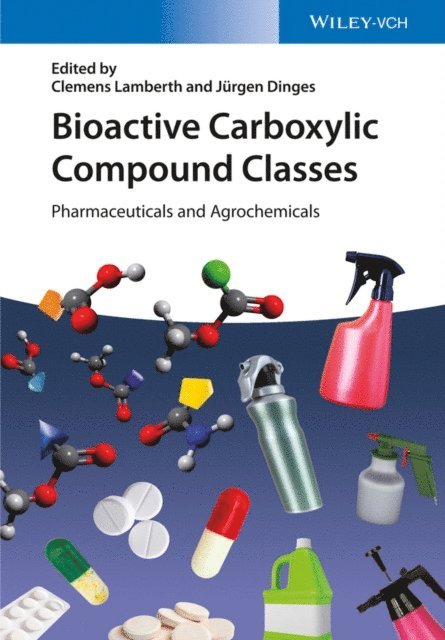
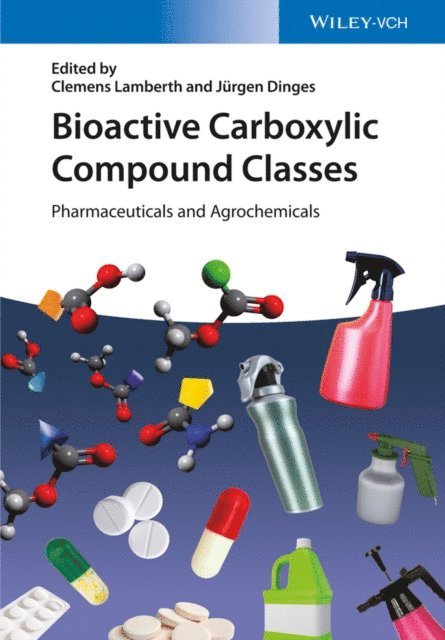
Following the successful and proven concept used in "Bioactive Heterocyclic Compound Classes" by the same editors, this book is the first to present approved pharmaceutical and agrochemical compounds classified by their carboxylic acid functionality in one handy volume. Each of the around 40 chapters describes one or two typical syntheses of a specific compound class and provides concise information on the history of development, mode of action, biological activity and field of application, as well as structure-activity relationships. In addition, similarities and differences between pharmaceuticals and agrochemicals are discussed in the introduction. Written by a team of experts in the field, this is a useful reference for researchers in academia and chemical or pharmaceutical companies working in the field of total synthesis and natural product chemistry, drug development, and crop protection research.
E-bok
PDF, Engelska, 20162 138 kr
Läs direkt efter köp
Following the successful and proven concept used in "Bioactive Heterocyclic Compound Classes" by the same editors, this book is the first to present approved pharmaceutical and agrochemical compounds classified by their carboxylic acid functionality in one handy volume. Each of the around 40 chapters describes one or two typical syntheses of a specific compound class and provides concise information on the history of development, mode of action, biological activity and field of application, as well as structure-activity relationships. In addition, similarities and differences between pharmaceuticals and agrochemicals are discussed in the introduction. Written by a team of experts in the field, this is a useful reference for researchers in academia and chemical or pharmaceutical companies working in the field of total synthesis and natural product chemistry, drug development, and crop protection research.