J. Russell Hawkins – författare
Visar alla böcker från författaren J. Russell Hawkins. Handla med fri frakt och snabb leverans.
6 produkter
6 produkter
Inbunden, Engelska, 2021
559 kr
Skickas inom 3-6 vardagar
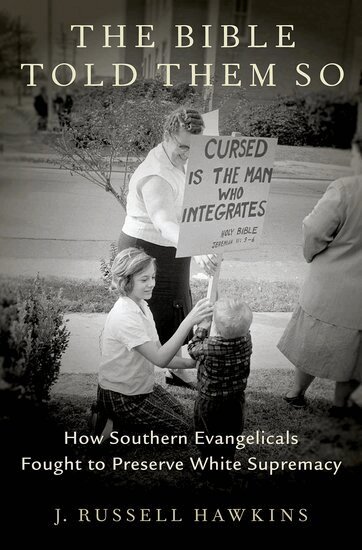
Why did southern white evangelical Christians resist the civil rights movement in the 1950s and 1960s? Simply put, they believed the Bible told them so. These white Christians entered the battle certain that God was on their side. Ultimately, the civil rights movement triumphed in the 1960s and, with its success, fundamentally transformed American society. But this victory did little to change southern white evangelicals' theological commitment to segregation. Rather than abandoning their segregationist theology in the second half of the 1960s, white evangelicals turned their focus on institutions they still controlled--churches, homes, denominations, and private colleges and secondary schools--and fought on. Focusing on the case of South Carolina, The Bible Told Them So shows how, despite suffering defeat in the public sphere, white evangelicals continued to battle for their own institutions, preaching and practicing a segregationist Christianity they continued to believe reflected God's will. Increasingly caught in the tension between their sincere belief that God desired segregation and their reluctance to give voice to such ideas for fear of being perceived as bigoted or intolerant, by the late 1960s southern white evangelicals embraced the rhetoric of colorblindness and protection of the family as measures to maintain both segregation and respectable social standing. This strategy set southern white evangelicals on an alternative path for race relations in the decades ahead.
245 kr
Läs direkt efter köp
Why did southern white evangelical Christians resist the civil rights movement in the 1950s and 1960s? Simply put, they believed the Bible told them so. These white Christians entered the battle certain that God was on their side. Ultimately, the civil rights movement triumphed in the 1960s and, with its success, fundamentally transformed American society. But this victory did little to change southern white evangelicals'' theological commitment to segregation. Rather than abandoning their segregationist theology in the second half of the 1960s, white evangelicals turned their focus on institutions they still controlled--churches, homes, denominations, and private colleges and secondary schools--and fought on. Focusing on the case of South Carolina, The Bible Told Them So shows how, despite suffering defeat in the public sphere, white evangelicals continued to battle for their own institutions, preaching and practicing a segregationist Christianity they continued to believe reflected God''s will. Increasingly caught in the tension between their sincere belief that God desired segregation and their reluctance to give voice to such ideas for fear of being perceived as bigoted or intolerant, by the late 1960s southern white evangelicals embraced the rhetoric of colorblindness and protection of the family as measures to maintain both segregation and respectable social standing. This strategy set southern white evangelicals on an alternative path for race relations in the decades ahead.
E-bok
PDF, Engelska, 2021245 kr
Läs direkt efter köp
Why did southern white evangelical Christians resist the civil rights movement in the 1950s and 1960s? Simply put, they believed the Bible told them so. These white Christians entered the battle certain that God was on their side. Ultimately, the civil rights movement triumphed in the 1960s and, with its success, fundamentally transformed American society. But this victory did little to change southern white evangelicals'' theological commitment to segregation. Rather than abandoning their segregationist theology in the second half of the 1960s, white evangelicals turned their focus on institutions they still controlled--churches, homes, denominations, and private colleges and secondary schools--and fought on. Focusing on the case of South Carolina, The Bible Told Them So shows how, despite suffering defeat in the public sphere, white evangelicals continued to battle for their own institutions, preaching and practicing a segregationist Christianity they continued to believe reflected God''s will. Increasingly caught in the tension between their sincere belief that God desired segregation and their reluctance to give voice to such ideas for fear of being perceived as bigoted or intolerant, by the late 1960s southern white evangelicals embraced the rhetoric of colorblindness and protection of the family as measures to maintain both segregation and respectable social standing. This strategy set southern white evangelicals on an alternative path for race relations in the decades ahead.
Inbunden, Engelska, 2013
605 kr
Skickas inom 5-8 vardagar
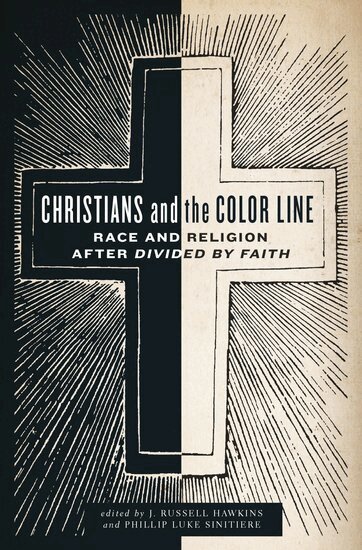
Since OUP's publication in 2000 of Michael Emerson and Christian Smith's groundbreaking study, Divided by Faith (DBF), research on racialized religion has burgeoned in a variety of disciplines in response to and in conversation with DBF. This conversation has moved outside of sociological circles; historians, theologians, and philosophers have also engaged the central tenets of DBF for the purpose of contextualizing, substantiating, and in some cases, contesting the book's findings. In a poll published in January 2012, nearly 70% of evangelical churches professed a desire to be racially and culturally diverse. Currently, only around 8% of them have achieved this multiracial status. To an unprecedented degree, evangelical churches in the United States are trying to overcome the deep racial divides that persist in their congregations. Not surprisingly, many of these evangelicals have turned to DBF for solutions. The essays in Christians and the Color Line complicate the research findings of Emerson and Smith's study and explore new areas of research that have opened in the years since DBF's publication. The book is split into two sections. The chapters in the first section consider the history of American evangelicalism and race as portrayed in DBF. In the second section the authors pick up where DBF left off, and discuss how American churches could ameliorate the problem of race in their congregations while also identifying problems that can arise from such attempted amelioration.
E-bok
PDF, Engelska, 2013287 kr
Läs direkt efter köp
Christians and the Color Line analyzes the complex entanglement of race and religion in the United States. Drawing on historical and contemporary examples of racialized religion, the essays in this volume consider the problem of race both in Christian congregations and in American society as a whole. Belying the notion that a post-racial America has arrived, congregations in the US are showing an unprecedented degree of interest in overcoming the deep racial divisions that exist within American Protestantism. In one recent poll, for instance, nearly 70 percent of church leaders expressed a strong desire for their congregations to become racially and culturally diverse. To date, reality has eluded this professed desire as fewer than 10 percent of American Protestant churches have actually achieved multiracial status. Employing innovative research from sociology, history, philosophy, and religious studies, the contributors to this volume use Michael Emerson and Christian Smith''s groundbreaking study Divided by Faith (Oxford, 2000) as their starting point to acknowledge important historical, sociological, and theological causations for racial divisions in Christian communities. Collectively, however, these scholars also offer constructive steps that Christians of all races might take to overcome the color line and usher in a new era of cross-racial engagement.
E-bok
Engelska, 2013287 kr
Läs direkt efter köp
Christians and the Color Line analyzes the complex entanglement of race and religion in the United States. Drawing on historical and contemporary examples of racialized religion, the essays in this volume consider the problem of race both in Christian congregations and in American society as a whole. Belying the notion that a post-racial America has arrived, congregations in the US are showing an unprecedented degree of interest in overcoming the deep racial divisions that exist within American Protestantism. In one recent poll, for instance, nearly 70 percent of church leaders expressed a strong desire for their congregations to become racially and culturally diverse. To date, reality has eluded this professed desire as fewer than 10 percent of American Protestant churches have actually achieved multiracial status. Employing innovative research from sociology, history, philosophy, and religious studies, the contributors to this volume use Michael Emerson and Christian Smith''s groundbreaking study Divided by Faith (Oxford, 2000) as their starting point to acknowledge important historical, sociological, and theological causations for racial divisions in Christian communities. Collectively, however, these scholars also offer constructive steps that Christians of all races might take to overcome the color line and usher in a new era of cross-racial engagement.