
J. Samuel Preus - Böcker
Visar alla böcker från författaren J. Samuel Preus. Handla med fri frakt och snabb leverans.
3 produkter
3 produkter
547 kr
Skickas inom 7-10 vardagar
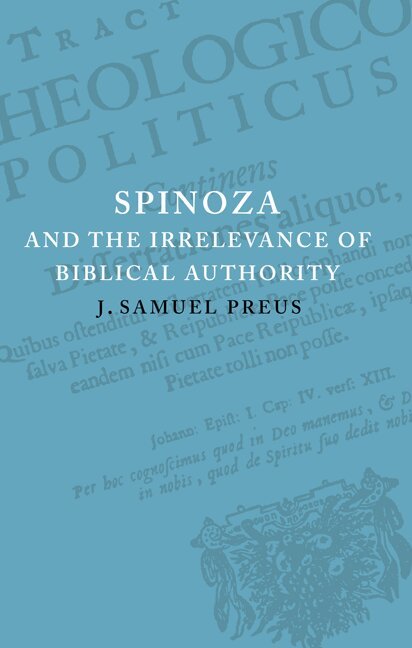
Spinoza's Theological-Political Treatise (1670) is a landmark both in democratic political theory and in the history of biblical interpretation. Spinoza championed liberty of thought, speech and writing by discrediting the Bible as the standard for truth and a source of public law. Applying a new historical criticism, he showed that biblical teaching and law were irrelevant for a modern pluralistic state and its intellectual life. J. Samuel Preus highlights Spinoza's achievement by reading the Treatise in the context of a literary conflict among his contemporaries about biblical interpretation - a conflict fraught with political implication. Preus's exposition of neglected primary sources surrounding Spinoza's work offers evidence regarding his rhetorical strategy and intent in the Treatise. The book provides not only a valuable contribution to Spinoza scholarship but an important account of the origins of modern methods of biblical interpretation.
1 245 kr
Skickas inom 7-10 vardagar
Spinoza's Theological-Political Treatise (1670) is a landmark both in democratic political theory and in the history of biblical interpretation. Spinoza championed liberty of thought, speech and writing by discrediting the Bible as the standard for truth and a source of public law. Applying a new historical criticism, he showed that biblical teaching and law were irrelevant for a modern pluralistic state and its intellectual life. J. Samuel Preus highlights Spinoza's achievement by reading the Treatise in the context of a literary conflict among his contemporaries about biblical interpretation - a conflict fraught with political implication. Preus's exposition of neglected primary sources surrounding Spinoza's work offers evidence regarding his rhetorical strategy and intent in the Treatise. The book provides not only a valuable contribution to Spinoza scholarship but an important account of the origins of modern methods of biblical interpretation.
867 kr
Skickas inom 5-8 vardagar
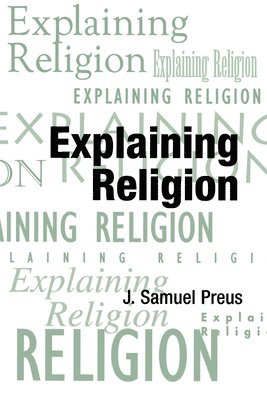
J. Samuel Preus traces the development and articulation of a modern "naturalistic" approach to the study of religion by examining ideas about the origin of religion in the works of nine western thinkers: Jean Bodin, Herbert of Cherbury, Bernard Fontenelle, Giambattista Vico, David Hume, Auguste Comte, Edward Brunett Tylor, Emile Durkheim, and Sigmund Freud. He argues that beginning in the sixteenth century increasing critical detachment from theological presuppositions and commitments made it possible for the question of origins to be posed from an altogether non-religious point of view. This new modernist paradigm was characterized by the conviction that religion could be explained in scientific terms, like any other object of critical investigation.