J. Seckbach – författare
Visar alla böcker från författaren J. Seckbach. Handla med fri frakt och snabb leverans.
2 produkter
2 produkter
Del 4 - Cellular Origin, Life in Extreme Habitats and Astrobiology
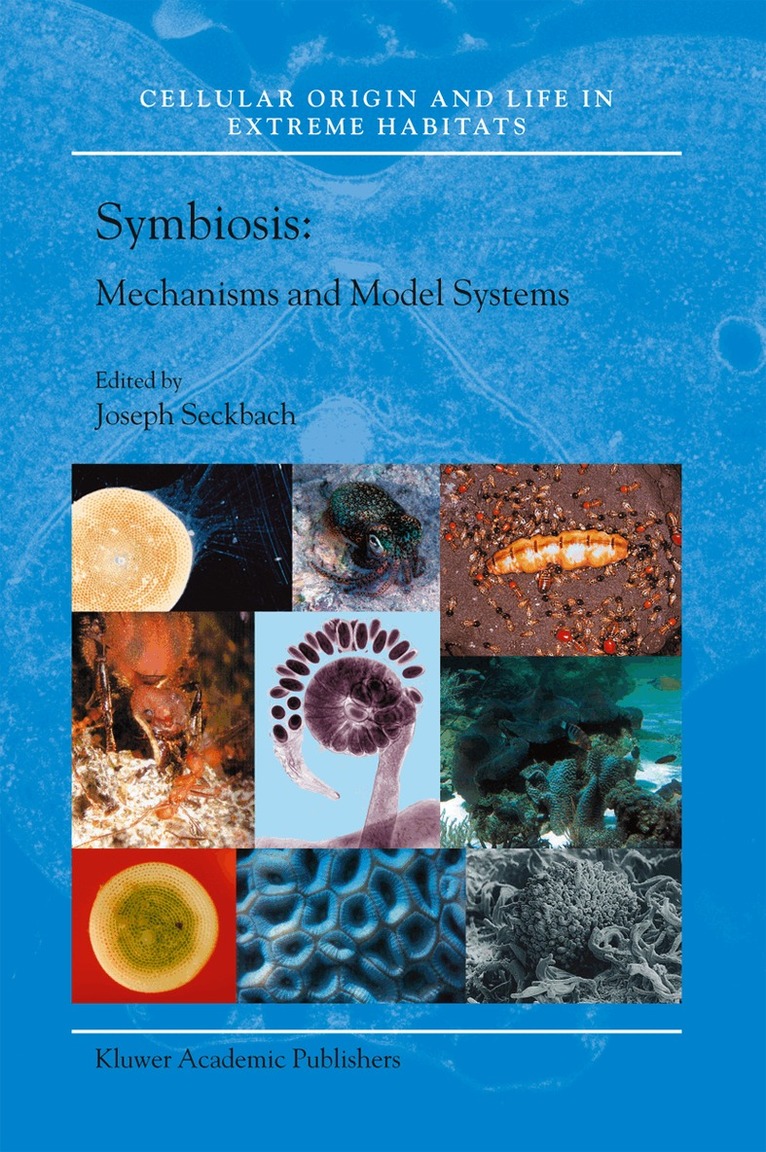
Symbiosis
Mechanisms and Model Systems
Inbunden, Engelska, 2002
3 237 kr
Skickas inom 10-15 vardagar
Symbiosis is the fourth volume in the series Cellular Origin and Life in Extreme Habitats (COLE). Fifty experts, from over a dozen countries, review their current studies on different approaches to these phenomena. The chapters present various aspects of symbiosis from gene transfer, morphological features, and biodiversity to individual organisms sharing mutual cellular habitats. The origin of the eukaryotic phase is discussed with emphasis on cyanelles, H syntrophy, N2 fixation, and S-based symbiosis (as well as the origin of mitochondrion, chloroplast, and nucleus). All members of the three domains of life are presented for sharing symbiotic associations. This volume brings the concept of living together as `One plus One (plus One) equals One.' The purpose of this book is to introduce the teacher, researcher, scholar, and student as well as the open-minded and science-oriented reader to the global importance of this association.
Del 11 - Cellular Origin, Life in Extreme Habitats and Astrobiology
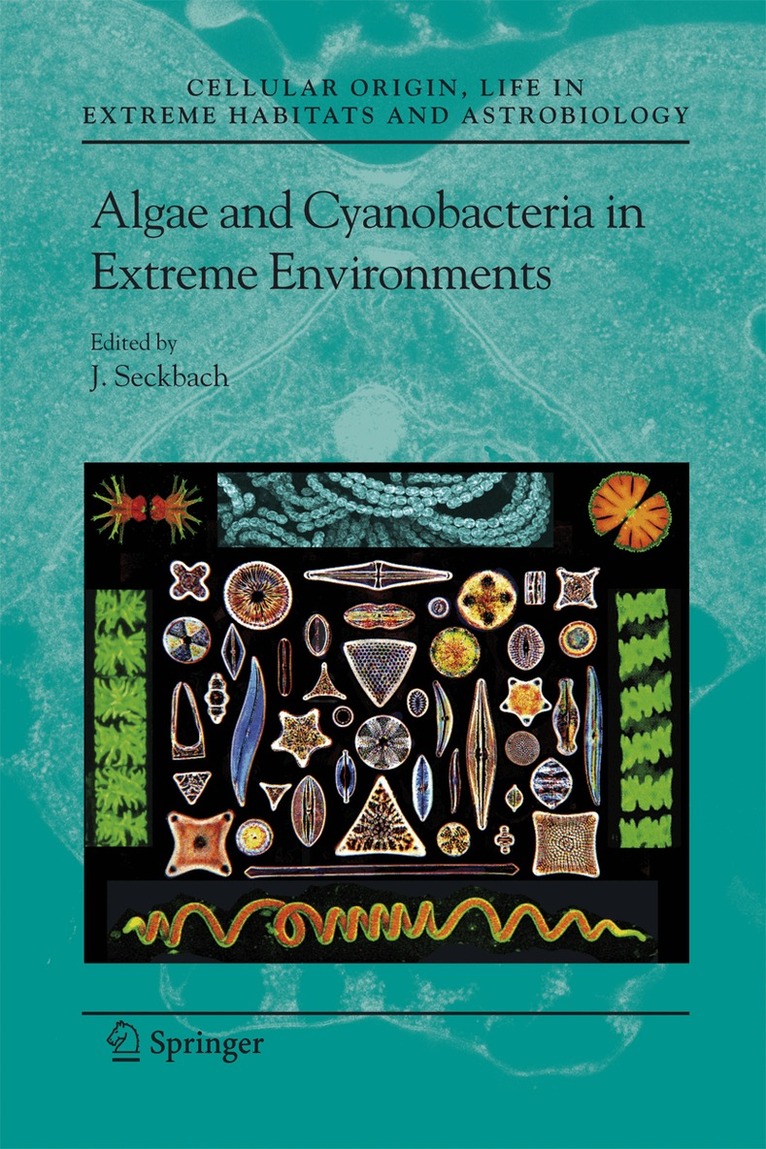
Algae and Cyanobacteria in Extreme Environments
Inbunden, Engelska, 2007
3 237 kr
Skickas inom 10-15 vardagar
Algae and Cyanobacteria in Extreme Environments is a unique collection of essays, contributed by leading scientists from around the world, devoted to algae – and some related microbes – observed in unexpected harsh habitats, which it seems are an oasis or Garden of Eden for these organisms. This timely book on Extremophilic algae, including its especially impressive micrographs, may provide clues about the edges of life on Earth and possibly elsewhere in the universe.Defining locations from the anthropomorphic point of view, the environments explored ranges from severe and distant to “normal” places. The algae discussed, microbial oxygenic phototrophs, are classified into various categories according to their habitats. They thrive in various temperature ranges, at the limits of pH values, in salt solutions, under UV radiation, dryness, heavy metals, anaerobic niches, under various levels of illuminations, and under hydrostatic pressure. Authors discuss bio-diversely algal territories ecologically – the hot springs with the thermophiles or acido-thermophiles; Antarctica, the Arctic, and permafrost zones with their cold lovers (Psychrophiles); soda lakes with the alkaliphiles, saltine areas with halophiles. In addition to general essays, Algal species discussed in detail include diatoms, Cyanidium, Galdieria, Dunaliella, and Chroococcidiopsis.This volume is a must for students of the field of biodiversity, as well as those in phycology, ecology and general biological research.