J. Seibl – författare
Visar alla böcker från författaren J. Seibl. Handla med fri frakt och snabb leverans.
4 produkter
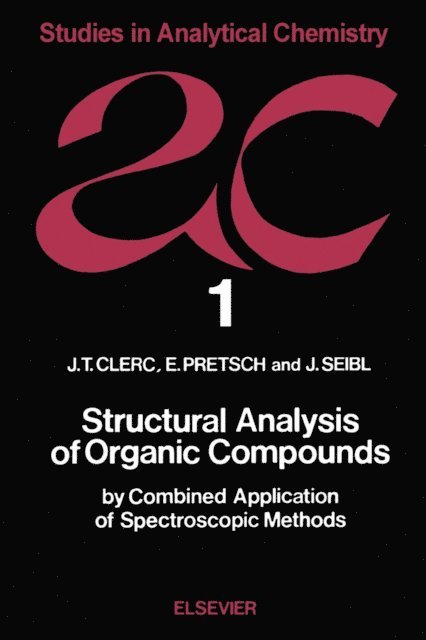
Structural Analysis of Organic Compounds by Combined Application of Spectroscopic Methods
Av J. Seibl, E. Pretsch m. fl.
E-bok, 2012
717 kr
Lägg i varukorg
Structural Analysis of Organic Compounds covers some practical analytical aspects of organic structural analysis by combined application of spectroscopic methods. This book is composed of three parts encompassing 35 chapters that specifically describe infrared-, ultraviolet-, proton and carbon-13 …
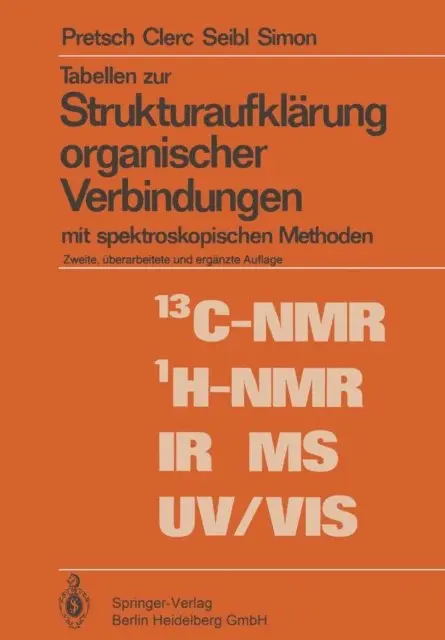
Tabellen zur Strukturaufklärung organischer Verbindungen mit spektroskopischen Methoden
E-bok, 2013
554 kr
Lägg i varukorg
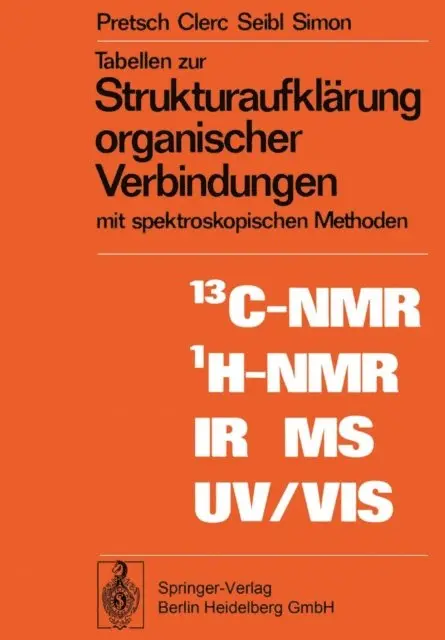
Tabellen zur Strukturaufklärung organischer Verbindungen mit spektroskopischen Methoden
E-bok, 2013
542 kr
Lägg i varukorg
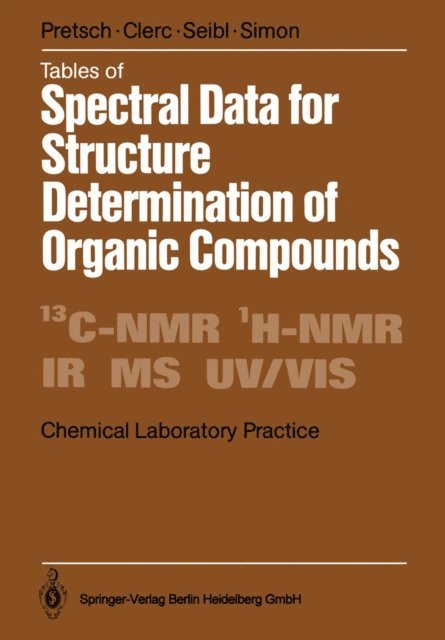
Tables of Spectral Data for Structure Determination of Organic Compounds
E-bok, 2013
302 kr
Lägg i varukorg
Although numerical data are, in principle, universal, the compilations presented in this book are extensively annotated and interleaved with text. This translation of the second German edition has been prepared to facilitate the use of this work, with all its valuable detail, by the large community …