This book, a collection of essays from scholars across disciplines, explores leadership of discovery, probing the guided and collaborative exploration and interpretation of the experience of our inner thoughts and feelings, and of our external worlds.
This book serves as a guided introduction to the richly diverse perspectives on leadership throughout the ages and throughout the world. Each of the selections, introduced by the editor, presents enlightening thoughts on a different aspect of leadership. Writings by Plato, Aristotle, Lao-tzu and others demonstrate that the challenges of leadership are as old as civilization. Machiavelli, Tolstoy, Ghandi, and W.E.B. Du Bois provide a wide range of insights into the eternal practice and problems of leadership. Modern masters of leadership such as James MacGregor Burns, John Kotter, and Warren Bennis join such leading practitioners as Max De Pree and Roger B. Smith in discussing contemporary issues in leadership theory and practice.
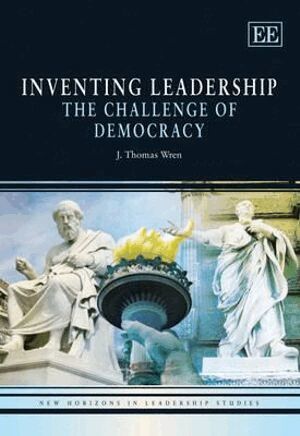
The tension between ruler and ruled in democratic societies has never been satisfactorily resolved, and the competing interpretations of this relationship lie at the bottom of much modern political discourse. In this fascinating book, Thomas Wren clarifies and elevates the debates over leadership by identifying the fundamental premises and assumptions that underlie past and present understandings. The author traces the intellectual history of the central constructs: the leader, the people, and, ultimately, the relationship between them as they seek to accomplish societal objectives. He begins with a discussion of the invented notion of the classical paragon of a ruler. Next he pursues the invention of the countervailing concept of a sovereign people, and finally, the need for the invention of a new construct - leadership - which embodies a new relation between ruler and ruled in regimes dedicated to power in the people. In doing so, he draws upon the giants of the Western intellectual tradition as well as the insights of modern historians, political scientists, sociologists and leadership scholars. The book concludes with a proposed model of leadership for a modern democratic world.Elegantly written and masterfully argued, this comprehensive study will be essential reading for students and scholars of leadership and democracy.