J. V. Dawkins – författare
Visar alla böcker från författaren J. V. Dawkins. Handla med fri frakt och snabb leverans.
3 produkter
3 produkter
Inbunden, Engelska, 1999
7 534 kr
Skickas inom 5-8 vardagar
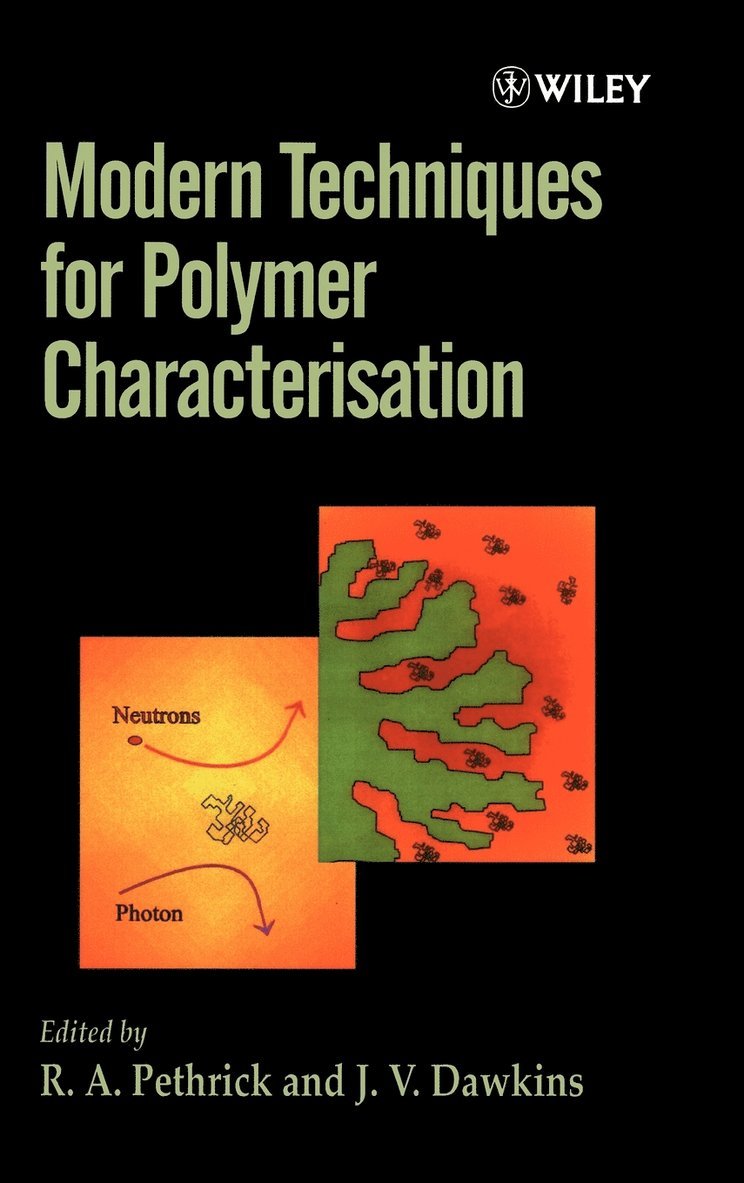
Taking an interdisciplinary perspective, this volume provides a unique insight into the principal characterisation techniques available for determining the size of macromolecules in solution, their structural sequences and molecular weight. Recognition of macromolecules as a distinct state of matter owes much to the availability of various techniques for molar mass characterisation. In recent years, significant progress has been made into refining and developing these techniques but there has been a need for a volume that describes all the principal characterisation techniques and their relevance to various types of material. This book reflects some of the most recent advances and covers such techniques as: * Temperature rising elution fractionation * Field flow fractionation * Static and dynamic light scattering * Neutron scattering * Vapour Pressure Osmometry/Viscometry * Ultrafugation and Sedimentation * Gel Electrophoresis of Biological Macromolecules * Mass Spectrometry of Polymers The book will be invaluable for all those who are concerned with the study and use of macromolecular materials. It describes the developments that have been made in methods for molar mass characterisation and also the size of molecules in solution and solid phases. As the problem of molar mass characterisation is common to synthetic and biological polymers, this book will be of interest not only to polymer chemists, engineers and technologists, but also for biologists and scientists in numerous allied disciplines.
Häftad, Engelska, 2011
539 kr
Skickas inom 10-15 vardagar
Over two decades ago, !he term characterisation covered just those techniques which measured the properties of polymers in solution in order to determine molecular weight and size. The discoveries of stereoregular polymers and polymer crystals created the need for new and advanced techniques for characterising chain structures and bulk properties. Further demands for new and improved characterisation methods for bulk polymers have resulted from the recent development and exploitation of multi phase polymeric systems, such as polymer blends, block and graft copolymers, and polymer composites. Today, therefore, characterisation is a very important part of polymer science. The polymer chemist must know the chain length, chain microstructure and chain conformation of the polymers he or she has prepared, i. e. the determination of molecular properties. The scientist involved in exploiting polymers in such applications as plastics, elastomers, fibres, surface coatings and adhesives must be informed on the morphology and physical and mechanical behaviour of his or her products, i. e. the determination of bulk and surface properties and their dependence on molecular properties. The techniques required for these determinations now cover an extremely wide field. Our aim has been to review a number of techniques critically and in sufficient depth so that the present state and future potential of each technique may be judged by the reader. Three criteria were used in the selection of techniques. First, we wished to present new methods which have been developed actively in the polymer field during the past five years.
Del 2 - Developments Series
Developments in Polymer Characterisation
Häftad, Engelska, 2013
539 kr
Skickas inom 10-15 vardagar
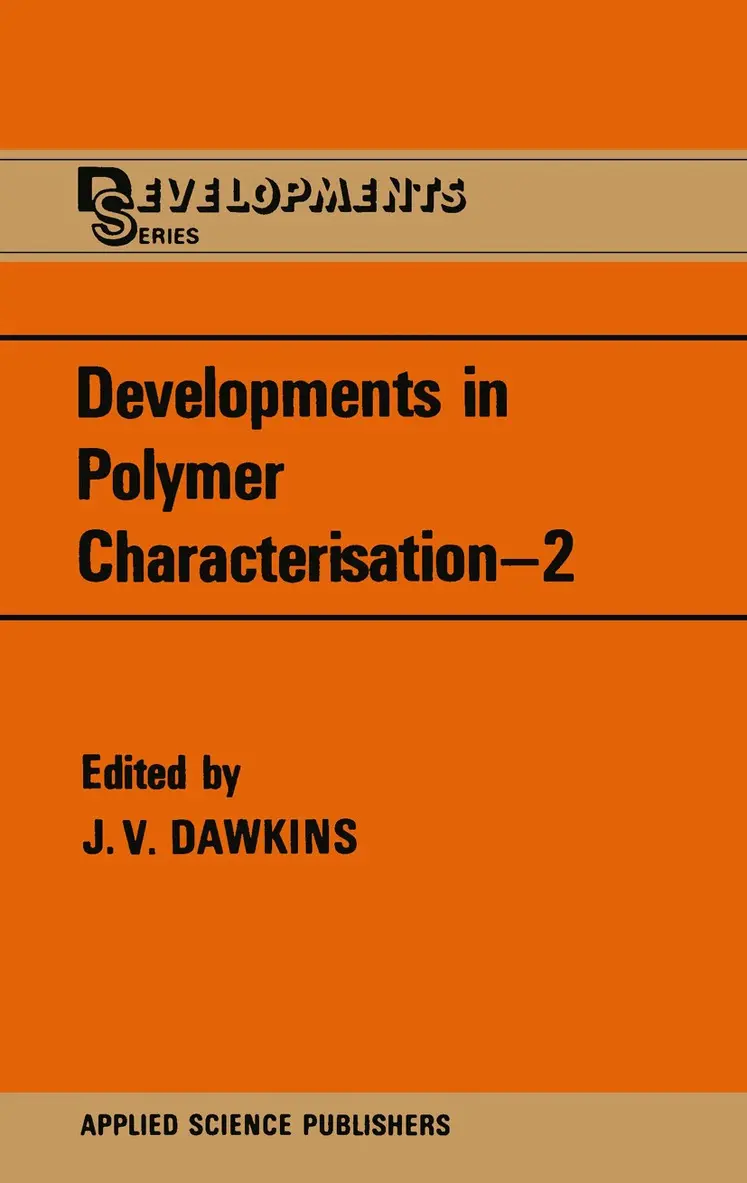
The policy adopted in Volume 1 of this series of including a relatively small number of topics for detailed review has been continued here. The techniques selected have received considerable attention in recent years. F or this reason and because of the significance of the characterisation data, further coverage of 13C nuclear magnetic resonance spectroscopy and small angle neutron scattering is given in the first two chapters. In Chapter I a large part of the review describes the determination of monomer sequence distributions and configurational sequences in copolymers formed from more than one polymerisable monomer. The review on neutron scattering (Chapter 2) is directed towards the determination of the chain conformation in semi-crystaIIine polymers, which has provided important results for the interpretation of chain folding and morphology in crystaIIisable polymers. Laser Raman spectroscopy has also been used for morphological studies, and this application together with a description of the theoretical and experimental aspects of the technique is given in Chapter 3. X-ray photoelectron spectroscopy because of its extreme sensitivity to surface characteristics has provided information on polymeric solids that could not be obtained by other techniques. The principles and practice of this ESCA technique, including its use for simple elemental analysis, structural elucidation and depth profiling, are described in Chapter 4. The final two chapters are mainly concerned with the chain conformation of polymers in dilute solution. Ultrasonic techniques (Chapter 5) show pmmise for observing the dynamics of conformational changes.