J.A. Reggia – författare
Visar alla böcker från författaren J.A. Reggia. Handla med fri frakt och snabb leverans.
4 produkter
4 produkter
E-bok
PDF, Engelska, 19993 096 kr
Läs direkt efter köp
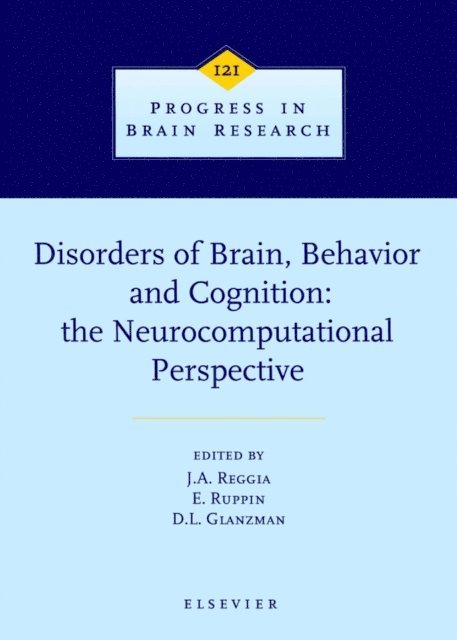
This book contains selected contributions of papers, many presented at the Second International Workshop on Neural Modeling of Brain Disorders, as well as a few additional papers on related topics, including a wide range of presentations describing computational models of neurological, neuropsychological and psychiatric disorders. It is a unique, comprehensive review of the state-of-the-art of modeling cognitive and brain disorders, appealing to a multidisciplinary audience of clinicians, psychologists, neuroscientists, cognitive scientists, computer scientists, and other neural network researchers. The rest of the book is organized along four main themes, involving memory, neuropsychological, neurological and psychiatric disorders. In general, the cognitive disorders and these psychiatric diseases traditionally regarded as "functional" were modeled along functional lines, while those disorders traditionally viewed as "organic" neurological diseases generally drew more from knowledge of the underlying neurobiology and pathophysiology.
E-bok
PDF, Engelska, 2012687 kr
Läs direkt efter köp
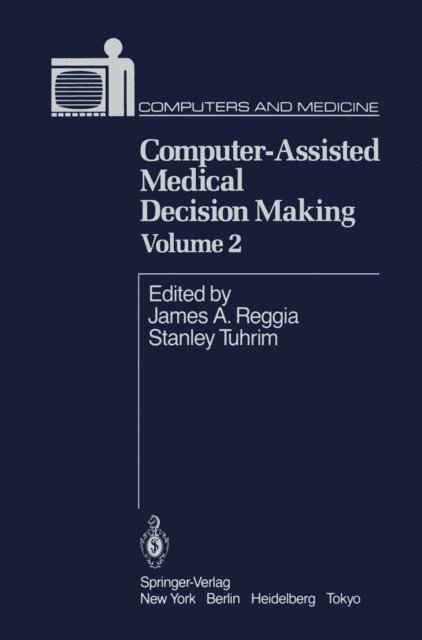
Computer technology has impacted the practice of medicine in dramatic ways. Imaging techniques provide noninvasive tools which alter the diag nostic process. Sophisticated monitoring equipment presents new levels of detail for both patient management and research. In most of these high technology applications, the computer is embedded in the device; its presence is transparent to the user. There is also a growing number of applications in which the health care provider directly interacts with a computer. In many cases, these appli cations are limited to administrative functions, e.g., office practice man agement, location of hospital patients, appointments, and scheduling. Nevertheless, there also are instances of patient care functions such as results reporting, decision support, surveillance, and reminders. This series, Computers and Medicine, will focus upon the direct use of information systems as it relates to the medical community. After twenty-five years of experimentation and experience, there are many tested applications which can be implemented economically using the current generation of computers. Moreover, the falling cost of computers suggests that there will be even more extensive use in the near future. Yet there is a gap between current practice and the state-of-the-art.
Häftad, Engelska, 2011
544 kr
Skickas inom 10-15 vardagar
Computer technology has impacted the practice of medicine in dramatic ways. Imaging techniques provide noninvasive tools which alter the diag nostic process. Sophisticated monitoring equipment presents new levels of detail for both patient management and research. In most of these high technology applications, the computer is embedded in the device; its presence is transparent to the user. There is also a growing number of applications in which the health care provider directly interacts with a computer. In many cases, these appli cations are limited to administrative functions, e.g., office practice man agement, location of hospital patients, appointments, and scheduling. Nevertheless, there also are instances of patient care functions such as results reporting, decision support, surveillance, and reminders. This series, Computers and Medicine, will focus upon the direct use of information systems as it relates to the medical community. After twenty-five years of experimentation and experience, there are many tested applications which can be implemented economically using the current generation of computers. Moreover, the falling cost of computers suggests that there will be even more extensive use in the near future. Yet there is a gap between current practice and the state-of-the-art.
Häftad, Engelska, 2011
544 kr
Skickas inom 10-15 vardagar
Computer technology has impacted the practice of medicine in dramatic ways. Imaging techniques provide noninvasive tools which alter the diag nostic process. Sophisticated monitoring equipment presents new levels of detail for both patient management and research. In most of these high technology applications, the computer is embedded in the device; its presence is transparent to the user. There is also a growing number of applications in which the health care provider directly interacts with a computer. In many cases, these appli cations are limited to administrative functions, e.g., office practice man agement, location of hospital patients, appointments, and scheduling. Nevertheless, there also are instances of patient care functions such as results reporting, decision support, surveillance, and reminders. This series, Computers and Medicine, will focus upon the direct use of information systems as it relates to the medical community. After twenty-five years of experimentation and experience, there are many tested applications which can be implemented economically using the current generation of computers. Moreover, the falling cost of computers suggests that there will be even more extensive use in the near future. Yet there is a gap between current practice and the state-of-the-art.