Jac Ka Lok Leung – författare
Visar alla böcker från författaren Jac Ka Lok Leung. Handla med fri frakt och snabb leverans.
6 produkter
6 produkter
Inbunden, Engelska, 2022
1 375 kr
Skickas inom 10-15 vardagar
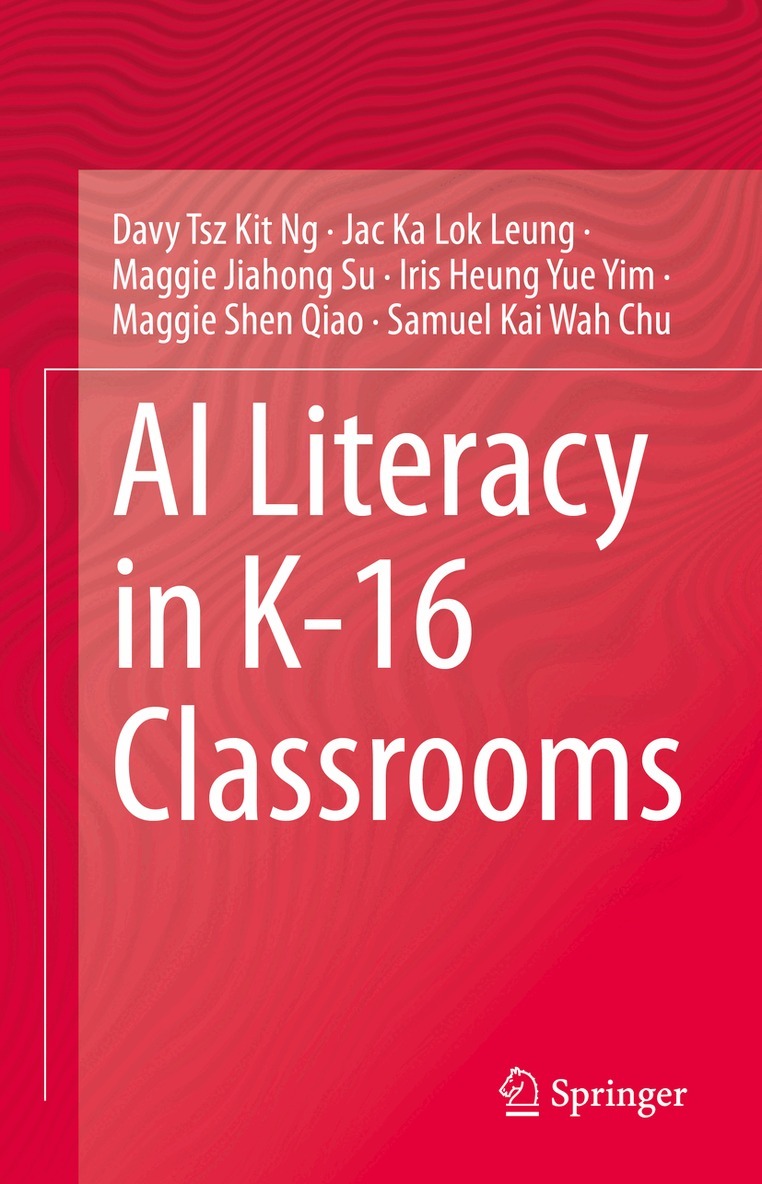
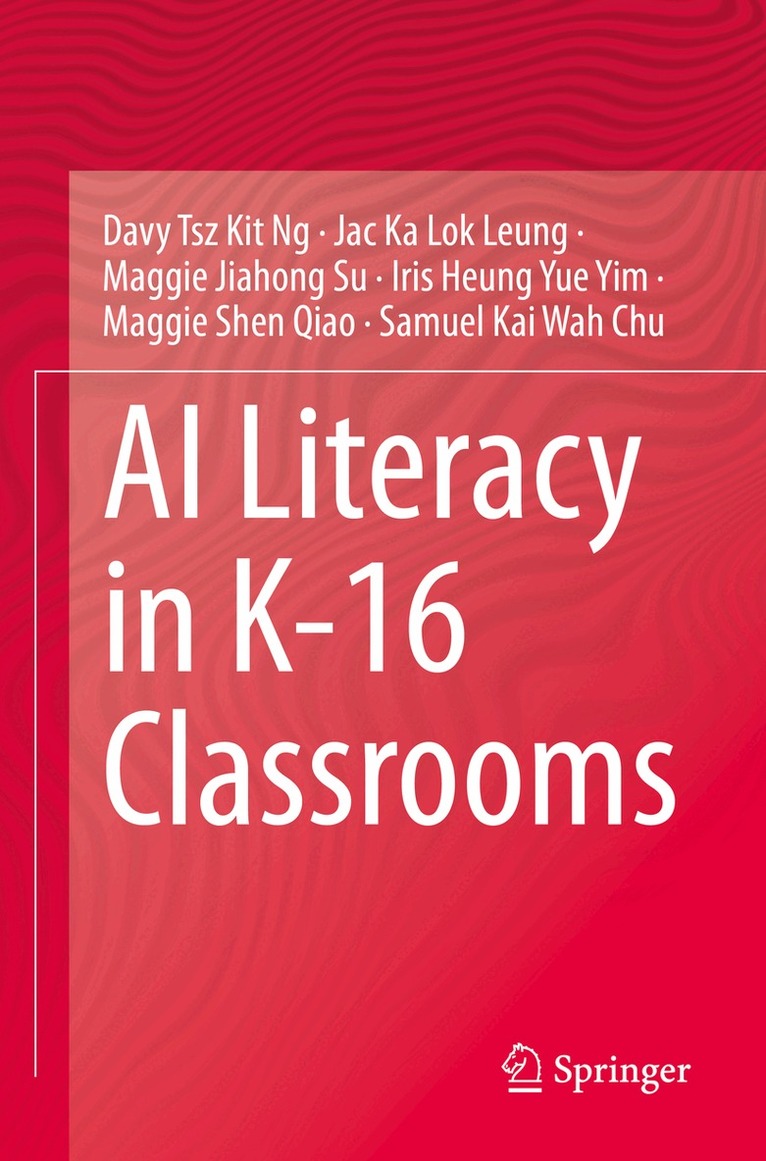
Artificial Intelligence is at the top of the agenda for education leaders, scientists, technologists and policy makers in educating the next generation across the globe. Beyond applying AI in daily life applications and educational tools, understanding how to learn and teach AI is increasingly important. Despite these emerging technology breakthroughs, AI learning is still new to educators especially to K-16 teachers. There is a lack of evidence-based studies that inform them about AI learning, including design principles for building a set of curriculum content, and pedagogical approaches as well as technological tools. Teaching AI concepts and techniques from programming languages and developmentally appropriate learning tools (e.g., robotics, serious games, software, intelligent agents) across different education levels emerged in recent years. The primary purpose of this book is to respond to the need to conceptualize the emerging term “AI literacy” and investigate how toteach and learn AI in K-16 education settings.This book examines different aspects of learning artefacts, pedagogies, content knowledge and assessment methods of AI literacy education, from theoretical discussions to practical recommendations for curriculum and instructional design. An exhaustive summary of current evidence with examples is illustrated in this book, as well as cutting-edge research that serves as an AI literacy model for different countries’ contexts. Part I, “Conceptualizing AI literacy”, provides a detailed discussion on the development of the concepts and frameworks on AI literacy education, discusses the differences and similarities between AI in education (AIED) and AI literacy education, and illustrates the reasons why K-16 students need to learn AI. These concepts are brought together in Part II, “K-16 AI literacy education” to further summarize the pedagogies, learning content, learning tools and assessment methods to inform K-16educators how to design their AI instruction at each education level. After that, part III “AI literacy for instructional designers” explores how instructional designers (i.e., AI developers and teachers) prepare themselves to become ready to design developmentally appropriate tools, platforms, services and curricula to empower students with AI literacy skills.
E-bok
Engelska, 20221 639 kr
Läs direkt efter köp
Artificial Intelligence is at the top of the agenda for education leaders, scientists, technologists and policy makers in educating the next generation across the globe. Beyond applying AI in daily life applications and educational tools, understanding how to learn and teach AI is increasingly important. Despite these emerging technology breakthroughs, AI learning is still new to educators especially to K-16 teachers. There is a lack of evidence-based studies that inform them about AI learning, including design principles for building a set of curriculum content, and pedagogical approaches as well as technological tools. Teaching AI concepts and techniques from programming languages and developmentally appropriate learning tools (e.g., robotics, serious games, software, intelligent agents) across different education levels emerged in recent years. The primary purpose of this book is to respond to the need to conceptualize the emerging term “AI literacy” and investigate how toteach and learn AI in K-16 education settings.This book examines different aspects of learning artefacts, pedagogies, content knowledge and assessment methods of AI literacy education, from theoretical discussions to practical recommendations for curriculum and instructional design. An exhaustive summary of current evidence with examples is illustrated in this book, as well as cutting-edge research that serves as an AI literacy model for different countries’ contexts. Part I, “Conceptualizing AI literacy”, provides a detailed discussion on the development of the concepts and frameworks on AI literacy education, discusses the differences and similarities between AI in education (AIED) and AI literacy education, and illustrates the reasons why K-16 students need to learn AI. These concepts are brought together in Part II, “K-16 AI literacy education” to further summarize the pedagogies, learning content, learning tools and assessment methods to inform K-16educators how to design their AI instruction at each education level. After that, part III “AI literacy for instructional designers” explores how instructional designers (i.e., AI developers and teachers) prepare themselves to become ready to design developmentally appropriate tools, platforms, services and curricula to empower students with AI literacy skills.
Engelska, 2022
608 kr
Skickas inom 5-8 vardagar
Häftad, Engelska, 2023
1 375 kr
Skickas inom 10-15 vardagar
Artificial Intelligence is at the top of the agenda for education leaders, scientists, technologists and policy makers in educating the next generation across the globe. Beyond applying AI in daily life applications and educational tools, understanding how to learn and teach AI is increasingly important. Despite these emerging technology breakthroughs, AI learning is still new to educators especially to K-16 teachers. There is a lack of evidence-based studies that inform them about AI learning, including design principles for building a set of curriculum content, and pedagogical approaches as well as technological tools. Teaching AI concepts and techniques from programming languages and developmentally appropriate learning tools (e.g., robotics, serious games, software, intelligent agents) across different education levels emerged in recent years. The primary purpose of this book is to respond to the need to conceptualize the emerging term “AI literacy” and investigate how toteach and learn AI in K-16 education settings.This book examines different aspects of learning artefacts, pedagogies, content knowledge and assessment methods of AI literacy education, from theoretical discussions to practical recommendations for curriculum and instructional design. An exhaustive summary of current evidence with examples is illustrated in this book, as well as cutting-edge research that serves as an AI literacy model for different countries’ contexts. Part I, “Conceptualizing AI literacy”, provides a detailed discussion on the development of the concepts and frameworks on AI literacy education, discusses the differences and similarities between AI in education (AIED) and AI literacy education, and illustrates the reasons why K-16 students need to learn AI. These concepts are brought together in Part II, “K-16 AI literacy education” to further summarize the pedagogies, learning content, learning tools and assessment methods to inform K-16educators how to design their AI instruction at each education level. After that, part III “AI literacy for instructional designers” explores how instructional designers (i.e., AI developers and teachers) prepare themselves to become ready to design developmentally appropriate tools, platforms, services and curricula to empower students with AI literacy skills.
Inbunden, Engelska, 2026
1 683 kr
Skickas inom 5-8 vardagar
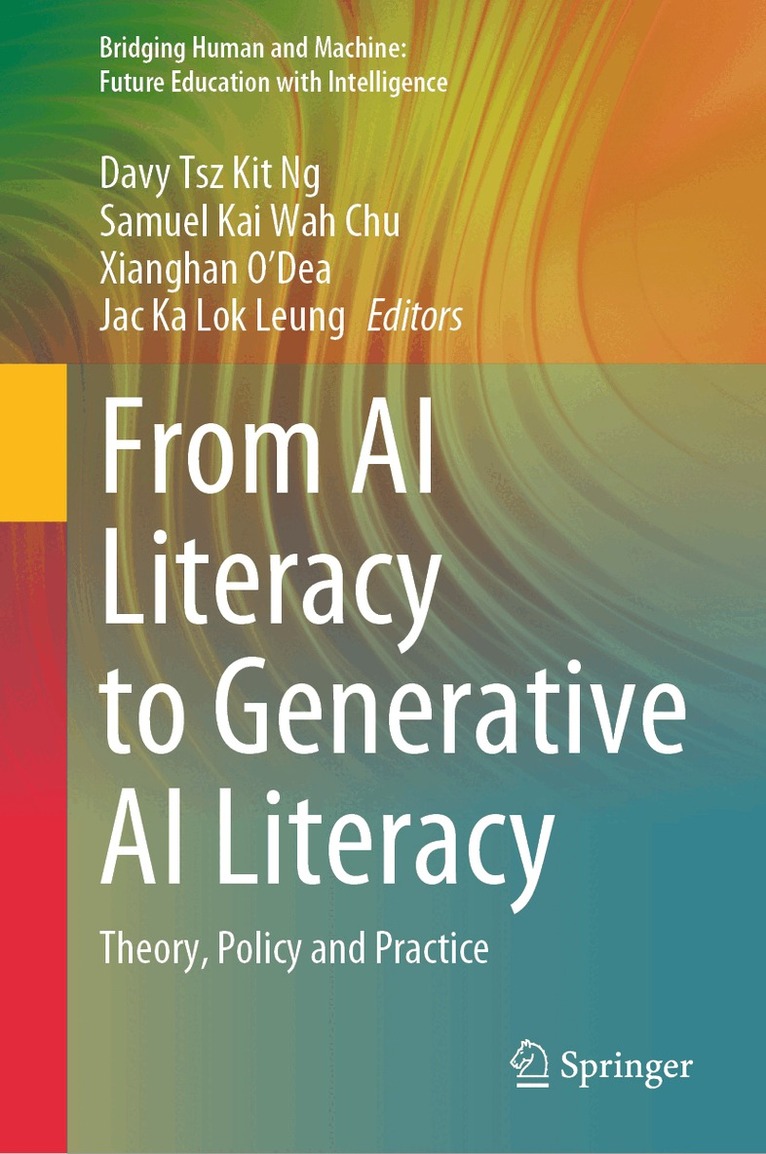
This book presents a scoping review and critical discussion of generative artificial intelligence (AI) literacy within the context of education. The first section explores how generative AI technologies—such as text generation, image synthesis, and video content creation—impact teaching and learning processes, student engagement, creativity, and critical thinking. The second section addresses the implications and challenges of integrating generative AI into the everyday lives of both young and adult learners, with a focus on ethical considerations, privacy concerns, and potential biases. The third section offers recommendations for policymakers, researchers, and practitioners, along with questionnaires designed to assess generative AI literacy. Through the use of scoping review methodology, the book provides readers with a comprehensive understanding of the current landscape of generative AI literacy in education, as well as the broader impacts and applications of generative AI technologies in educational settings.
E-bok
Engelska, 20262 070 kr
Läs direkt efter köp
This book presents a scoping review and critical discussion of generative artificial intelligence (AI) literacy within the context of education. The first section explores how generative AI technologies—such as text generation, image synthesis, and video content creation—impact teaching and learning processes, student engagement, creativity, and critical thinking. The second section addresses the implications and challenges of integrating generative AI into the everyday lives of both young and adult learners, with a focus on ethical considerations, privacy concerns, and potential biases. The third section offers recommendations for policymakers, researchers, and practitioners, along with questionnaires designed to assess generative AI literacy. Through the use of scoping review methodology, the book provides readers with a comprehensive understanding of the current landscape of generative AI literacy in education, as well as the broader impacts and applications of generative AI technologies in educational settings.