Jack Boss – författare
Visar alla böcker från författaren Jack Boss. Handla med fri frakt och snabb leverans.
6 produkter
6 produkter
Schoenberg's Tonal Music
Depictive Text Painting and the Birth of the 'Musical Idea'
Häftad, Engelska, 2027
547 kr
Kommande
Jack Boss's third book on the most famous member of the 'second Viennese School', this work offers an intriguing revisionist history of Schoenberg's early music. It provides close readings of six pieces from Op. 1 to Op. 9, illustrated by detailed motivic analyses as well as Schenkerian graphs, to show how tonality and motive work together to project the 'musical idea,' and how Schoenberg's tonal style gradually became more dissonant, leading to atonality. Boss's earlier books argued that the atonal and twelve-tone works were part of a consistent development tied together by the expression of a common narrative-the conflict, elaboration, and resolution of what Schoenberg himself called the 'idea.' This book completes the circle by showing that the early, tonal works also project musical idea narratives. It justifies Schoenberg's preference for setting music to text early in his career, by showing how his chosen texts helped shape these narratives of conflict and resolution.
1 774 kr
Skickas inom 7-10 vardagar
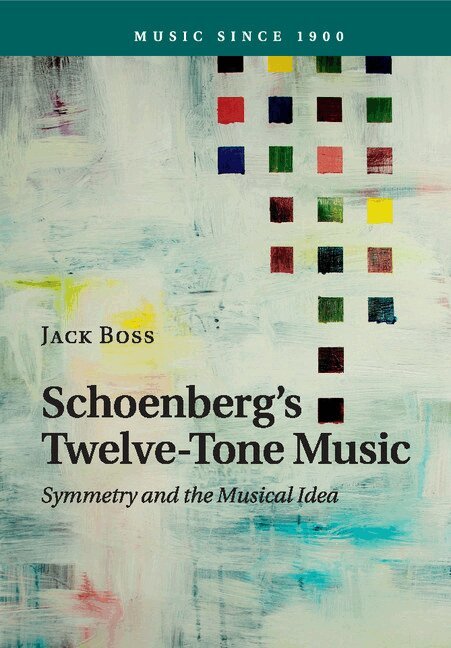
Jack Boss takes a unique approach to analyzing Arnold Schoenberg's twelve-tone music, adapting the composer's notion of a 'musical idea' - problem, elaboration, solution - as a framework and focusing on the large-scale coherence of the whole piece. The book begins by defining 'musical idea' as a large, overarching process involving conflict between musical elements or situations, elaboration of that conflict, and resolution, and examines how such conflicts often involve symmetrical pitch and interval shapes that are obscured in some way. Containing close analytical readings of a large number of Schoenberg's key twelve-tone works, including Moses und Aron, the Suite for Piano Op. 25, the Fourth Quartet, and the String Trio, the study provides the reader with a clearer understanding of this still-controversial, challenging, but vitally important modernist composer.
446 kr
Skickas inom 7-10 vardagar
Jack Boss takes a unique approach to analyzing Arnold Schoenberg's twelve-tone music, adapting the composer's notion of a 'musical idea' - problem, elaboration, solution - as a framework and focusing on the large-scale coherence of the whole piece. The book begins by defining 'musical idea' as a large, overarching process involving conflict between musical elements or situations, elaboration of that conflict, and resolution, and examines how such conflicts often involve symmetrical pitch and interval shapes that are obscured in some way. Containing close analytical readings of a large number of Schoenberg's key twelve-tone works, including Moses und Aron, the Suite for Piano Op. 25, the Fourth Quartet, and the String Trio, the study provides the reader with a clearer understanding of this still-controversial, challenging, but vitally important modernist composer.
Schoenberg's Atonal Music
Musical Idea, Basic Image, and Specters of Tonal Function
Häftad, Engelska, 2021
547 kr
Skickas inom 7-10 vardagar
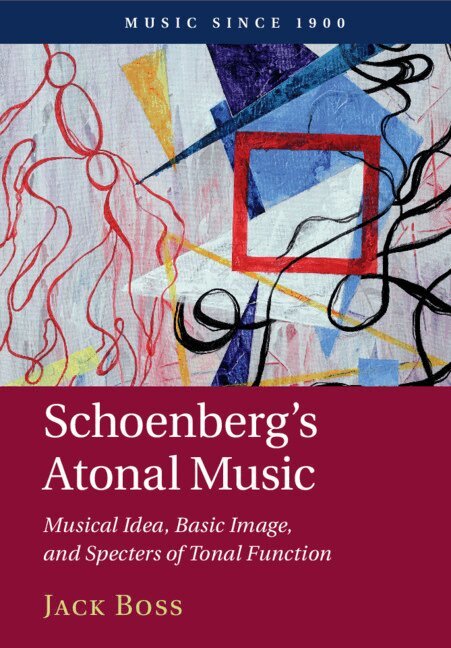
Award-winning author Jack Boss returns with the 'prequel' to Schoenberg's Twelve-Tone Music (Cambridge, 2014) demonstrating that the term 'atonal' is meaningful in describing Schoenberg's music from 1908 to 1921. This book shows how Schoenberg's atonal music can be understood in terms of successions of pitch and rhythmic motives and pitch-class sets that flesh out the large frameworks of 'musical idea' and 'basic image'. It also explains how tonality, after losing its structural role in Schoenberg's music after 1908, begins to re-appear not long after as an occasional expressive device. Like its predecessor, Schoenberg's Atonal Music contains close readings of representative works, including the Op. 11 and Op. 19 Piano Pieces, the Op. 15 George-Lieder, the monodrama Erwartung, and Pierrot lunaire. These analyses are illustrated by richly detailed musical examples, revealing the underlying logic of some of Schoenberg's most difficult pieces of music.
Schoenberg's Atonal Music
Musical Idea, Basic Image, and Specters of Tonal Function
Inbunden, Engelska, 2019
1 571 kr
Skickas inom 7-10 vardagar
Award-winning author Jack Boss returns with the 'prequel' to Schoenberg's Twelve-Tone Music (Cambridge, 2014) demonstrating that the term 'atonal' is meaningful in describing Schoenberg's music from 1908 to 1921. This book shows how Schoenberg's atonal music can be understood in terms of successions of pitch and rhythmic motives and pitch-class sets that flesh out the large frameworks of 'musical idea' and 'basic image'. It also explains how tonality, after losing its structural role in Schoenberg's music after 1908, begins to re-appear not long after as an occasional expressive device. Like its predecessor, Schoenberg's Atonal Music contains close readings of representative works, including the Op. 11 and Op. 19 Piano Pieces, the Op. 15 George-Lieder, the monodrama Erwartung, and Pierrot lunaire. These analyses are illustrated by richly detailed musical examples, revealing the underlying logic of some of Schoenberg's most difficult pieces of music.
Schoenberg's Tonal Music
Depictive Text Painting and the Birth of the 'Musical Idea'
Inbunden, Engelska, 2027
1 490 kr
Kommande
Jack Boss's third book on the most famous member of the 'second Viennese School', this work offers an intriguing revisionist history of Schoenberg's early music. It provides close readings of six pieces from Op. 1 to Op. 9, illustrated by detailed motivic analyses as well as Schenkerian graphs, to show how tonality and motive work together to project the 'musical idea,' and how Schoenberg's tonal style gradually became more dissonant, leading to atonality. Boss's earlier books argued that the atonal and twelve-tone works were part of a consistent development tied together by the expression of a common narrative-the conflict, elaboration, and resolution of what Schoenberg himself called the 'idea.' This book completes the circle by showing that the early, tonal works also project musical idea narratives. It justifies Schoenberg's preference for setting music to text early in his career, by showing how his chosen texts helped shape these narratives of conflict and resolution.