Jack Claiborne – författare
Visar alla böcker från författaren Jack Claiborne. Handla med fri frakt och snabb leverans.
6 produkter
6 produkter
Häftad, Engelska, 2012
695 kr
Skickas inom 10-15 vardagar
The history of an important newspaper is almost by definition a political, economic, and social history of the region it serves as well as the human drama of the people whose visions, talents, and labors shaped it over the years. Jack Claiborne combines these elements in The Charlotte Observer, a narrative that traces the development of the largest newpaper in the Carolinas from Reconstruction to the present.A business-oriented paper from the outset, the Observer began as a four-page, single-sheet publication, printed and folded by hand and distributed mostly by train. Today its huge presses print, cut, count, and fold more than 230,000 copies daily and 270,000 on Sundays for distribution by truck to mountain towns and coastal resorts as well as the sprawling neighborhoods of Charlotte.The rise of the Observer mirrors the rise of Charlotte as the Carolinas' largest trading, manufacturing, financial, and distribution center, and the evolution of the surrounding Piedmont countryside from an area of rolling farms and cotton fields to a dispersed urban region of manufacturing and commerce. In telling the Observer's story, Claiborne also recounts the birth and death of its formal rival, the evening Charlotte News (1888-1985). The story documents the Observer's embrace of the New South creed as it emerged as one of North Carolina's most influential newspapers and the voice of its industrial interests.Like Charlotte and the surrounding region, which were shaped by such men as Zebulon Vance, James Duke, Henry Belk, and Cameron Morrison, the Observer bears the imprint of many personalities, from pioneer industrialist D. A. Tompkins and the eloquent, outspoken editor J. P. Caldwell, to John S. and John L. Knight, leaders of the national company that owns the modern Observer. Spiced with vignettes of those and others who shaped and guided the paper, Claiborne's account captures the clash of ambition and personality that marked the paper's rise.The death of editor J. P. Caldwell in 1911 touched off a five-year struggle for power until the paper was purchased by Curtis Johnson, who built it into a large and highly profitable enterprise. Johnson's death in 1950 precipitated another five-year struggle, resulting in the paper's purchase by the Knights and their appointment of ""Pete"" McKnight as editor. Under McKnight the paper abandoned its rigid conservatism to become an advocate of social change across the South.A UNC Press Enduring Edition -- UNC Press Enduring Editions use the latest in digital technology to make available again books from our distinguished backlist that were previously out of print. These editions are published unaltered from the original, and are presented in affordable paperback formats, bringing readers both historical and cultural value.
E-bok
Engelska, 2017347 kr
Läs direkt efter köp
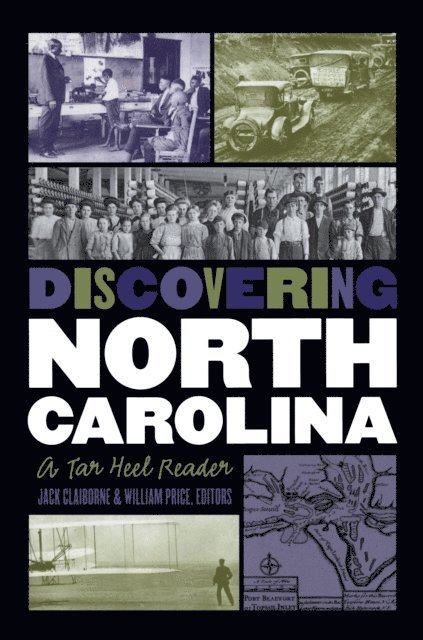
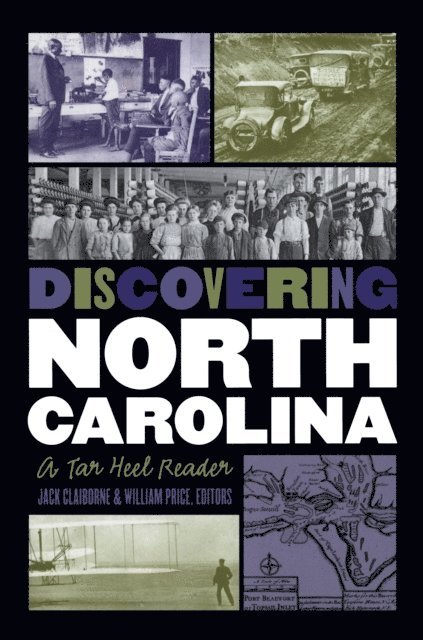
This splendid anthology offers an engaging journey through four centuries of North Carolina life. It draws on a wealth of sources — histories, biographies, diaries, novels, short stories, newspapers, and magazines — to show how North Carolina’s rich history and remarkable literary achievements cut across economic and racial lines in often surprising ways. There are selections by or about some of the state’s best-known sons and daughters, from Daniel Boone and Andrew Jackson to Ava Gardner, Doris Betts, and Tom Wicker; and topics covered include politics, sports, business, family life, education, race, religion, and war.
E-bok
Engelska, 2018520 kr
Läs direkt efter köp
The history of an important newspaper is almost by definition a political, economic, and social history of the region it serves as well as the human drama of the people whose visions, talents, and labors shaped it over the years. Jack Claiborne combines these elements in The Charlotte Observer, a narrative that traces the development of the largest newpaper in the Carolinas from Reconstruction to the present.A business-oriented paper from the outset, the Observer began as a four-page, single-sheet publication, printed and folded by hand and distributed mostly by train. Today its huge presses print, cut, count, and fold more than 230,000 copies daily and 270,000 on Sundays for distribution by truck to mountain towns and coastal resorts as well as the sprawling neighborhoods of Charlotte.The rise of the Observer mirrors the rise of Charlotte as the Carolinas'' largest trading, manufacturing, financial, and distribution center, and the evolution of the surrounding Piedmont countryside from an area of rolling farms and cotton fields to a dispersed urban region of manufacturing and commerce. In telling the Observer''s story, Claiborne also recounts the birth and death of its formal rival, the evening Charlotte News (1888-1985). The story documents the Observer''s embrace of the New South creed as it emerged as one of North Carolina''s most influential newspapers and the voice of its industrial interests.Like Charlotte and the surrounding region, which were shaped by such men as Zebulon Vance, James Duke, Henry Belk, and Cameron Morrison, the Observer bears the imprint of many personalities, from pioneer industrialist D. A. Tompkins and the eloquent, outspoken editor J. P. Caldwell, to John S. and John L. Knight, leaders of the national company that owns the modern Observer. Spiced with vignettes of those and others who shaped and guided the paper, Claiborne''s account captures the clash of ambition and personality that marked the paper''s rise.The death of editor J. P. Caldwell in 1911 touched off a five-year struggle for power until the paper was purchased by Curtis Johnson, who built it into a large and highly profitable enterprise. Johnson''s death in 1950 precipitated another five-year struggle, resulting in the paper''s purchase by the Knights and their appointment of "Pete" McKnight as editor. Under McKnight the paper abandoned its rigid conservatism to become an advocate of social change across the South.Originally published in 1986.A UNC Press Enduring Edition -- UNC Press Enduring Editions use the latest in digital technology to make available again books from our distinguished backlist that were previously out of print. These editions are published unaltered from the original, and are presented in affordable paperback formats, bringing readers both historical and cultural value.
E-bok
PDF, Engelska, 2018398 kr
Läs direkt efter köp
The history of an important newspaper is almost by definition a political, economic, and social history of the region it serves as well as the human drama of the people whose visions, talents, and labors shaped it over the years. Jack Claiborne combines these elements in The Charlotte Observer, a narrative that traces the development of the largest newpaper in the Carolinas from Reconstruction to the present.A business-oriented paper from the outset, the Observer began as a four-page, single-sheet publication, printed and folded by hand and distributed mostly by train. Today its huge presses print, cut, count, and fold more than 230,000 copies daily and 270,000 on Sundays for distribution by truck to mountain towns and coastal resorts as well as the sprawling neighborhoods of Charlotte.The rise of the Observer mirrors the rise of Charlotte as the Carolinas'' largest trading, manufacturing, financial, and distribution center, and the evolution of the surrounding Piedmont countryside from an area of rolling farms and cotton fields to a dispersed urban region of manufacturing and commerce. In telling the Observer''s story, Claiborne also recounts the birth and death of its formal rival, the evening Charlotte News (1888-1985). The story documents the Observer''s embrace of the New South creed as it emerged as one of North Carolina''s most influential newspapers and the voice of its industrial interests.Like Charlotte and the surrounding region, which were shaped by such men as Zebulon Vance, James Duke, Henry Belk, and Cameron Morrison, the Observer bears the imprint of many personalities, from pioneer industrialist D. A. Tompkins and the eloquent, outspoken editor J. P. Caldwell, to John S. and John L. Knight, leaders of the national company that owns the modern Observer. Spiced with vignettes of those and others who shaped and guided the paper, Claiborne''s account captures the clash of ambition and personality that marked the paper''s rise.The death of editor J. P. Caldwell in 1911 touched off a five-year struggle for power until the paper was purchased by Curtis Johnson, who built it into a large and highly profitable enterprise. Johnson''s death in 1950 precipitated another five-year struggle, resulting in the paper''s purchase by the Knights and their appointment of "Pete" McKnight as editor. Under McKnight the paper abandoned its rigid conservatism to become an advocate of social change across the South.Originally published in 1986.A UNC Press Enduring Edition -- UNC Press Enduring Editions use the latest in digital technology to make available again books from our distinguished backlist that were previously out of print. These editions are published unaltered from the original, and are presented in affordable paperback formats, bringing readers both historical and cultural value.
E-bok
PDF, Engelska, 2017277 kr
Läs direkt efter köp
This splendid anthology offers an engaging journey through four centuries of North Carolina life. It draws on a wealth of sources — histories, biographies, diaries, novels, short stories, newspapers, and magazines — to show how North Carolina’s rich history and remarkable literary achievements cut across economic and racial lines in often surprising ways. There are selections by or about some of the state’s best-known sons and daughters, from Daniel Boone and Andrew Jackson to Ava Gardner, Doris Betts, and Tom Wicker; and topics covered include politics, sports, business, family life, education, race, religion, and war.
Häftad, Engelska, 2023
207 kr
Tillfälligt slut