Jack Jacobs - Böcker
Visar alla böcker från författaren Jack Jacobs. Handla med fri frakt och snabb leverans.
7 produkter
7 produkter
1 245 kr
Skickas inom 7-10 vardagar
The history of the Frankfurt School cannot be fully told without examining the relationships of Critical Theorists to their Jewish family backgrounds. Jewish matters had significant effects on key figures in the Frankfurt School, including Max Horkheimer, Theodor W. Adorno, Erich Fromm, Leo Lowenthal and Herbert Marcuse. At some points, their Jewish family backgrounds clarify their life paths; at others, these backgrounds help to explain why the leaders of the School stressed the significance of antisemitism. In the post-Second World War era, the differing relationships of Critical Theorists to their Jewish origins illuminate their distinctive stances toward Israel. This book investigates how the Jewish backgrounds of major Critical Theorists, and the ways in which they related to their origins, impacted upon their work, the history of the Frankfurt School, and differences that emerged among them over time.
350 kr
Skickas inom 7-10 vardagar
The history of the Frankfurt School cannot be fully told without examining the relationships of Critical Theorists to their Jewish family backgrounds. Jewish matters had significant effects on key figures in the Frankfurt School, including Max Horkheimer, Theodor W. Adorno, Erich Fromm, Leo Lowenthal and Herbert Marcuse. At some points, their Jewish family backgrounds clarify their life paths; at others, these backgrounds help to explain why the leaders of the School stressed the significance of antisemitism. In the post-Second World War era, the differing relationships of Critical Theorists to their Jewish origins illuminate their distinctive stances toward Israel. This book investigates how the Jewish backgrounds of major Critical Theorists, and the ways in which they related to their origins, impacted upon their work, the history of the Frankfurt School, and differences that emerged among them over time.
402 kr
Skickas inom 7-10 vardagar
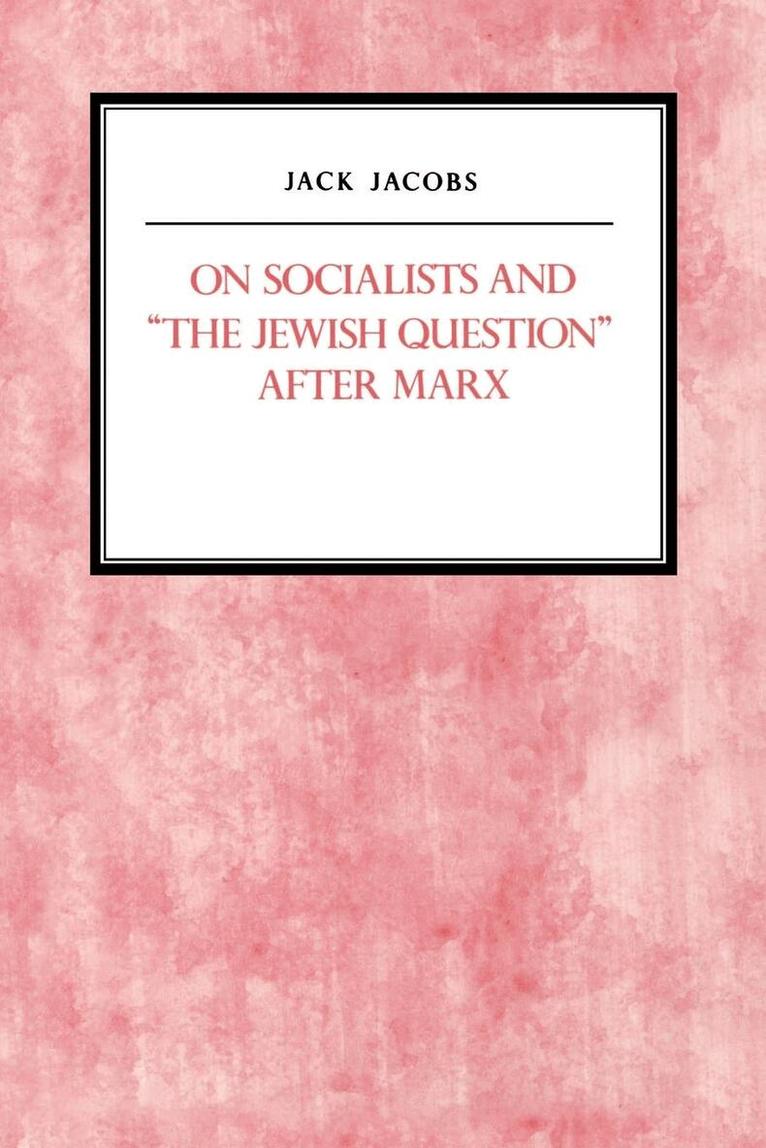
An enlightening and complex reconstruction of the dialogue between leading Socialist theoreticians and Jewish intellectuals from the 1880s until WWII. . . . Impressive not only for its meticulous and extensive research in archives throughout the U.S. and Europe but also for its lucid style.--ChoiceJack Jacobs, well versed in the history both of the general socialist movement and of Jewish socialism and Bundism in particular, brings out all the nuances and complexities of the relationship by focusing in detail on the attitudes towards Jews of three personalities: Karl Kautsky, Eduard Bernstein, and Rosa Luxemburg.--Jewish SocialistMastering a vast array of primary and secondary sources in more than five languages, Dr. Jacobs' meticulous research ... is an impressive piece of scholarship which enhances our understanding of an often troubled, yet important symbiotic relationship.--Andrei S. Markovits, Harvard University Author of The Politics of West German Trade Unions
1 451 kr
Skickas inom 5-8 vardagar
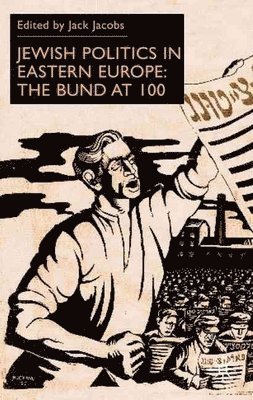
The Bund was the first modern Jewish political party in Eastern Europe and, arguably, the strongest Jewish party in Poland on the eve of the Second World War. Though 100 years have passed since its inception, the Bund and its legacy continue to be of abiding interest. Founded illegally and operated under the most adverse conditions, the Bund grew dramatically in the years immediately after its 1897 creation in Czarist Russia. It helped to organize the Russian Social Democratic Workers Party, it organized armed self-defense groups to fight against pogroms, and it played a significant role in the Russian Revolution of 1905. The Bundist became for many the symbol of the new Jew--enlightened, willing to fight for Jewish rights and needs, and unwilling to accept the status quo of Jewish communities dominated by the orthodox and the wealthy, and of a Russia oppressed by the Czar. Later, Bundist members were among those who contributed substantially to armed resistance in Nazi occupied Poland. Jewish Politics in Eastern Europe makes use of previously unexamined source materials to offer a range of new perspectives on the significance of the Bund and its ideas.Its fresh and insightful approaches will be of interest to all those concerned with Eastern European Jewry, Russian, Polish, and Ukranian history, and the history of socialist and labor movements.
260 kr
Skickas inom 10-15 vardagar
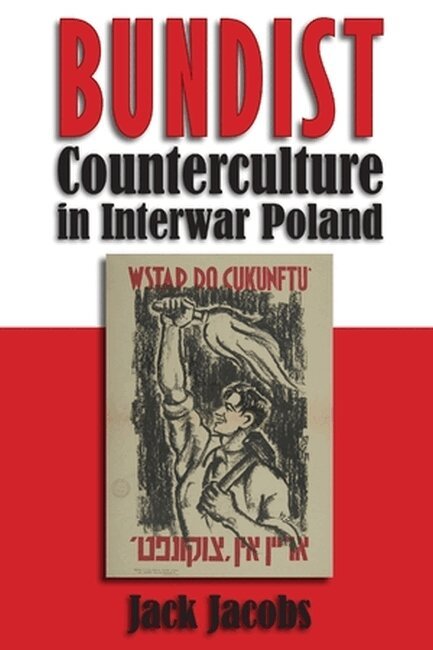
In the years between the two world wars, the Jewish community of Poland—the largest in Europe—was the cultural heart of the Jewish diaspora. The Jewish Workers’ Bund, which had a socialist, secularist, Yiddishist, and anti-Zionist orientation, won a series of important electoral battles in Poland on the eve of the Second World War and became a major political party. Many earlier works on the politics of Polish Jewry have suggested that Bundist victories were ephemeral or attributable to outside forces. Jack Jacobs, however, argues convincingly that the electoral success of the Bund was linked to the long-term efforts of the constellation of cultural, educational, and other movements revolving around the party. The Bundist movements for children, youth, and women, and for physical education offered highly innovative programs and promoted countercultural values.Drawing on meticulously researched archival materials, Jacobs shows how the development of these programs—such as a program to provide sex education to working-class Jewish youth—translated into a stronger, more robust party. At the same time, he suggests the Bund’s limitations, highlighting its failed women’s movement. Jacobs provides a fascinating account of Bundist movements and a thoughtful revision to the accepted view.
1 482 kr
Skickas inom 7-10 vardagar
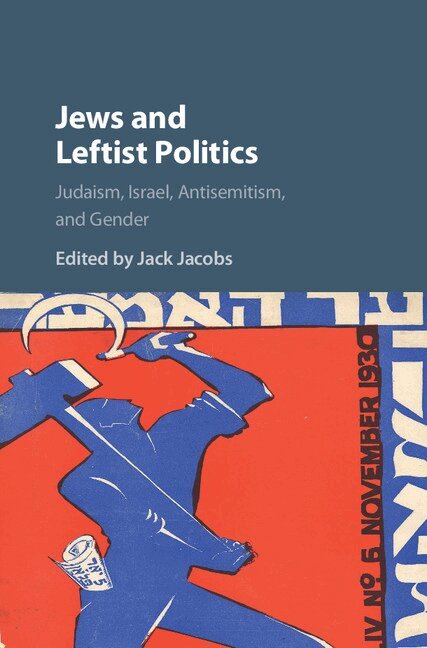
The relationships, past and present, between Jews and the political left remain of abiding interest to both the academic community and the public. Jews and Leftist Politics contains new and insightful chapters from world-renowned scholars and considers such matters as the political implications of Judaism; the relationships of leftists and Jews; the histories of Jews on the left in Europe, the United States, and Israel; contemporary anti-Zionism; the associations between specific Jews and Communist parties; and the importance of gendered perspectives. It also contains fresh studies of canonical figures, including Gershom Scholem, Gustav Landauer, and Martin Buber, and examines the affiliations of Jews to prominent institutions, calling into question previous widely held assumptions. The volume is characterized by judicious appraisals made by respected authorities, and sheds considerable light on contentious themes.
292 kr
Skickas inom 3-6 vardagar