Jacopo Morelli – författare
Visar alla böcker från författaren Jacopo Morelli. Handla med fri frakt och snabb leverans.
15 produkter
15 produkter
Inbunden, Engelska, 2022
385 kr
Skickas inom 5-8 vardagar
Häftad, Engelska, 2022
235 kr
Skickas inom 5-8 vardagar
Inbunden, Italienska, 2023
357 kr
Skickas inom 5-8 vardagar
Inbunden, Tyska, 2023
371 kr
Skickas inom 5-8 vardagar
Häftad, Tyska, 2023
214 kr
Skickas inom 5-8 vardagar
Häftad, Italienska, 2023
186 kr
Skickas inom 5-8 vardagar
Inbunden, Italienska, 2025
471 kr
Skickas inom 5-8 vardagar
Häftad, Italienska, 2025
353 kr
Skickas inom 5-8 vardagar
Inbunden, Italienska, 2025
385 kr
Skickas inom 5-8 vardagar
Häftad, Italienska, 2025
201 kr
Skickas inom 5-8 vardagar
Inbunden, Engelska, 2026
1 774 kr
Skickas inom 10-15 vardagar
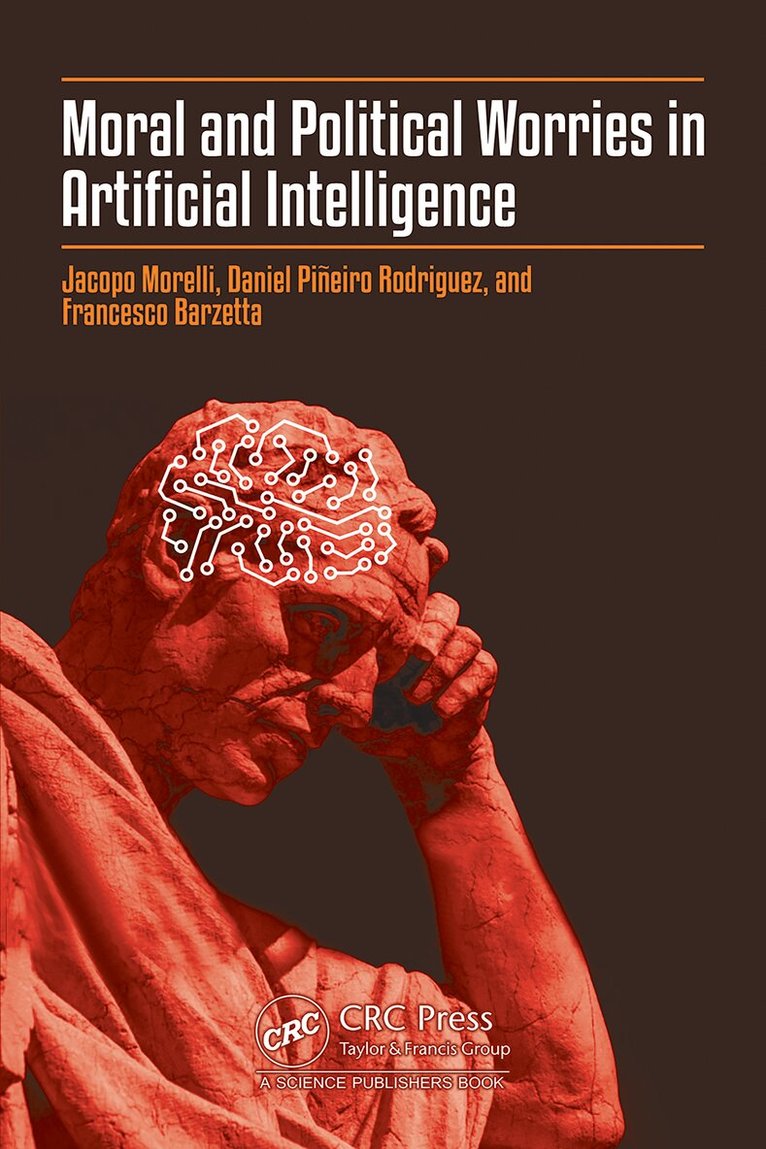
On the one hand AI is hailed as a driver of unprecedented progress, with the potential to alleviate poverty, expand access to education, and improve healthcare outcomes, and on the other, critics highlight risks such as bias, surveillance, erosion of accountability, and even the possibility of autonomous systems escaping human control. Some argue that current AI systems are far less “intelligent” than the label suggests, lacking consciousness or intentionality, and are therefore better understood as powerful but limited tools. Others emphasize the dangers of delegating critical decisions to opaque algorithms, especially in domains such as justice, warfare, or mental health. These divergent perspectives point to a shared recognition: AI cannot be addressed solely as a technical matter but must be evaluated within moral, legal, and political frameworks.In this sense, the key questions are normative: What duties and responsibilities should guide the creation and deployment of AI systems? How can risks such as discrimination, loss of privacy, or democratic erosion be mitigated? And what forms of governance are required to ensure accountability? This book takes up these challenges by examining AI through an interdisciplinary lens, highlighting its promises, its dangers, and the ethical, legal, and political structures necessary to use it responsibly.
E-bok
PDF, Engelska, 2026841 kr
Läs direkt efter köp
On the one hand AI is hailed as a driver of unprecedented progress, with the potential to alleviate poverty, expand access to education, and improve healthcare outcomes, and on the other, critics highlight risks such as bias, surveillance, erosion of accountability, and even the possibility of autonomous systems escaping human control. Some argue that current AI systems are far less "e;intelligent"e; than the label suggests, lacking consciousness or intentionality, and are therefore better understood as powerful but limited tools. Others emphasize the dangers of delegating critical decisions to opaque algorithms, especially in domains such as justice, warfare, or mental health. These divergent perspectives point to a shared recognition: AI cannot be addressed solely as a technical matter but must be evaluated within moral, legal, and political frameworks.In this sense, the key questions are normative: What duties and responsibilities should guide the creation and deployment of AI systems? How can risks such as discrimination, loss of privacy, or democratic erosion be mitigated? And what forms of governance are required to ensure accountability? This book takes up these challenges by examining AI through an interdisciplinary lens, highlighting its promises, its dangers, and the ethical, legal, and political structures necessary to use it responsibly.
E-bok
Engelska, 2026841 kr
Läs direkt efter köp
On the one hand AI is hailed as a driver of unprecedented progress, with the potential to alleviate poverty, expand access to education, and improve healthcare outcomes, and on the other, critics highlight risks such as bias, surveillance, erosion of accountability, and even the possibility of autonomous systems escaping human control. Some argue that current AI systems are far less "e;intelligent"e; than the label suggests, lacking consciousness or intentionality, and are therefore better understood as powerful but limited tools. Others emphasize the dangers of delegating critical decisions to opaque algorithms, especially in domains such as justice, warfare, or mental health. These divergent perspectives point to a shared recognition: AI cannot be addressed solely as a technical matter but must be evaluated within moral, legal, and political frameworks.In this sense, the key questions are normative: What duties and responsibilities should guide the creation and deployment of AI systems? How can risks such as discrimination, loss of privacy, or democratic erosion be mitigated? And what forms of governance are required to ensure accountability? This book takes up these challenges by examining AI through an interdisciplinary lens, highlighting its promises, its dangers, and the ethical, legal, and political structures necessary to use it responsibly.
Häftad, Italienska, 2011
229 kr
Skickas inom 5-8 vardagar
Häftad, Engelska, 2009
395 kr
Skickas inom 3-6 vardagar