Jacqueline Stevens - Böcker
Visar alla böcker från författaren Jacqueline Stevens. Handla med fri frakt och snabb leverans.
7 produkter
7 produkter
Del 34 - New Directions in Critical Theory
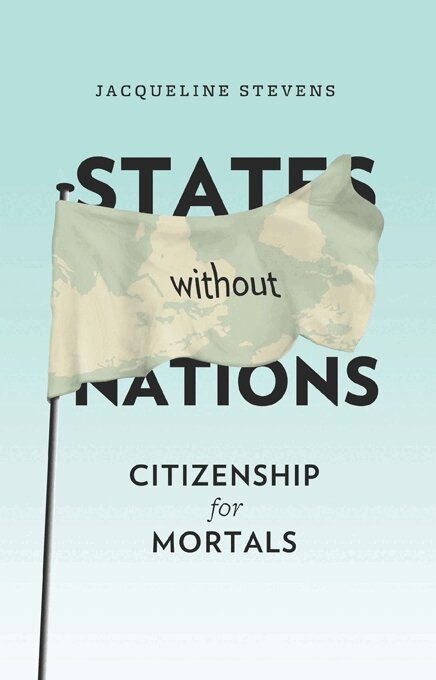
States Without Nations
Citizenship for Mortals
Inbunden, Engelska, 2009
1 108 kr
Skickas inom 7-10 vardagar
As citizens, we hold certain truths to be self-evident: that the rights to own land, marry, inherit property, and especially to assume birthright citizenship should be guaranteed by the state. The laws promoting these rights appear not only to preserve our liberty but to guarantee society remains just. Yet considering how much violence and inequality results from these legal mandates, Jacqueline Stevens asks whether we might be making the wrong assumptions. Would a world without such laws be more just? Arguing that the core laws of the nation-state are more about a fear of death than a desire for freedom, Jacqueline Stevens imagines a world in which birthright citizenship, family inheritance, state-sanctioned marriage, and private land ownership are eliminated. Would chaos be the result? Drawing on political theory and history and incorporating contemporary social and economic data, she brilliantly critiques our sentimental attachments to birthright citizenship, inheritance, and marriage and highlights their harmful outcomes, including war, global apartheid, destitution, family misery, and environmental damage.It might be hard to imagine countries without the rules of membership and ownership that have come to define them, but as Stevens shows, conjuring new ways of reconciling our laws with the condition of mortality reveals the flaws of our present institutions and inspires hope for moving beyond them.
Del 34 - New Directions in Critical Theory
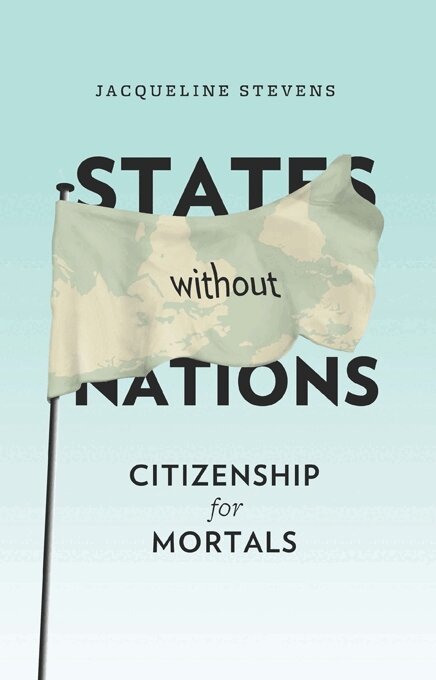
States Without Nations
Citizenship for Mortals
Häftad, Engelska, 2011
592 kr
Skickas inom 3-6 vardagar
As citizens, we hold certain truths to be self-evident: that the rights to own land, marry, inherit property, and especially to assume birthright citizenship should be guaranteed by the state. The laws promoting these rights appear not only to preserve our liberty but to guarantee society remains just. Yet considering how much violence and inequality results from these legal mandates, Jacqueline Stevens asks whether we might be making the wrong assumptions. Would a world without such laws be more just? Arguing that the core laws of the nation-state are more about a fear of death than a desire for freedom, Jacqueline Stevens imagines a world in which birthright citizenship, family inheritance, state-sanctioned marriage, and private land ownership are eliminated. Would chaos be the result? Drawing on political theory and history and incorporating contemporary social and economic data, she brilliantly critiques our sentimental attachments to birthright citizenship, inheritance, and marriage and highlights their harmful outcomes, including war, global apartheid, destitution, family misery, and environmental damage.It might be hard to imagine countries without the rules of membership and ownership that have come to define them, but as Stevens shows, conjuring new ways of reconciling our laws with the condition of mortality reveals the flaws of our present institutions and inspires hope for moving beyond them.
2 044 kr
Skickas inom 10-15 vardagar
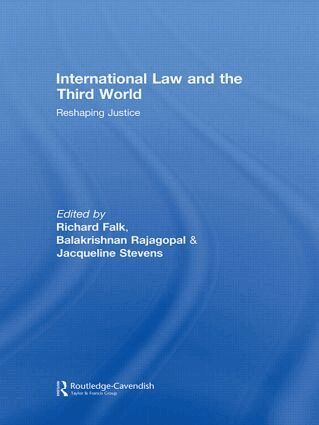
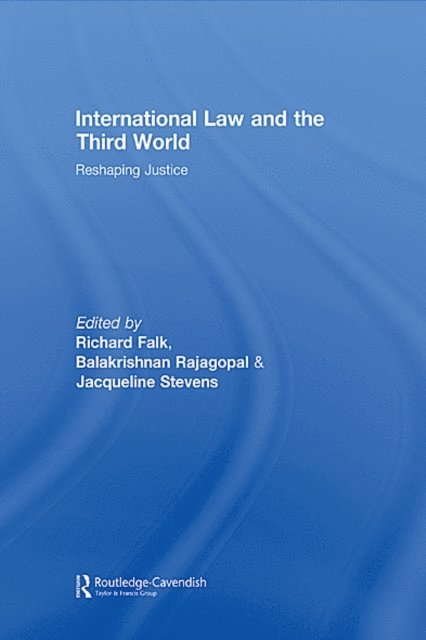
This volume is devoted to critically exploring the past, present and future relevance of international law to the priorities of the countries, peoples and regions of the South. Within the limits of space it has tried to be comprehensive in scope and representative in perspective and participation. The contributions are grouped into three clusters to give some sense of coherence to the overall theme: articles by Baxi, Anghie, Falk, Stevens and Rajagopal on general issues bearing on the interplay between international law and world order; articles highlighting regional experience by An-Na’im, Okafor, Obregon and Shalakany; and articles on substantive perspectives by Mgbeoji, Nesiah, Said, Elver, King-Irani, Chinkin, Charlesworth and Gathii. This collective effort gives an illuminating account of the unifying themes, while at the same time exhibiting the wide diversity of concerns and approaches.
617 kr
Skickas inom 10-15 vardagar
This volume is devoted to critically exploring the past, present and future relevance of international law to the priorities of the countries, peoples and regions of the South. Within the limits of space it has tried to be comprehensive in scope and representative in perspective and participation. The contributions are grouped into three clusters to give some sense of coherence to the overall theme: articles by Baxi, Anghie, Falk, Stevens and Rajagopal on general issues bearing on the interplay between international law and world order; articles highlighting regional experience by An-Na’im, Okafor, Obregon and Shalakany; and articles on substantive perspectives by Mgbeoji, Nesiah, Said, Elver, King-Irani, Chinkin, Charlesworth and Gathii. This collective effort gives an illuminating account of the unifying themes, while at the same time exhibiting the wide diversity of concerns and approaches.
503 kr
Skickas inom 7-10 vardagar
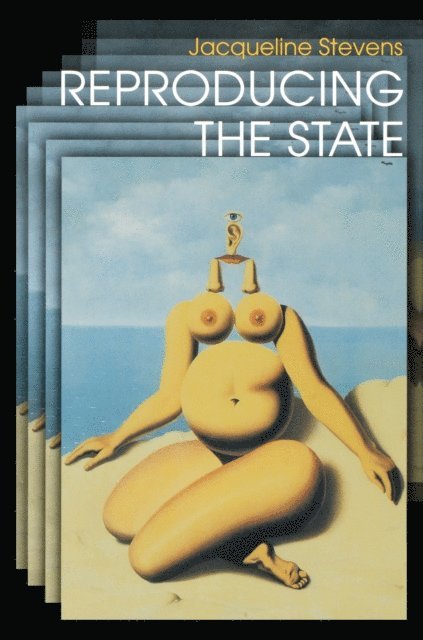
People are said to acquire their affiliations of ethnicity, race, and sex at birth. Hence, these affiliations have long been understood to be natural, independent of the ability of political societies to define who we are. Reproducing the State vigorously challenges the conventional view, as well as post-structuralist scholarship that minimizes state power. Jacqueline Stevens examines birth-based theories of membership and group affiliations in political societies ranging from the Athenian polis, to tribes of Australia, to the French republic, to the contemporary United States. The book details how political societies determine the kinship rules that are used to reproduce political societies. Stevens analyzes the ways that ancestral and territorial birth rules for membership in political societies pattern other intergenerational affiliations. She shows how the notion of ethnicity depends on the implicit or explicit invocation of a past, present, or future political society.She also shows how geography is used to represent political regions, including continents, as the seemingly natural underpinning for racial taxonomies perpetuated through miscegenation laws and birth certificates. And Stevens argues that sex differences are also constituted through membership practices of political societies. In its chronological and disciplinary range, Reproducing the State will reward the interest of scholars in many fields, including anthropology, history, political science, sociology, women's studies, race studies, and ethnic studies.
1 144 kr
Skickas inom 7-10 vardagar
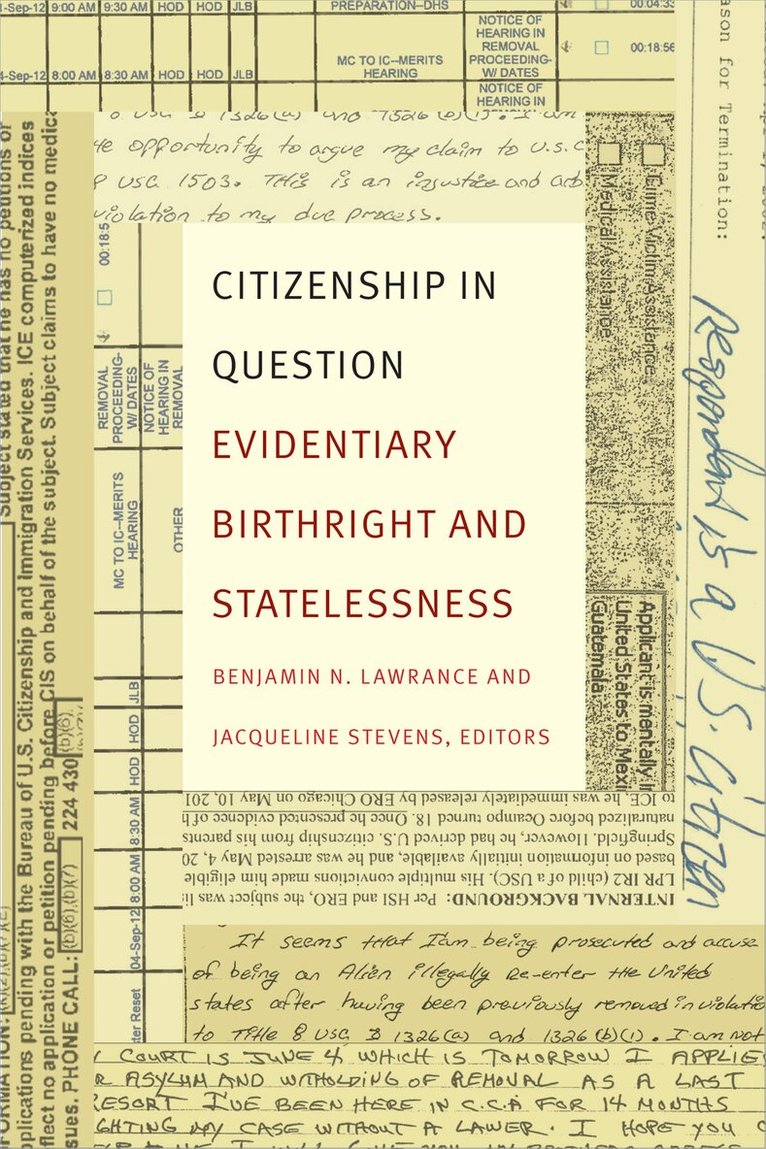
Citizenship is often assumed to be a clear-cut issue-either one has it or one does not. However, as the contributors to Citizenship in Question demonstrate, citizenship is not self-evident; it emerges from often obscure written records and is interpreted through ambiguous and dynamic laws. In case studies that analyze the legal barriers to citizenship rights in over twenty countries, the contributors explore how states use evidentiary requirements to create and police citizenship, often based on fictions of racial, ethnic, class, and religious differences. Whether examining the United States’ deportation of its own citizens, the selective use of DNA tests and secret results in Thailand, or laws that have stripped entire populations of citizenship, the contributors emphasize the political, psychological, and personal impact of citizenship policies. Citizenship in Question incites scholars to revisit long-standing political theories and debates about nationality, free movement, and immigration premised on the assumption of clear demarcations between citizens and noncitizens.Contributors. Alfred Babo, Jacqueline Bhabha, Jacqueline Field, Amanda Flaim, Sara L. Friedman, Daniel Kanstroom, Benjamin N. Lawrance, Beatrice McKenzie, Polly J. Price, Rachel E. Rosenbloom, Kim Rubenstein, Kamal Sadiq, Jacqueline Stevens, Margaret D. Stock
333 kr
Skickas inom 7-10 vardagar
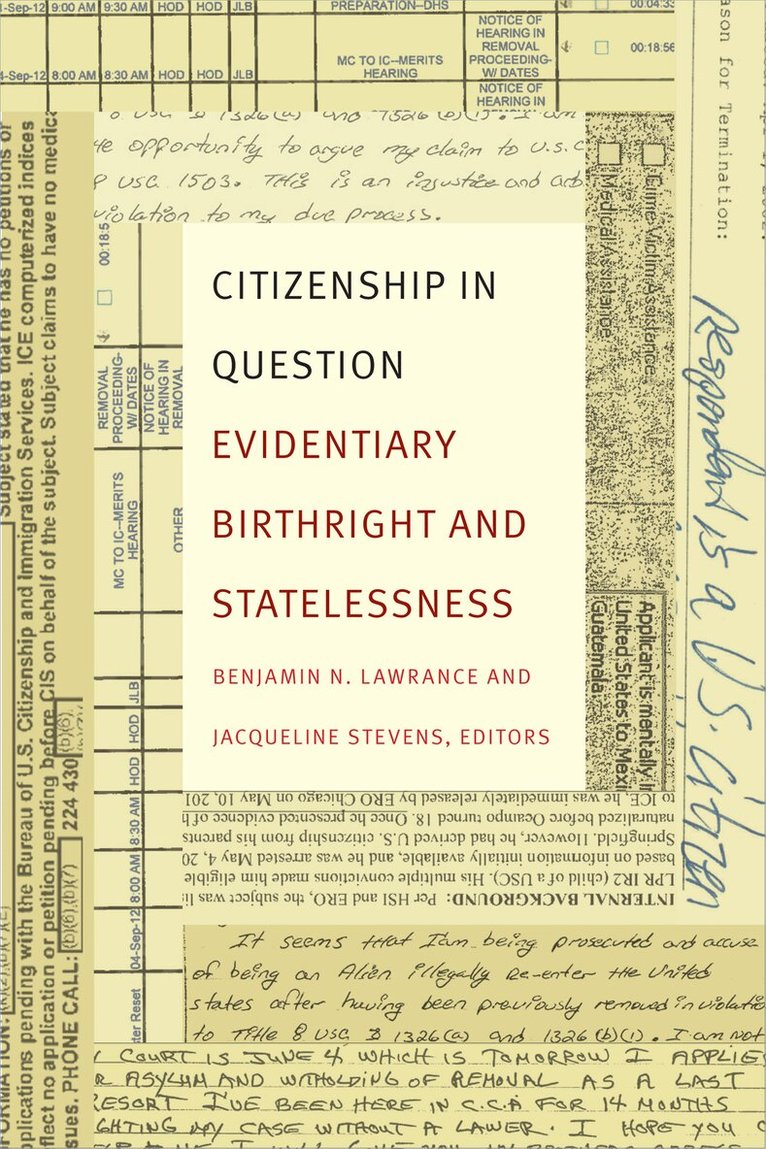
Citizenship is often assumed to be a clear-cut issue-either one has it or one does not. However, as the contributors to Citizenship in Question demonstrate, citizenship is not self-evident; it emerges from often obscure written records and is interpreted through ambiguous and dynamic laws. In case studies that analyze the legal barriers to citizenship rights in over twenty countries, the contributors explore how states use evidentiary requirements to create and police citizenship, often based on fictions of racial, ethnic, class, and religious differences. Whether examining the United States’ deportation of its own citizens, the selective use of DNA tests and secret results in Thailand, or laws that have stripped entire populations of citizenship, the contributors emphasize the political, psychological, and personal impact of citizenship policies. Citizenship in Question incites scholars to revisit long-standing political theories and debates about nationality, free movement, and immigration premised on the assumption of clear demarcations between citizens and noncitizens.Contributors. Alfred Babo, Jacqueline Bhabha, Jacqueline Field, Amanda Flaim, Sara L. Friedman, Daniel Kanstroom, Benjamin N. Lawrance, Beatrice McKenzie, Polly J. Price, Rachel E. Rosenbloom, Kim Rubenstein, Kamal Sadiq, Jacqueline Stevens, Margaret D. Stock