Jade d'Alpoim Guedes - Böcker
Visar alla böcker från författaren Jade d'Alpoim Guedes. Handla med fri frakt och snabb leverans.
3 produkter
3 produkter
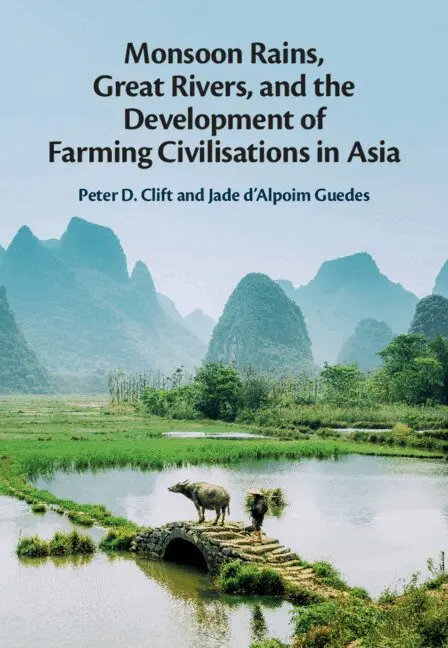
Monsoon Rains, Great Rivers and the Development of Farming Civilisations in Asia
Inbunden, Engelska, 2021
1 100 kr
Skickas inom 7-10 vardagar
The Asian monsoon and associated river systems supply the water that sustains a large portion of humanity, and has enabled Asia to become home to some of the oldest and most productive farming systems on Earth. This book uses climate data and environmental models to provide a detailed review of variations in the Asian monsoon since the mid-Holocene, and its impacts on farming systems and human settlement. Future changes to the monsoon due to anthropogenically-driven global warming are also discussed. Faced with greater rainfall and more cyclones in South Asia, as well as drying in North China and regional rising sea levels, understanding how humans have developed resilient strategies in the past to climate variations is critical. Containing important implications for the large populations and booming economies in the Indo-Pacific region, this book is an important resource for researchers and graduate students studying the climate, environmental history, agronomy and archaeology of Asia.
1 499 kr
Kommande
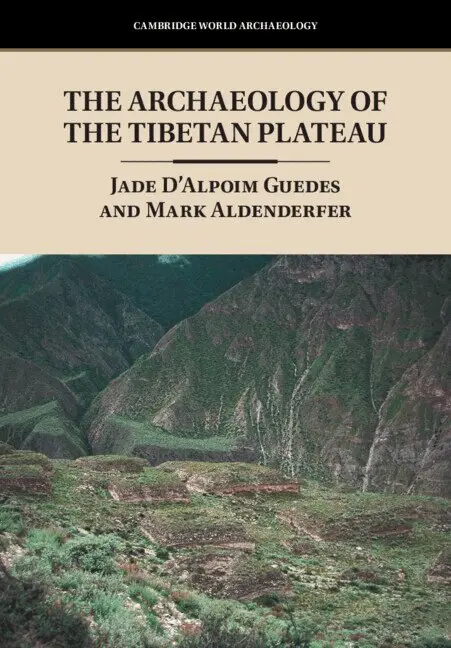
The Archaeology of the Tibetan Plateau offers a comprehensive survey of past and recent research on the prehistory of the plateau, from its early peopling to the eve of the foundation of the Tibetan Empire in the 7th C. The first English language book-length study of the Tibetan past, it is organized around eight chapters that describe modern and ancient environments, historical speculations about ancient Tibet by mystics, fascists, and contemporary scholars, evidence of the first peoples to live and thrive on the plateau, the arrival of the domesticated plants and animals that transformed the subsistence economy, and the emergence of early forms of status and prestige. The book concludes with a discussion of how the past informs environmental conservation and heritage preservation and explores how archaeological data are used by the Chinese state to create an alternative vision of the Tibetan past at odds with indigenous Tibetan perspectives.
509 kr
Skickas inom 5-8 vardagar
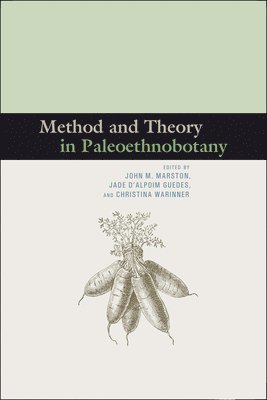
Paleoethnobotany, the study of archaeological plant remains, is poised at the intersection of the study of the past and concerns of the present, including agricultural decision making, biodiversity, and global environmental change, and has much to offer to archaeology, anthropology, and the interdisciplinary study of human relationships with the natural world. Method and Theory in Paleoethnobotany demonstrates those connections and highlights the increasing relevance of the study of past human-plant interactions for understanding the present and future.A diverse and highly regarded group of scholars reference a broad array of literature from around the world as they cover their areas of expertise in the practice and theory of paleoethnobotany—starch grain analysis, stable isotope analysis, ancient DNA, digital data management, and ecological and postprocessual theory.The only comprehensive edited volume focusing on method and theory to appear in the last twenty-five years, Method and Theory in Paleoethnobotany addresses the new areas of inquiry that have become central to contemporary archaeological debates, as well as the current state of theoretical, methodological, and empirical work in paleoethnobotany.