Jago Cooper - Böcker
Visar alla böcker från författaren Jago Cooper. Handla med fri frakt och snabb leverans.
3 produkter
3 produkter
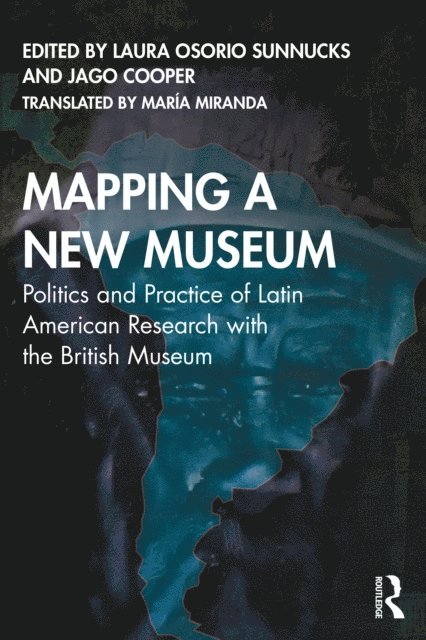
Mapping a New Museum
Politics and Practice of Latin American Research with the British Museum
Inbunden, Engelska, 2021
2 166 kr
Skickas inom 10-15 vardagar
Mapping a New Museum seeks to rethink the museum’s role in today’s politically conscious world. Presenting a selection of innovative projects that have taken place in Latin America over the last year, the book begins to map out possibilities for the future of the global museum. The projects featured within the pages of this book were all supported by The Santo Domingo Centre of Excellence for Latin American Research (SDCELAR) at the British Museum (BM), with the aim of making the BM’s Latin American collections meaningful to communities in the region and others worldwide. These projects illustrate how communities manage cultural heritage and, taken together, they suggest that there is also no all-encompassing counter-narrative that can be used to "decolonise" museums. Reflecting on, and experimenting with, the ways that research happens within museum collections, the interdisciplinary collaborations described within these pages have used collections to tell stories that destabilise societal assumptions, whilst also proactively seeking out that which has historically been overlooked. The result is, the book argues, a research environment that challenges intellectual orthodoxy and values critical and alternative forms of knowledge.Mapping a New Museum contains English and Spanish versions of every chapter, which enables the book to put critical stress on the self-referentiality of Anglophone literature in the field of museum anthropology. The book will be essential reading for students, scholars and museum practitioners working around the world.
Mapping a New Museum
Politics and Practice of Latin American Research with the British Museum
Häftad, Engelska, 2021
584 kr
Skickas inom 10-15 vardagar
Mapping a New Museum seeks to rethink the museum’s role in today’s politically conscious world. Presenting a selection of innovative projects that have taken place in Latin America over the last year, the book begins to map out possibilities for the future of the global museum. The projects featured within the pages of this book were all supported by The Santo Domingo Centre of Excellence for Latin American Research (SDCELAR) at the British Museum (BM), with the aim of making the BM’s Latin American collections meaningful to communities in the region and others worldwide. These projects illustrate how communities manage cultural heritage and, taken together, they suggest that there is also no all-encompassing counter-narrative that can be used to "decolonise" museums. Reflecting on, and experimenting with, the ways that research happens within museum collections, the interdisciplinary collaborations described within these pages have used collections to tell stories that destabilise societal assumptions, whilst also proactively seeking out that which has historically been overlooked. The result is, the book argues, a research environment that challenges intellectual orthodoxy and values critical and alternative forms of knowledge.Mapping a New Museum contains English and Spanish versions of every chapter, which enables the book to put critical stress on the self-referentiality of Anglophone literature in the field of museum anthropology. The book will be essential reading for students, scholars and museum practitioners working around the world.
302 kr
Skickas inom 5-8 vardagar
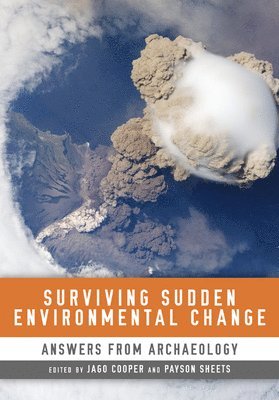
Archaeologists have long encountered evidence of natural disasters through excavation and stratigraphy. In Surviving Sudden Environmental Change, case studies examine how eight different past human communities-ranging from Arctic to equatorial regions, from tropical rainforests to desert interiors, and from deep prehistory to living memory-faced and coped with such dangers.Many disasters originate from a force of nature, such as an earthquake, cyclone, tsunami, volcanic eruption, drought, or flood. But that is only half of the story; decisions of people and their particular cultural lifeways are the rest. Sociocultural factors are essential in understanding risk, impact, resilience, reactions, and recoveries from massive sudden environmental changes. By using deep-time perspectives provided by interdisciplinary approaches, this book provides a rich temporal background to the human experience of environmental hazards and disasters. In addition, each chapter is followed by an abstract summarizing the important implications for today's management practices and providing recommendations for policy makers. Publication supported in part by the National Science Foundation.