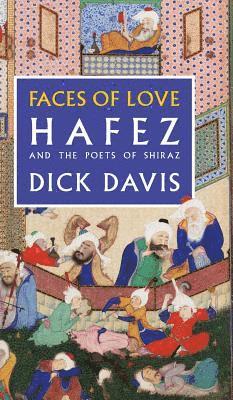
Acclaimed translator Dick Davis breathes new life into the timeless works of three masters of fourteenth-century Persian literature.Together, Hafez, a giant of world literature; Jahan Malek Khatun, an eloquent princess; and Obayd-e Zakani, a dissolute satirist, represent one of the most remarkable literary flowerings of any era. All three lived in the famed city of Shiraz, a provincial capital of south-central Iran, and all three drew support from arts-loving rulers during a time better known for its violence than its creative brilliance. Here Dick Davis, an award-winning poet widely considered 'our finest translator of Persian poetry' (The Times Literary Supplement), presents a diverse selection of some of the best poems by these world-renowned authors and shows us the spiritual and secular aspects of love, in varieties embracing every aspect of the human heart.A Choice Magazine Outstanding Academic Title for 2013Dick Davis is a translator, a poet, and a scholar of Persian literature who has published more than twenty books. He is a fellow of the Royal Society of Literature and has taught at the University of California at Santa Barbara and Ohio State University. He lives in Columbus, Ohio.
This bilingual edition of Faces of Love: Hafez and the Poets of Shiraz has the original Persian verses facing the English translations. The three Shirazi poets whose work is featured here, Hafez, Jahan Malek Khatun, and Obayd-e Zakani, lived at the same time (the mid fourteenth century), and certainly knew of one another Obayd wrote at least two poems about Jahan Khatun, and Jahan Khatun quotes Hafez in one of her poems. Its extremely likely that, during the 1340s and early 1350s at least, they also knew one another personally. The poetic life of the city during this period centered on the court of the ruling family, the Injus; Jahan Khatun was an Inju princess, while her uncle, Abu Eshaq, the head of the family and the ruler of the city, was a great patron of poets.
Jahan Khatun was a fourteenth-century Persian princess who lived through tumultuous political upheavals: her father was murdered when she was a teenager, eleven years later her familys dynasty was overthrown and all her male relatives were killed, and once her family had lost all their political power she suffered imprisonment and exile. Despite all this her poems give us a charming portrait of someone eagerly grasping for whatever pleasures she could salvage from life. Only one thing seems to have defeated her apparently indomitable spirit, the death of her infant daughter Soltan Bakht. She mentions her familys and her own political setbacks in her poems, but not often and only briefly; for her daughter though she wrote twenty three heartfelt, despairing elegies, and it is clear that the death of her young child was the one disaster in her life that she found impossible to deal with. This little book contains verse translations of all twenty three elegies, rendered into English for the first time.