James A. Estes – författare
Visar alla böcker från författaren James A. Estes. Handla med fri frakt och snabb leverans.
6 produkter
6 produkter
Del 14 - Organisms and Environments
Serendipity
An Ecologist's Quest to Understand Nature
Inbunden, Engelska, 2016
258 kr
Skickas inom 5-8 vardagar
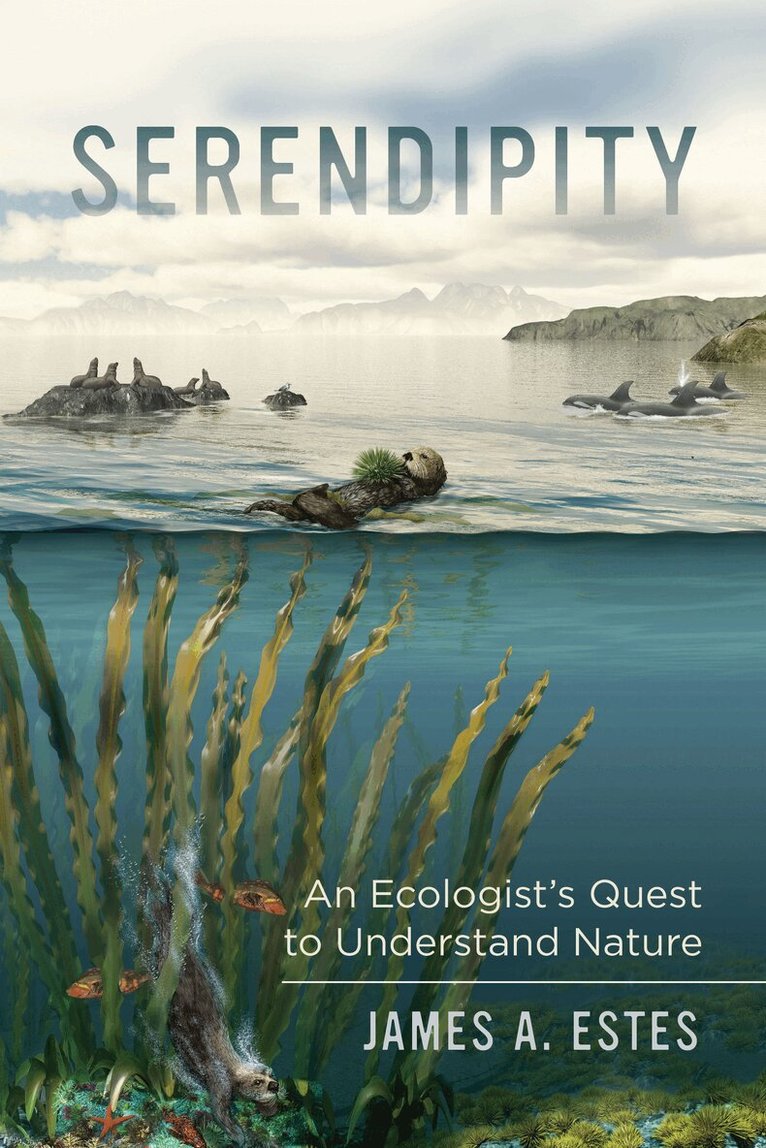
To newly minted biologist James Estes, the sea otters he was studying in the leafy kelp forests off the coast of Alaska appeared to have an unbalanced relationship with their greater environment. Gorging themselves on the sea urchins that grazed among the kelp, these small charismatic mammals seemed to give little back in return. But as Estes dug deeper, he unearthed a far more complex relationship between the otter and its underwater environment, discovering that otters play a critical role in driving positive ecosystem dynamics. While teasing out the connective threads, he began to question our assumptions about ecological relationships. These questions would ultimately inspire a lifelong quest to better understand the surprising complexity of our natural world and the unexpected ways we discover it. Serendipity tells the story of James Estes' life as a naturalist and the concepts that have driven his interest in researching the ecological role of top-level predators.Using the relationships between sea otters, kelp, and sea urchins as a touchstone, Estes retraces his investigations of numerous other species, ecosystems, and ecological processes in an attempt to discover why ecologists can learn so many details about the systems in which they work and yet understand so little about the broader processes that influence these systems. Part memoir, part natural history, and deeply inquisitive, Serendipity will entertain and inform readers as it raises thoughtful questions about our relationship with the natural world.
Del 14 - Organisms and Environments
Serendipity
An Ecologist's Quest to Understand Nature
Häftad, Engelska, 2020
216 kr
Skickas inom 5-8 vardagar
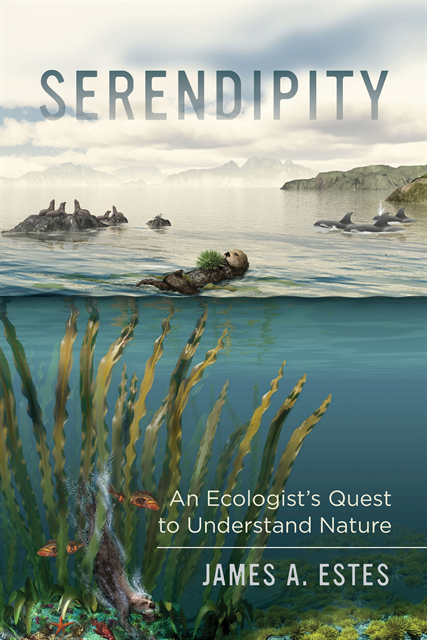
"Many of the findings in the book . . . are classics of ecology. . . . A rare and delightful insight into timely science."—Jane Lubchenco, Nature"Estes's refreshing narrative deftly weaves rigorous science with personal reflection to create an absorbing and introspective read that is equal parts memoir, ecological textbook, and motivational guidebook for young ecologists."—ScienceTo newly minted biologist James Estes, the sea otters he was studying in the leafy kelp forests off the coast of Alaska appeared to have an unbalanced relationship with their greater environment. Gorging themselves on the sea urchins that grazed among the kelp, these small charismatic mammals seemed to give little back in return. But as Estes dug deeper, he unearthed a far more complex relationship between the otter and its underwater environment, discovering that otters play a critical role in driving positive ecosystem dynamics. While teasing out the connective threads, he began to question our assumptions about ecological relationships. These questions would ultimately inspire a lifelong quest to better understand the surprising complexity of our natural world and the unexpected ways we discover it. Serendipity tells the story of James Estes’s life as a naturalist and the concepts that have driven his interest in researching the ecological role of top-level predators. Using the relationships between sea otters, kelp, and sea urchins as a touchstone, Estes retraces his investigations of numerous other species, ecosystems, and ecological processes in an attempt to discover why ecologists can learn so many details about the systems in which they work and yet understand so little about the broader processes that influence these systems. Part memoir, part natural history, and deeply inquisitive, Serendipity will entertain and inform readers as it raises thoughtful questions about our relationship with the natural world.
E-bok
PDF, Engelska, 20071 285 kr
Läs direkt efter köp
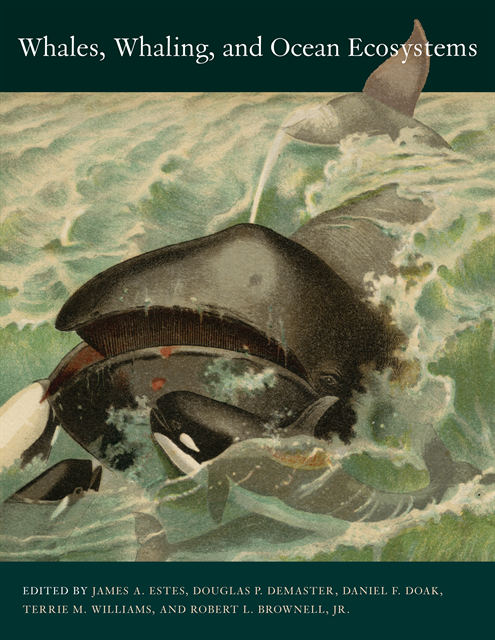
This unprecedented volume presents a sweeping picture of what we know about the natural history, biology, and ecology of whales in the broad context of the dynamics of ocean ecosystems. Innovative and comprehensive, the volume encompasses multiple points of view to consider the total ecological impact of industrial whaling on the world''s oceans. Combining empirical research, ecological theory and modeling, and historical data, its chapters present perspectives from ecology, population biology, physiology, genetics, evolutionary history, ocean biogeography, economics, culture, and law, among other disiplines. Throughout, contributors investigate how whaling fundamentally disrupted ocean ecosystems, examine the various roles whales play in food webs, and discuss the continuing ecological chain reactions to the depletion of these large animals. In addition to reviewing what is known of the current and historic whale populations, Whales, Whaling, and Ocean Ecosystems considers how this knowledge will bear on scientific approaches to conservation and whaling in the future and provocatively asks whether it is possible to restore ocean ecosystems to their pre-whaling condition.
E-bok
Engelska, 2016341 kr
Läs direkt efter köp
"Many of the findings in the book . . . are classics of ecology. . . . A rare and delightful insight into timely science."—Jane Lubchenco, Nature "Estes's refreshing narrative deftly weaves rigorous science with personal reflection to create an absorbing and introspective read that is equal parts memoir, ecological textbook, and motivational guidebook for young ecologists."—Science To newly minted biologist James Estes, the sea otters he was studying in the leafy kelp forests off the coast of Alaska appeared to have an unbalanced relationship with their greater environment. Gorging themselves on the sea urchins that grazed among the kelp, these small charismatic mammals seemed to give little back in return. But as Estes dug deeper, he unearthed a far more complex relationship between the otter and its underwater environment, discovering that otters play a critical role in driving positive ecosystem dynamics. While teasing out the connective threads, he began to question our assumptions about ecological relationships. These questions would ultimately inspire a lifelong quest to better understand the surprising complexity of our natural world and the unexpected ways we discover it. Serendipity tells the story of James Estes’s life as a naturalist and the concepts that have driven his interest in researching the ecological role of top-level predators. Using the relationships between sea otters, kelp, and sea urchins as a touchstone, Estes retraces his investigations of numerous other species, ecosystems, and ecological processes in an attempt to discover why ecologists can learn so many details about the systems in which they work and yet understand so little about the broader processes that influence these systems. Part memoir, part natural history, and deeply inquisitive, Serendipity will entertain and inform readers as it raises thoughtful questions about our relationship with the natural world.
E-bok
PDF, Engelska, 20121 367 kr
Läs direkt efter köp
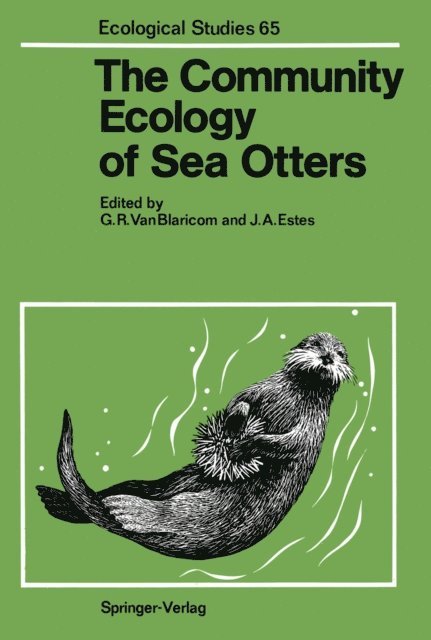
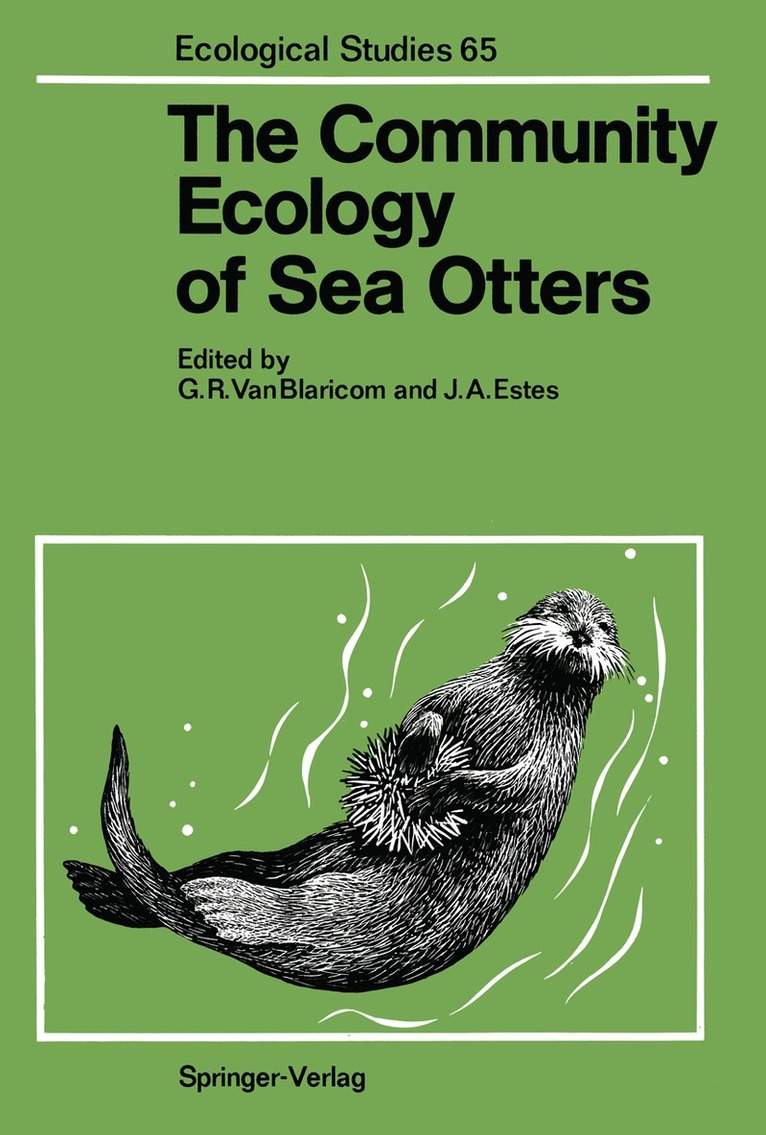
The impetus for this volume comes from two sources. The first is scientific: by virtue of a preference for certain large benthic invertebrates as food, sea otters have interesting and significant effects on the structure and dynamics of nearshore communities in the North Pacific. The second is political: be cause of the precarious status of the sea otter population in coastal California, the U.S. Fish and Wildlife Service (USFWS) announced, in June 1984, a proposal to establish a new population of sea otters at San Nicolas Island, off southern California. The proposal is based on the premise that risks of catastrophic losses of sea otters, due to large oil spills, are greatly reduced by distributing the population among two geographically separate locations. The federal laws of the U.S. require that USFWS publish an Environmental Impact Statement (ElS) regarding the proposed translocation of sea otters to San Nicolas Island. The EIS is intended to be an assessment of likely bio logical, social, and economic effects of the proposal. In final form, the EIS has an important role in the decision of federal management authority (in this case, the Secretary of the Interior of the U.S.) to accept or reject the proposal.
Häftad, Engelska, 2011
1 091 kr
Skickas inom 10-15 vardagar
The impetus for this volume comes from two sources. The first is scientific: by virtue of a preference for certain large benthic invertebrates as food, sea otters have interesting and significant effects on the structure and dynamics of nearshore communities in the North Pacific. The second is political: be cause of the precarious status of the sea otter population in coastal California, the U.S. Fish and Wildlife Service (USFWS) announced, in June 1984, a proposal to establish a new population of sea otters at San Nicolas Island, off southern California. The proposal is based on the premise that risks of catastrophic losses of sea otters, due to large oil spills, are greatly reduced by distributing the population among two geographically separate locations. The federal laws of the U.S. require that USFWS publish an Environmental Impact Statement (ElS) regarding the proposed translocation of sea otters to San Nicolas Island. The EIS is intended to be an assessment of likely bio logical, social, and economic effects of the proposal. In final form, the EIS has an important role in the decision of federal management authority (in this case, the Secretary of the Interior of the U.S.) to accept or reject the proposal.