James Aronson - Böcker
Visar alla böcker från författaren James Aronson. Handla med fri frakt och snabb leverans.
9 produkter
9 produkter
1 013 kr
Skickas inom 7-10 vardagar
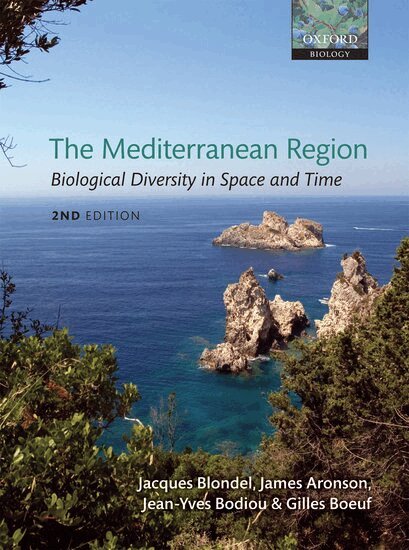
It is becoming clear that the Mediterranean region is one of the "hottest" of the biodiversity hotspots on the planet. There is also an increasing concern for the conservation, adaptive management, and restoration of the unique natural ecosystems and cultural landscapes that characterize this area. The region's biological and cultural heritage as well as its huge wealth of biodiversity is now at real risk. This brings a further urgency to the task of communicating detailed but readily accessible information on the Mediterranean biota, and an ecological, historical and evolutionary perspective to the changing contexts in which the region's flora and fauna continue to evolve. There is no other recent textbook devoted solely to Mediterranean evolutionary ecology, and a synthesis of the many recent advances is now overdue. This new work builds on the success and reputation of the first edition, although the text has been updated and expanded to document recent changes to biodiversity, new ecological and evolutionary insights, and the challenges for the future. These changes include the addition of two new chapters devoted to the Mediterranean Sea itself, and especially the coastal areas. Throughout the book, the pressing issues of global change (especially climate warming) are addressed, in conjunction with changing land use, and in terms of their potential impact on biota, communities, ecosystems, and landscapes.
312 kr
Skickas inom 3-6 vardagar
1 271 kr
Tillfälligt slut
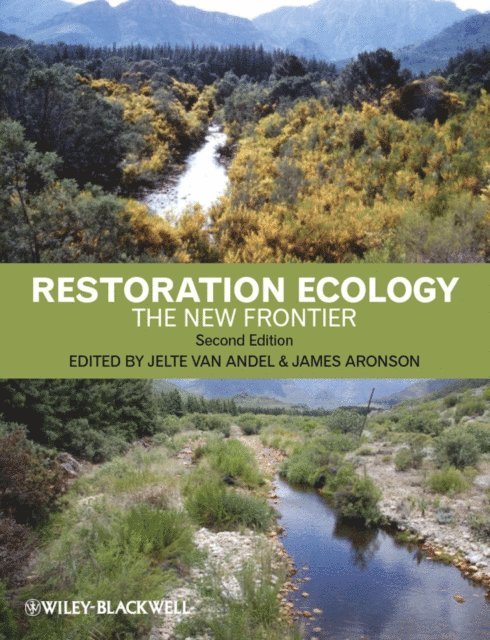
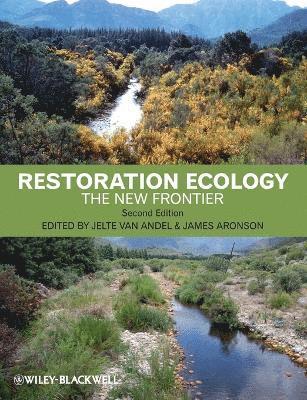
Enlarged, enhanced and internationalized edition of the first restoration ecology textbook to be published, with foreword by Dr. Steven Whisnant of Texas A&M University and Chair of the Society of Ecological Restoration. Since 2006, when the first edition of this book appeared, major advances have taken place in restoration science and in the practice of ecological restoration. Both are now accepted as key components of the increasingly urgent search for sustainability at global, national, and community levels – hence the phrase 'New Frontier' in the title. While the first edition focused on ecosystems and landscapes in Europe, this new edition covers biomes and contexts all over the world. Several new chapters deal with broad issues such as biological invasions, climate change, and agricultural land abandonment as they relate to restoration science and ecological restoration. Case studies are included from Australia, North America, and the tropics.This is an accessible textbook for senior undergraduate and graduate level students, and early career scientists. The book also provides a solid scientific background for managers, volunteers, and mid-career professionals involved in the practice of ecological restoration.Review of the first edition:"I suspect that this volume will find its way onto the shelves of many restoration researchers and practitioners and will be used as a key text in graduate courses, where it will help fill a large void. My own copy is already heavily bookmarked, and will be a constant source of research ideas and lecture material." (Environmental Conservation) Companion Website: A companion website with downloadable figures is available at www.wiley.com/go/vanandel/restorationecology
782 kr
Skickas inom 7-10 vardagar
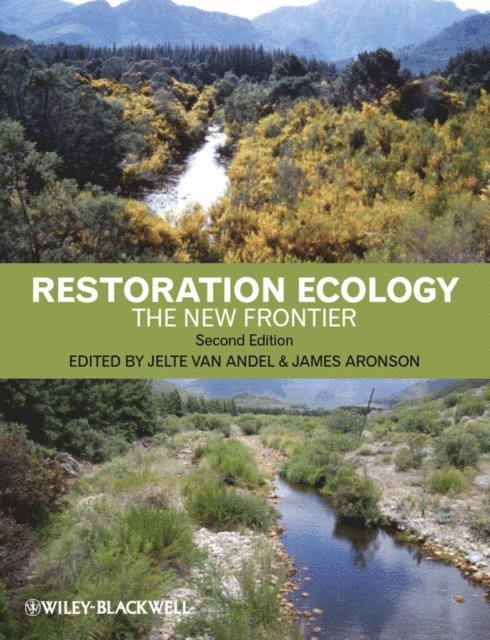
Enlarged, enhanced and internationalized edition of the first restoration ecology textbook to be published, with foreword by Dr. Steven Whisnant of Texas A&M University and Chair of the Society of Ecological Restoration. Since 2006, when the first edition of this book appeared, major advances have taken place in restoration science and in the practice of ecological restoration. Both are now accepted as key components of the increasingly urgent search for sustainability at global, national, and community levels – hence the phrase 'New Frontier' in the title. While the first edition focused on ecosystems and landscapes in Europe, this new edition covers biomes and contexts all over the world. Several new chapters deal with broad issues such as biological invasions, climate change, and agricultural land abandonment as they relate to restoration science and ecological restoration. Case studies are included from Australia, North America, and the tropics.This is an accessible textbook for senior undergraduate and graduate level students, and early career scientists. The book also provides a solid scientific background for managers, volunteers, and mid-career professionals involved in the practice of ecological restoration.Review of the first edition:"I suspect that this volume will find its way onto the shelves of many restoration researchers and practitioners and will be used as a key text in graduate courses, where it will help fill a large void. My own copy is already heavily bookmarked, and will be a constant source of research ideas and lecture material." (Environmental Conservation) Companion Website: A companion website with downloadable figures is available at www.wiley.com/go/vanandel/restorationecology
687 kr
Skickas inom 11-20 vardagar
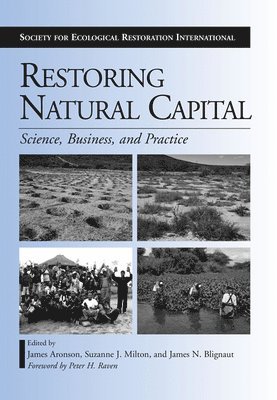
How can environmental degradation be stopped? How can it be reversed? And how can the damage already done be repaired? The authors of this volume argue that a two-pronged approach is needed: reducing demand for ecosystem goods and services and better management of them, coupled with an increase in supply through environmental restoration. Restoring Natural Capital brings together economists and ecologists, theoreticians, practitioners, policy makers, and scientists from the developed and developing worlds to consider the costs and benefits of repairing ecosystem goods and services in natural and socioecological systems. It examines the business and practice of restoring natural capital, and seeks to establish common ground between economists and ecologists with respect to the restoration of degraded ecosystems and landscapes and the still broader task of restoring natural capital. The book focuses on developing strategies that can achieve the best outcomes in the shortest amount of time as it:• considers conceptual and theoretical issues from both an economicand ecological perspective• examines specific strategies to foster the restoration of naturalcapital and offers a synthesis and a vision of the way forwardNineteen case studies from around the world illustrate challenges and achievements in setting targets, refining approaches to finding and implementing restoration projects, and using restoration of natural capital as an economic opportunity. Throughout, contributors make the case that the restoration of natural capital requires close collaboration among scientists from across disciplines as well as local people, and when successfully executed represents a practical, realistic, and essential tool for achieving lasting sustainable development.
1 277 kr
Tillfälligt slut
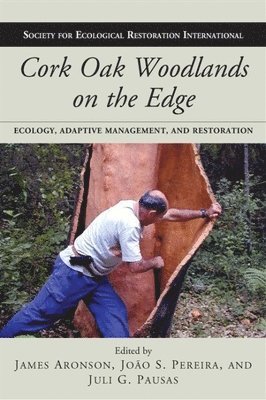
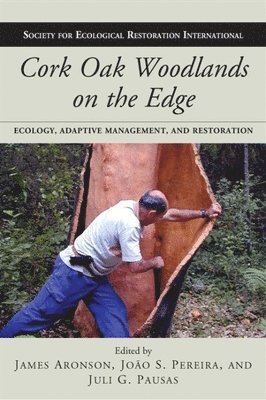
This title offers scientific and practical information on cork oak woodlands and the cultural systems dependent on them. Cork oak has historically been an important species in the western Mediterranean - ecologically as a canopy or 'framework' tree in natural woodlands, and culturally as an economically valuable resource that underpins local economies. Both the natural woodlands and the derived cultural systems are experiencing rapid change, and whether or not they are resilient enough to adapt to that change is an open question. "Cork Oak Woodlands on the Edge" provides a synthesis of the most up-to-date, scientific, and practical information on the management of cork oak woodlands and the cultural systems that depend on cork oak. In addition, "Cork Oak Woodlands on the Edge" offers ten site profiles written by local experts that present an in-depth vision of cork oak woodlands across a range of biophysical, historical, and cultural contexts, with sixteen pages of full-colour photos that illustrate the tree, agro-silvopastoral systems, products, resident biodiversity, and more."Cork Oak Woodlands on the Edge" is an important book for anyone interested in the future of cork oak woodlands, or in the management of cultural landscapes and their associated land-use systems. In a changing world full of risks and surprises, it represents an excellent example of a multidisciplinary and holistic approach to studying, managing, and restoring an ecosystem, and will serve as a guide for other studies of this kind. Co-sponsored by the Society for Ecological Restoration International and Island Press, this series offers a foundation of practical knowledge and scientific insight that will help ecological restoration become the powerful reparative and healing tool that the world needs.
674 kr
Skickas inom 11-20 vardagar
This title offers scientific and practical information on cork oak woodlands and the cultural systems dependent on them. Cork oak has historically been an important species in the western Mediterranean - ecologically as a canopy or 'framework' tree in natural woodlands, and culturally as an economically valuable resource that underpins local economies. Both the natural woodlands and the derived cultural systems are experiencing rapid change, and whether or not they are resilient enough to adapt to that change is an open question. "Cork Oak Woodlands on the Edge" provides a synthesis of the most up-to-date, scientific, and practical information on the management of cork oak woodlands and the cultural systems that depend on cork oak. In addition, "Cork Oak Woodlands on the Edge" offers ten site profiles written by local experts that present an in-depth vision of cork oak woodlands across a range of biophysical, historical, and cultural contexts, with sixteen pages of full-colour photos that illustrate the tree, agro-silvopastoral systems, products, resident biodiversity, and more."Cork Oak Woodlands on the Edge" is an important book for anyone interested in the future of cork oak woodlands, or in the management of cultural landscapes and their associated land-use systems. In a changing world full of risks and surprises, it represents an excellent example of a multidisciplinary and holistic approach to studying, managing, and restoring an ecosystem, and will serve as a guide for other studies of this kind. Co-sponsored by the Society for Ecological Restoration International and Island Press, this series offers a foundation of practical knowledge and scientific insight that will help ecological restoration become the powerful reparative and healing tool that the world needs.
Ecological Restoration, Second Edition
Principles, Values, and Structure of an Emerging Profession
Inbunden, Engelska, 2013
817 kr
Skickas inom 11-20 vardagar
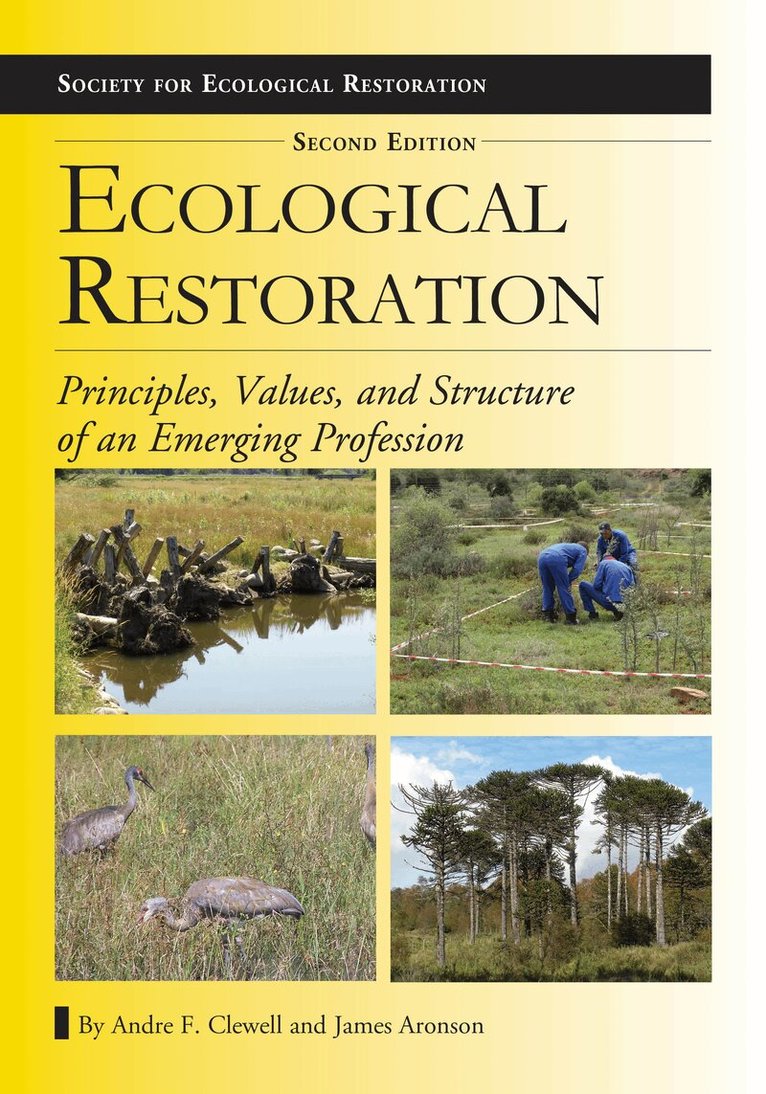
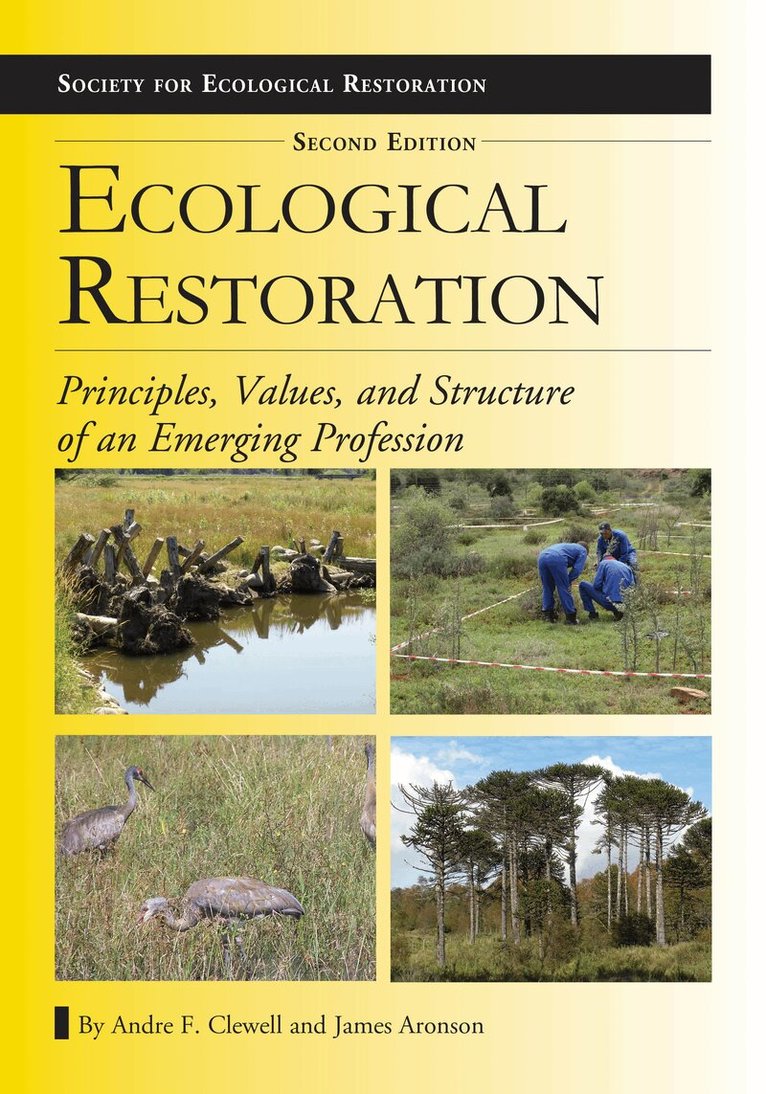
Originally published in 2007, "Ecological Restoration" has become one of the seminal books in this quickly developing field. This completely revised and reorganised edition presents up-to-date developments and current trends in the field by two of its leaders. Among its key features are: entirely new Virtual Field Trips, with additional examples woven into chapters; full treatment of the controversial topic of the restoration of semicultural ecosystems; up-to-date discussion of reference systems and reference models, which inform almost every aspect of restoration planning; and, full discussion of the global issue of ecosystem impairment and the complex topics of what restoration recovery means and how it is accomplished. The authors focus on clarifying terminology, stressing the importance of precision in language for a field that is quickly becoming an established discipline. This new edition will be an invaluable resource for practitioners and theoreticians from a variety of backgrounds and perspectives, ranging from backyard volunteers to highly trained academic scientists and professional consultants.
Ecological Restoration, Second Edition
Principles, Values, and Structure of an Emerging Profession
Häftad, Engelska, 2013
314 kr
Skickas inom 7-10 vardagar
Originally published in 2007, "Ecological Restoration" has become one of the seminal books in this quickly developing field. This completely revised and reorganised edition presents up-to-date developments and current trends in the field by two of its leaders. Among its key features are: entirely new Virtual Field Trips, with additional examples woven into chapters; full treatment of the controversial topic of the restoration of semicultural ecosystems; up-to-date discussion of reference systems and reference models, which inform almost every aspect of restoration planning; and full discussion of the global issue of ecosystem impairment and the complex topics of what restoration recovery means and how it is accomplished. The authors focus on clarifying terminology, stressing the importance of precision in language for a field that is quickly becoming an established discipline. This new edition will be an invaluable resource for practitioners and theoreticians from a variety of backgrounds and perspectives, ranging from backyard volunteers to highly trained academic scientists and professional consultants.