James B. Crooks - Böcker
Visar alla böcker från författaren James B. Crooks. Handla med fri frakt och snabb leverans.
2 produkter
2 produkter
269 kr
Skickas inom 10-15 vardagar
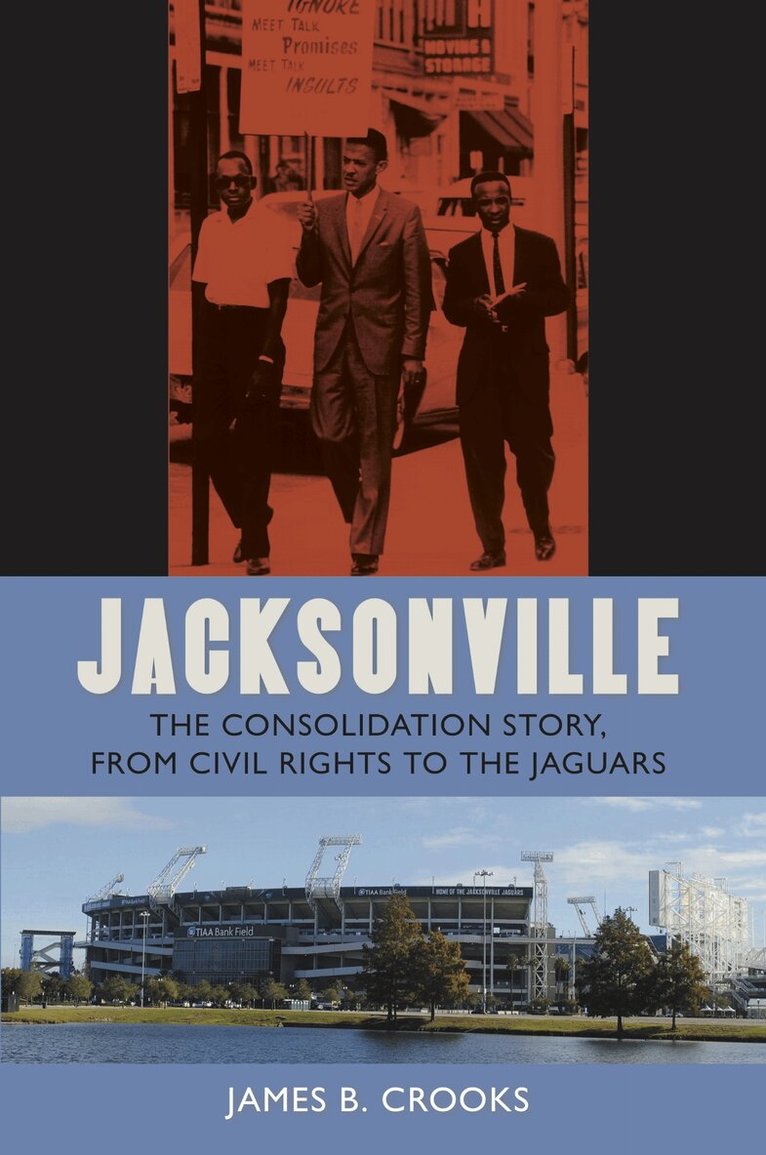
In the 1950s and '60s Jacksonville faced daunting problems. Critics described city government as boss-ridden, expensive, and corrupt. African Americans challenged racial segregation, and public high schools were disaccredited. The St. Johns River and its tributaries were heavily polluted. Downtown development had succumbed to suburban sprawl.Consolidation, endorsed by an almost two-to-one majority in 1967, became the catalyst for change. The city's decision to consolidate with surrounding Duval County began the transformation of this conservative, Deep South, backwater city into a prosperous, mainstream metropolis. James B. Crooks introduces readers to preconsolidation Jacksonville and then focuses on three major issues that confronted the expanded city: racial relations, environmental pollution, and the revitalization of downtown. He shows the successes and setbacks of four mayors-Hans G. Tanzler, Jake Godbold, Tommy Hazouri, and Ed Austin—in responding to these issues. He also compares Jacksonville's experience with that of another Florida metropolis, Tampa, which in 1967 decided against consolidation with surrounding Hillsborough County. Consolidation has not been a panacea for all the city's ills, Crooks concludes. Yet the city emerges in the 21st century with increased support for art and education, new economic initiatives, substantial achievements in downtown renewal, and laudable efforts to improve race relations and address environmental problems. Readers familiar with Jacksonville over the last 40 years will recognize events like the St. Johns River cleanup, the building of the Jacksonville Landing, the ending of odor pollution, and the arrival of the Jaguars NFL franchise. During the administration of Mayor Hazouri from 1987 to 1991, Crooks was Jacksonville historian-in-residence at City Hall. Combining observations from this period with extensive interviews and documents (including a cache of files from the mezzanine of the old City Hall parking garage that contained 44 cabinets of letters, memos, and reports), he has written an urban history that will fascinate scholars of politics and governmental reform as well as residents of the First Coast city.
200 kr
Skickas inom 10-15 vardagar
The books in the Florida and the Caribbean Open Books Series demonstrate the University Press of Florida’s long history of publishing Latin American and Caribbean studies titles that connect in and through Florida, highlighting the connections between the Sunshine State and its neighboring islands. Books in this series show how early explorers found and settled Florida and the Caribbean. They tell the tales of early pioneers, both foreign and domestic. They examine topics critical to the area such as travel, migration, economic opportunity, and tourism. They look at the growth of Florida and the Caribbean and the attendant pressures on the environment, culture, urban development, and the movement of peoples, both forced and voluntary. The Florida and the Caribbean Open Books Series gathers the rich data available in these architectural, archaeological, cultural, and historical works, as well as the travelogues and naturalists’ sketches of the area in prior to the twentieth century, making it accessible for scholars and the general public alike. The Florida and the Caribbean Open Books Series is made possible through a grant from the National Endowment for the Humanities and the Andrew W. Mellon Foundation, under the Humanities Open Books program.