James B. Twitchell – författare
Visar alla böcker från författaren James B. Twitchell. Handla med fri frakt och snabb leverans.
9 produkter
9 produkter
Inbunden, Engelska, 1996
863 kr
Skickas inom 5-8 vardagar
-- Philadelphia Inquirer
Inbunden, Engelska, 2002
496 kr
Skickas inom 5-8 vardagar
Economic downturns and terrorist attacks notwithstanding, America's love affair with luxury continues unabated. Over the last several years, luxury spending in the United States has been growing four times faster than overall spending. It has been characterized by political leaders as vital to the health of the American economy as a whole, even as an act of patriotism. Accordingly, indices of consumer confidence and purchasing seem unaffected by recession. This necessary consumption of unnecessary items and services is going on at all but the lowest layers of society: J.C. Penney now offers day spa treatments; Kmart sells cashmere bedspreads. So many products are claiming luxury status today that the credibility of the category itself is strained: for example, the name "pashmina" had to be invented to top mere cashmere. We see luxury everywhere: in storefronts, advertisements, even in the workings of our imaginations. But what is it? How is it manufactured on the factory floor and in the minds of consumers? Who cares about it and who buys it?And how concerned should we be that luxuries are commanding a larger and larger percentage of both our disposable income and our aspirations? Trolling the upscale malls of America, making his way toward the Mecca of Las Vegas, James B. Twitchell comes to some remarkable conclusions. The democratization of luxury, he contends, has been the single most important marketing phenomenon of our times. In the pages of Living It Up, Twitchell commits the academic heresy of paying respect to popular luxury consumption as a force that has united the country and the globe in a way that no war, movement, or ideology ever has. What's more, he claims, the shopping experience for Americans today has its roots in the spiritual, the religious, and the transcendent. Deft and subtle writing, audacious ideas, and a fine sense of humor inform this entertaining and insightful book.
Häftad, Engelska, 2008
235 kr
Skickas inom 5-8 vardagar
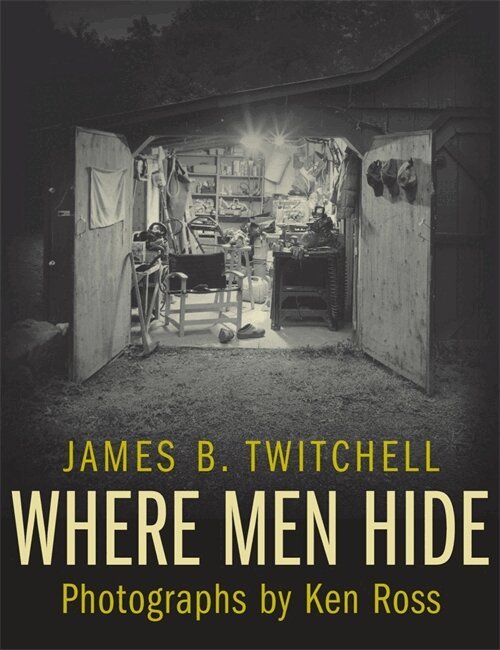
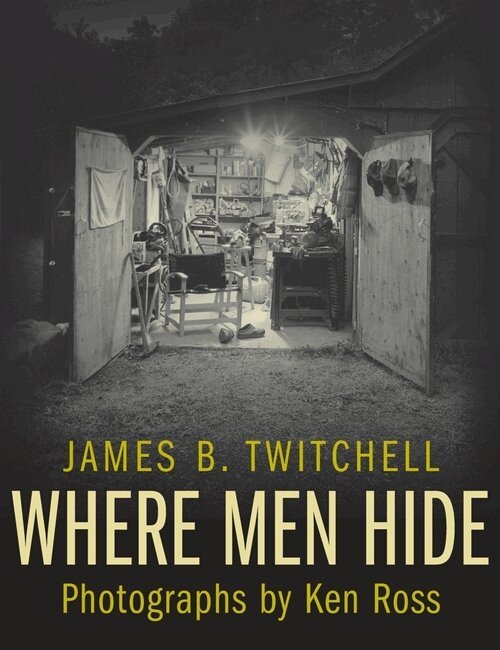
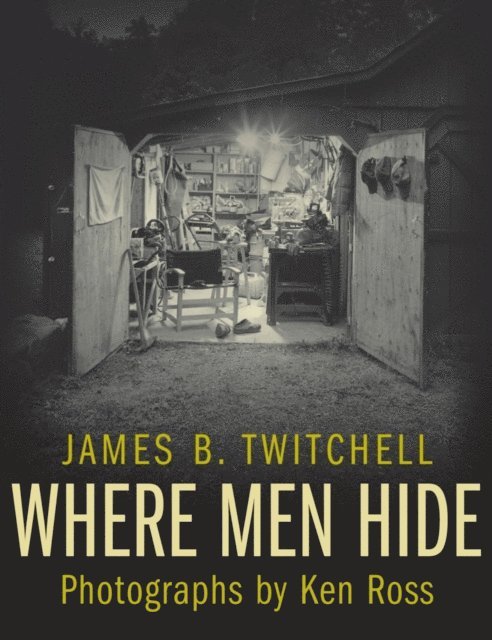
"If you ask men if they spend any time hiding, they usually look at you as if you're nuts. 'What, me hide?' But if you ask women whether men hide, they immediately know what you mean."-from Where Men Hide Where Men Hide is a spirited tour of the dark and often dirty places men go to find comfort, camaraderie, relaxation, and escape. Ken Ross's striking photographs and James Twitchell's lively analysis trace the evolution of these virtual caves, and question why they are rapidly disappearing. Ross documents both traditional and contemporary male haunts, such as bars, barbershops, lodges, pool halls, strip clubs, garages, deer camps, megachurches, the basement Barcalounger, and Twitchell examines their provenance, purpose, and appeal. He finds that for centuries men have met with each other in underground lairs and clubhouses to conduct business or, in the case of strip clubs and the modern rec room, to bond and indulge in shady entertainments. In these secret dens, certain rules are abandoned while others are obeyed.However, Twitchell sees this less as exclusionary behavior and more as the result of social anxiety: when women want to get together, they just do it; when men get together, it's a production. Drawing on literary, historical, and pop cultural sources, Twitchell connects the places men hide with figures like Hemingway and Huck Finn, Frederick Jackson Turner's theory of the American frontier, and the mythological interpretations of Joseph Campbell and Robert Bly. Instead of blaming the disappearance of the man-cave solely on feminism, simple fair play, or the demands of Title IX, Twitchell believes this evaporation is due as well to the rise of solitary pursuits such as driving, watching television, and playing videogames. By blending together anecdote, research, and keen observation, Ross and Twitchell bring this little-discussed and controversial phenomenon to light.
Inbunden, Engelska, 2020
976 kr
Skickas inom 3-6 vardagar
Häftad, Engelska, 2005
200 kr
Skickas inom 5-8 vardagar
Häftad, Engelska, 2014
200 kr
Skickas inom 5-8 vardagar
Häftad, Engelska, 1987
379 kr
Skickas inom 5-8 vardagar
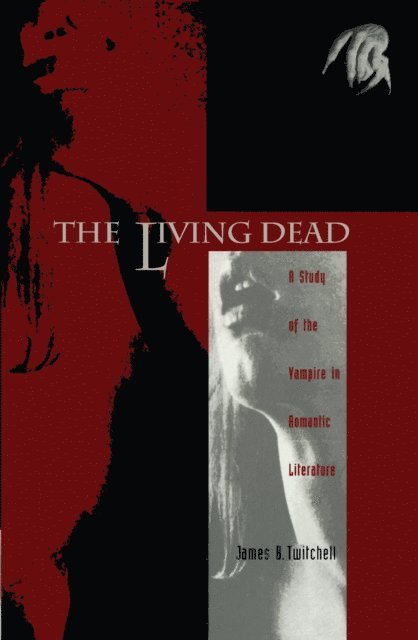
In his Preface to The Living Dead: A Study of the Vampire in Romantic Literature, James Twitchell writes that he is not interested in the current generation of vampires, which he finds "rude, boring and hopelessly adolescent. However, they have not always been this way. In fact, a century ago they were often quite sophisticated, used by artists varied as Blake, Poe, Coleridge, the Brontes, Shelley, and Keats, to explain aspects of interpersonal relations. However vulgar the vampire has since become, it is important to remember that along with the Frankenstein monster, the vampire is one of the major mythic figures bequeathed to us by the English Romantics. Simply in terms of cultural influence and currency, the vampire is far more important than any other nineteenth-century archetypes; in fact, he is probably the most enduring and prolific mythic figure we have. This book traces the vampire out of folklore into serious art until he stabilizes early in this century into the character we all too easily recognize.
Inbunden, Engelska, 1999
898 kr
Tillfälligt slut
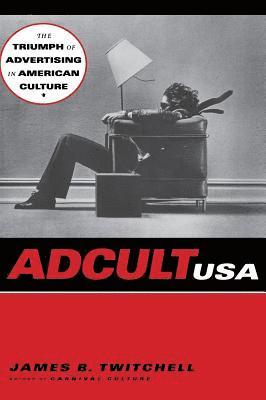
Coke adds life. Just do it. Yo quiero Taco Bell. We live in a commercial age, awash in a sea of brand names, logos, and advertising jingles-not to mention commodities themselves. Are shoppers merely the unwitting stooges of the greedy producers who will stop at nothing to sell their wares? Are the producers' powers of persuasion so great that resistance is futile? James Twitchell counters this assumption of the used and abused consumer with a witty and unflinching look at commercial culture, starting from the simple observation that "we are powerfully attracted to the world of goods (after all, we don't call them 'bads')." He contends that far from being forced upon us against our better judgment, "consumerism is our better judgment." Why? Because increasingly, store-bought objects are what hold us together as a society, doing the work of "birth, patina, pews, coats of arms, house, and social rank"-previously done by religion and bloodline. We immediately understand the connotations of status and identity exemplified by the Nike swoosh, the Polo pony, the Guess? label, the DKNY logo.The commodity alone is not what we are after; rather, we actively and creatively want that logo and its signification-the social identity it bestows upon us. As Twitchell summarizes, "Tell me what you buy, and I will tell what you are and who you want to be." Using elements as disparate as the film The Jerk, French theorists, popular bumper stickers, and Money magazine to explore the nature and importance of advertising lingo, packaging, fashion, and "The Meaning of Self," Twitchell overturns one stodgy social myth after another. In the process he reveals the purchase and possession of things to be the self-identifying acts of modern life. Not only does the car you drive tell others who you are, it lets you know as well. The consumption of goods, according to Twitchell, provides us with tangible everyday comforts and with crucial inner security in a seemingly faithless age. That we may find our sense of self through buying material objects is among the chief indictments of contemporary culture. Twitchell, however, sees the significance of shopping. "There are no false needs." We buy more than objects, we buy meaning. For many of us, especially in our youth, Things R Us.
Inbunden, Engelska, 2006
801 kr
Tillfälligt slut
"If you ask men if they spend any time hiding, they usually look at you as if you're nuts. 'What, me hide?' But if you ask women whether men hide, they immediately know what you mean."-from Where Men Hide Where Men Hide is a spirited tour of the dark and often dirty places men go to find comfort, camaraderie, relaxation, and escape. Ken Ross's striking photographs and James Twitchell's lively analysis trace the evolution of these virtual caves, and question why they are rapidly disappearing. Ross documents both traditional and contemporary male haunts, such as bars, barbershops, lodges, pool halls, strip clubs, garages, deer camps, megachurches, the basement Barcalounger, and Twitchell examines their provenance, purpose, and appeal. He finds that for centuries men have met with each other in underground lairs and clubhouses to conduct business or, in the case of strip clubs and the modern rec room, to bond and indulge in shady entertainments. In these secret dens, certain rules are abandoned while others are obeyed.However, Twitchell sees this less as exclusionary behavior and more as the result of social anxiety: when women want to get together, they just do it; when men get together, it's a production. Drawing on literary, historical, and pop cultural sources, Twitchell connects the places men hide with figures like Hemingway and Huck Finn, Frederick Jackson Turner's theory of the American frontier, and the mythological interpretations of Joseph Campbell and Robert Bly. Instead of blaming the disappearance of the man-cave solely on feminism, simple fair play, or the demands of Title IX, Twitchell believes this evaporation is due as well to the rise of solitary pursuits such as driving, watching television, and playing videogames. By blending together anecdote, research, and keen observation, Ross and Twitchell bring this little-discussed and controversial phenomenon to light.