James C. Russell – författare
Visar alla böcker från författaren James C. Russell. Handla med fri frakt och snabb leverans.
2 produkter
2 produkter
Inbunden, Engelska, 1994
2 119 kr
Skickas inom 5-8 vardagar
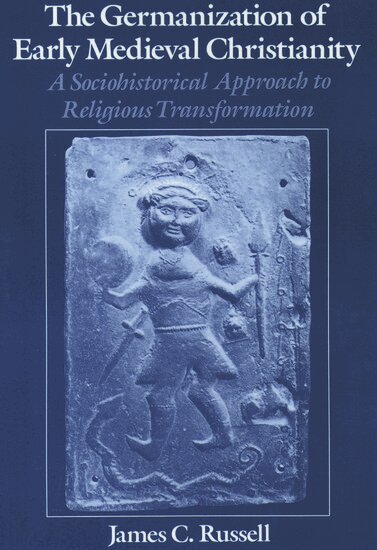
European Christians think of their religion as the "normal" expression of Christianity, in contrast to such ethnic offshoots as the Maronite, Coptic, or Russian Orthodox faiths. In fact, however, as James Russell here shows, Europeanized Christianity is highly adapted, arising from the early interaction of Mediterranean Christianity with Northern European culture.This book takes a close look at the ways in which Christianity changed in order to win the allegiance of the Germanic and Anglo-Saxon peoples. Russell argues that the Northern peoples were far more resistant to conversion than the disaffected, urban populace of the Roman Empire had been. Unlike their Mediterranean counterparts, the Northerners displayed a high level of social solidarity. As a result, Russell contends, considerable cultural accommodation was necessary for Christianity to take hold in the Germanic context. In the process of exploring the nature of these changes, Russell develops a suggestive new model of the ways in which religious change occurs in any culture.
Häftad, Engelska, 1996
535 kr
Skickas inom 7-10 vardagar
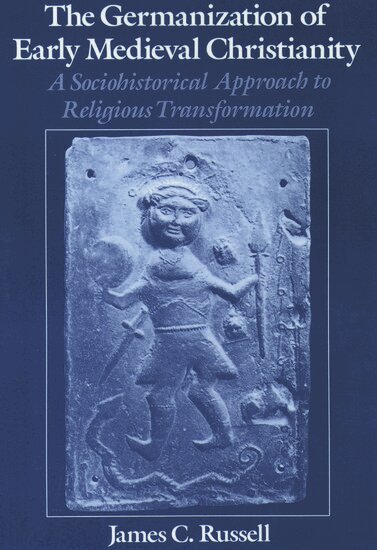
While historians of Christianity have generally acknowledged some degree of Germanic influence in the development of early medieval Christianity, Russell goes further, arguing for a fundamental Germanic reinterpretation of Christianity. This first full-scale treatment of the subject follows a truly interdisciplinary approach, applying to the early medieval period a sociohistorical method similar to that which has already proven fruitful in explicating the history of Early Christianity and Late Antiquity. The encounter of the Germanic peoples with Christianity is studied from within the larger context of the encounter of a predominantly "world-accepting" Indo-European folk-religiosity with predominantly "world-rejecting" religious movements. While the first part of the book develops a general model of religious transformation for such encounters, the second part applies this model to the Germano-Christian scenario. Russell shows how a Christian missionary policy of temporary accommodation inadvertently contributed to a reciprocal Germanization of Christianity.