James C. Zimring – författare
Visar alla böcker från författaren James C. Zimring. Handla med fri frakt och snabb leverans.
7 produkter
7 produkter
E-bok
Engelska, 2009566 kr
Läs direkt efter köp
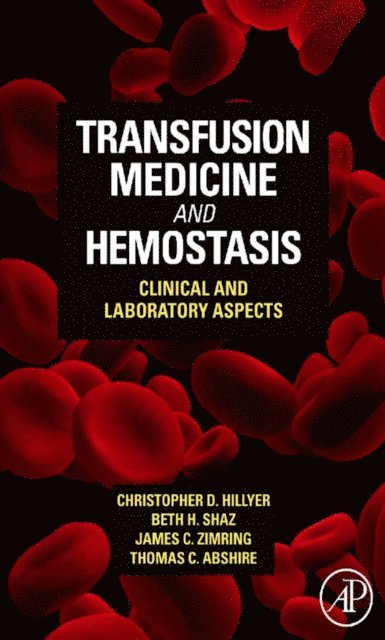
Transfusion Medicine and Hemostasis is a manual-style book that links transfusion medicine and hemostasis to laboratory methods and diagnostic tests engaged in routine and specialized coagulation laboratories. The book is divided into two main parts with chapters that are brief and readable. The first main part of the book is subdivided into blood banking and transfusion medicine. Under blood banking, the chapters cover blood collection, donation process, component manufacturing, donor testing and storage; transfusion-medicine chapters examine the components for transfusion, pre-transfusion immunohematology testing, blood groups, blood products and their modifications, approaches to transfusion therapy in specific clinical settings, and transfusion reactions and complications. In addition, chapters that talk about apheresis, cellular therapy, and tissue banking in the hospital setting are included. Hemostasis, the second main part of the book, is subdivided into three sections. The first section, clinical coagulation, includes chapters about neonatal thrombocytopenia, inherited platelet function disorders, immune thrombocytopenia, immune-mediated coagulopathies, congenital bleeding disorders, and acquired bleeding disorders. The second section relates to laboratory testing of coagulation, with chapters about laboratory assessments of platelet disorders, von Willebrand disease, coagulation factor disorders, fibrinogen and fibrinolysis, tests for hypercoagulable state and for activation of the coagulation system, and laboratory support for anticoagulation. The third section discusses coagulation factor products. This book will be valuable for the education of trainees, practitioners, and future leaders in these fields.
Inbunden, Engelska, 2022
829 kr
Skickas inom 5-8 vardagar
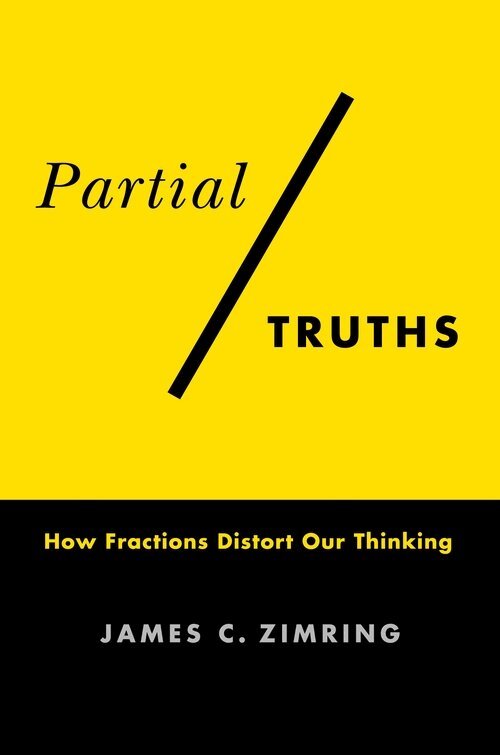
A fast-food chain once tried to compete with McDonald’s quarter-pounder by introducing a third-pound hamburger—only for it to flop when consumers thought a third pound was less than a quarter pound because three is less than four. Separately, a rash of suicides by teenagers who played Dungeons and Dragons caused a panic in parents and the media. They thought D&D was causing teenage suicides—when in fact teenage D&D players died by suicide at a much lower rate than the national average. Errors of this type can be found from antiquity to the present, from the Peloponnesian War to the COVID-19 pandemic. How and why do we keep falling into these traps?James C. Zimring argues that many of the mistakes that the human mind consistently makes boil down to misperceiving fractions. We see slews of statistics that are essentially fractions, such as percentages, probabilities, frequencies, and rates, and we tend to misinterpret them. Sometimes bad actors manipulate us by cherry-picking data or distorting how information is presented; other times, sloppy communicators inadvertently mislead us. In many cases, we fool ourselves and have only our own minds to blame. Zimring also explores the counterintuitive reason that these flaws might benefit us, demonstrating that individual error can be highly advantageous to problem solving by groups. Blending key scientific research in cognitive psychology with accessible real-life examples, Partial Truths helps readers spot the fallacies lurking in everyday information, from politics to the criminal justice system, from religion to science, from business strategies to New Age culture.
Häftad, Engelska, 2024
213 kr
Skickas inom 5-8 vardagar
A fast-food chain once tried to compete with McDonald’s quarter-pounder by introducing a third-pound hamburger—only for it to flop when consumers thought a third pound was less than a quarter pound because three is less than four. Separately, a rash of suicides by teenagers who played Dungeons and Dragons caused a panic in parents and the media. They thought D&D was causing teenage suicides—when in fact teenage D&D players died by suicide at a much lower rate than the national average. Errors of this type can be found from antiquity to the present, from the Peloponnesian War to the COVID-19 pandemic. How and why do we keep falling into these traps?James C. Zimring argues that many of the mistakes that the human mind consistently makes boil down to misperceiving fractions. We see slews of statistics that are essentially fractions, such as percentages, probabilities, frequencies, and rates, and we tend to misinterpret them. Sometimes bad actors manipulate us by cherry-picking data or distorting how information is presented; other times, sloppy communicators inadvertently mislead us. In many cases, we fool ourselves and have only our own minds to blame. Zimring also explores the counterintuitive reason that these flaws might benefit us, demonstrating that individual error can be highly advantageous to problem solving by groups. Blending key scientific research in cognitive psychology with accessible real-life examples, Partial Truths helps readers spot the fallacies lurking in everyday information, from politics to the criminal justice system, from religion to science, from business strategies to New Age culture.
Inbunden, Engelska, 2019
825 kr
Skickas inom 7-10 vardagar
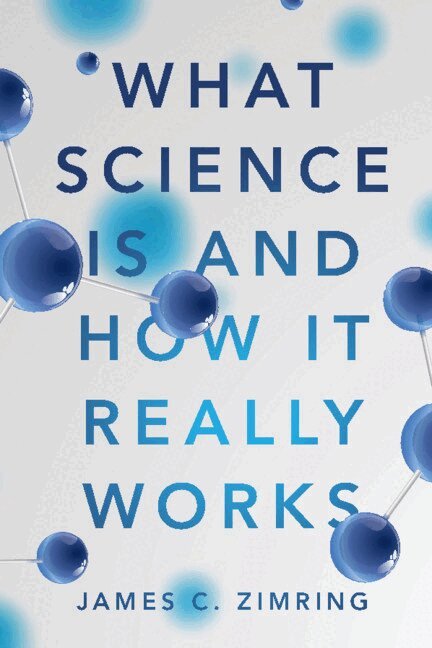
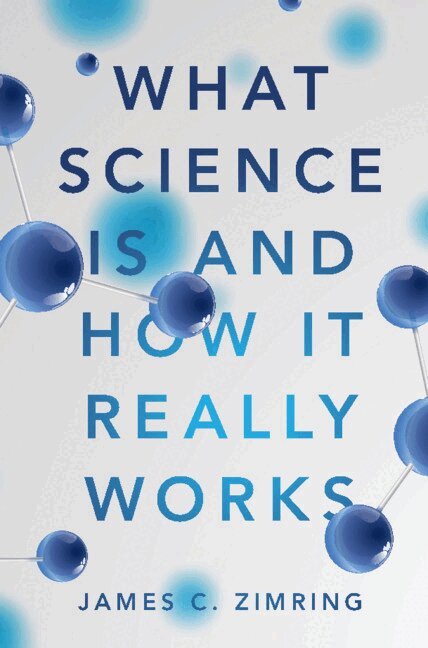
Scientific advances have transformed the world. However, science can sometimes get things wrong, and at times, disastrously so. Understanding the basis for scientific claims and judging how much confidence we should place in them is essential for individual choice, societal debates, and development of public policy and laws. We must ask: what is the basis of scientific claims? How much confidence should we put in them? What is defined as science and what is not? This book synthesizes a working definition of science and its properties, as explained through the eyes of a practicing scientist, by integrating advances from philosophy, psychology, history, sociology, and anthropology into a holistic view. Crucial in our political climate, the book fights the myths of science often portrayed to the public. Written for a general audience, it also enables students to better grasp methodologies and helps professional scientists to articulate what they do and why.
Häftad, Engelska, 2019
317 kr
Skickas inom 7-10 vardagar
Scientific advances have transformed the world. However, science can sometimes get things wrong, and at times, disastrously so. Understanding the basis for scientific claims and judging how much confidence we should place in them is essential for individual choice, societal debates, and development of public policy and laws. We must ask: what is the basis of scientific claims? How much confidence should we put in them? What is defined as science and what is not? This book synthesizes a working definition of science and its properties, as explained through the eyes of a practicing scientist, by integrating advances from philosophy, psychology, history, sociology, and anthropology into a holistic view. Crucial in our political climate, the book fights the myths of science often portrayed to the public. Written for a general audience, it also enables students to better grasp methodologies and helps professional scientists to articulate what they do and why.
E-bok
PDF, Engelska, 2019382 kr
Läs direkt efter köp
Scientific advances have transformed the world. However, science can sometimes get things wrong, and at times, disastrously so. Understanding the basis for scientific claims and judging how much confidence we should place in them is essential for individual choice, societal debates, and development of public policy and laws. We must ask: what is the basis of scientific claims? How much confidence should we put in them? What is defined as science and what is not? This book synthesizes a working definition of science and its properties, as explained through the eyes of a practicing scientist, by integrating advances from philosophy, psychology, history, sociology, and anthropology into a holistic view. Crucial in our political climate, the book fights the myths of science often portrayed to the public. Written for a general audience, it also enables students to better grasp methodologies and helps professional scientists to articulate what they do and why.
E-bok
Engelska, 2019382 kr
Läs direkt efter köp
Scientific advances have transformed the world. However, science can sometimes get things wrong, and at times, disastrously so. Understanding the basis for scientific claims and judging how much confidence we should place in them is essential for individual choice, societal debates, and development of public policy and laws. We must ask: what is the basis of scientific claims? How much confidence should we put in them? What is defined as science and what is not? This book synthesizes a working definition of science and its properties, as explained through the eyes of a practicing scientist, by integrating advances from philosophy, psychology, history, sociology, and anthropology into a holistic view. Crucial in our political climate, the book fights the myths of science often portrayed to the public. Written for a general audience, it also enables students to better grasp methodologies and helps professional scientists to articulate what they do and why.