James Calum O’Neill - Böcker
Visar alla böcker från författaren James Calum O’Neill. Handla med fri frakt och snabb leverans.
2 produkter
2 produkter
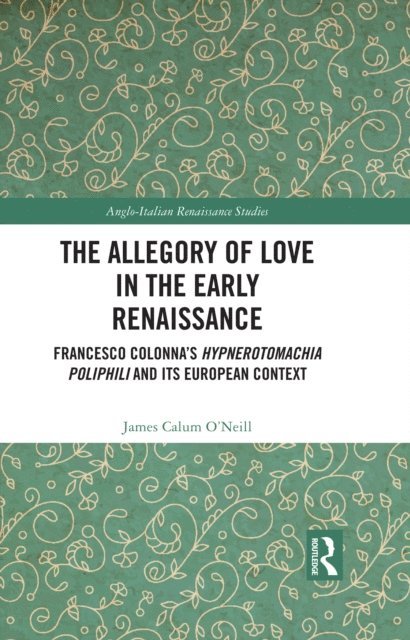
Allegory of Love in the Early Renaissance
Francesco Colonna’s Hypnerotomachia Poliphili and its European Context
Inbunden, Engelska, 2023
2 643 kr
Skickas inom 10-15 vardagar
Described as ‘the most beautiful book ever printed’ previous research has focused on the printing history of the Hypnerotomachia and its copious literary sources. This monograph critically engages with the narrative of the Hypnerotomachia and with Poliphilo as a character within this narrative, placing it within its European literary context. Using narratological analysis, it examines the journey of Poliphilo and the series of symbolic, allegorical, and metaphorical experiences narrated by him that are indicative of his metamorphosing interiority. It analyses the relationship between Poliphilo and his external surroundings in sequences of the narrative pertaining to thresholds; the symbolic architectural, topographical, and garden forms and spaces; and Poliphilo’s transforming interior passions including his love of antiquarianism, language, and Polia, the latter of which leads to his elegiac description of lovesickness, besides examinations of numerosophical symbolism in number, form, and proportion of the architectural descriptions and how they relate to the narrative.
Allegory of Love in the Early Renaissance
Francesco Colonna’s Hypnerotomachia Poliphili and its European Context
Häftad, Engelska, 2024
659 kr
Skickas inom 10-15 vardagar
Described as ‘the most beautiful book ever printed’ previous research has focused on the printing history of the Hypnerotomachia and its copious literary sources. This monograph critically engages with the narrative of the Hypnerotomachia and with Poliphilo as a character within this narrative, placing it within its European literary context. Using narratological analysis, it examines the journey of Poliphilo and the series of symbolic, allegorical, and metaphorical experiences narrated by him that are indicative of his metamorphosing interiority. It analyses the relationship between Poliphilo and his external surroundings in sequences of the narrative pertaining to thresholds; the symbolic architectural, topographical, and garden forms and spaces; and Poliphilo’s transforming interior passions including his love of antiquarianism, language, and Polia, the latter of which leads to his elegiac description of lovesickness, besides examinations of numerosophical symbolism in number, form, and proportion of the architectural descriptions and how they relate to the narrative.