James Chakwizira – författare
Visar alla böcker från författaren James Chakwizira. Handla med fri frakt och snabb leverans.
5 produkter
5 produkter
Inbunden, Engelska, 2021
546 kr
Skickas inom 10-15 vardagar
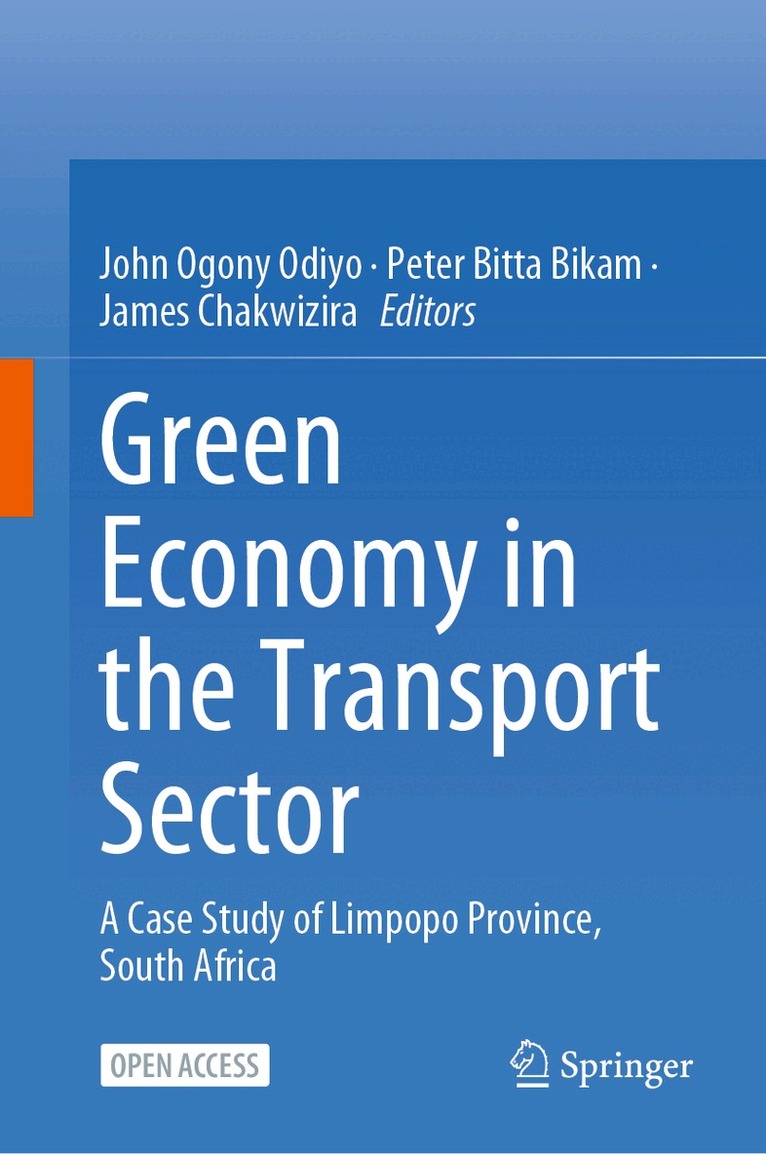
This open access book is interdisciplinary and provides cross-sectoral and multi-dimensional exploration of sustainable development and transportation in South Africa. Drawing on work from different disciplines, the book contributes not only to academia but also seeks to inform urban and regional policy with the view of contributing to the national aspirations of South Africa as espoused in the National Development Plan (NDP), 2030, National Spatial Development Framework (NSDF) Draft (2019), National Climate Change Adaptation Strategy (NCASS) Draft (2019), Green Transport Strategy for South Africa (2018–2050), and National Transportation Plan (NATMAP), 2050. Adopting a multi-dimensional assessment, the book provides a background for co-production concerning climate change, sustainable development, and transportation in the Global South. The book contributes in its analysis of the institutional and legislative framework that relates to the climate change, skills and knowledge transfer, sustainable development, and transportation in South Africa, as these are responsible for the evolution of the green economy and transport sector in the country. The connections among different sectors and issues such as environment, transport modes, technology innovation, vehicle management and emission control, skills and knowledge transfer, legislative and policy framework, and the wider objectives of the sustainable development goals (SDGs), especially goals 11 to 13. The success stories relating to climate change, sustainable development, and transportation in South Africa are identified together with the best possible practices that may inform better environmental, urban and regional planning, policy, practice, and management.
Häftad, Engelska, 2021
438 kr
Skickas inom 10-15 vardagar
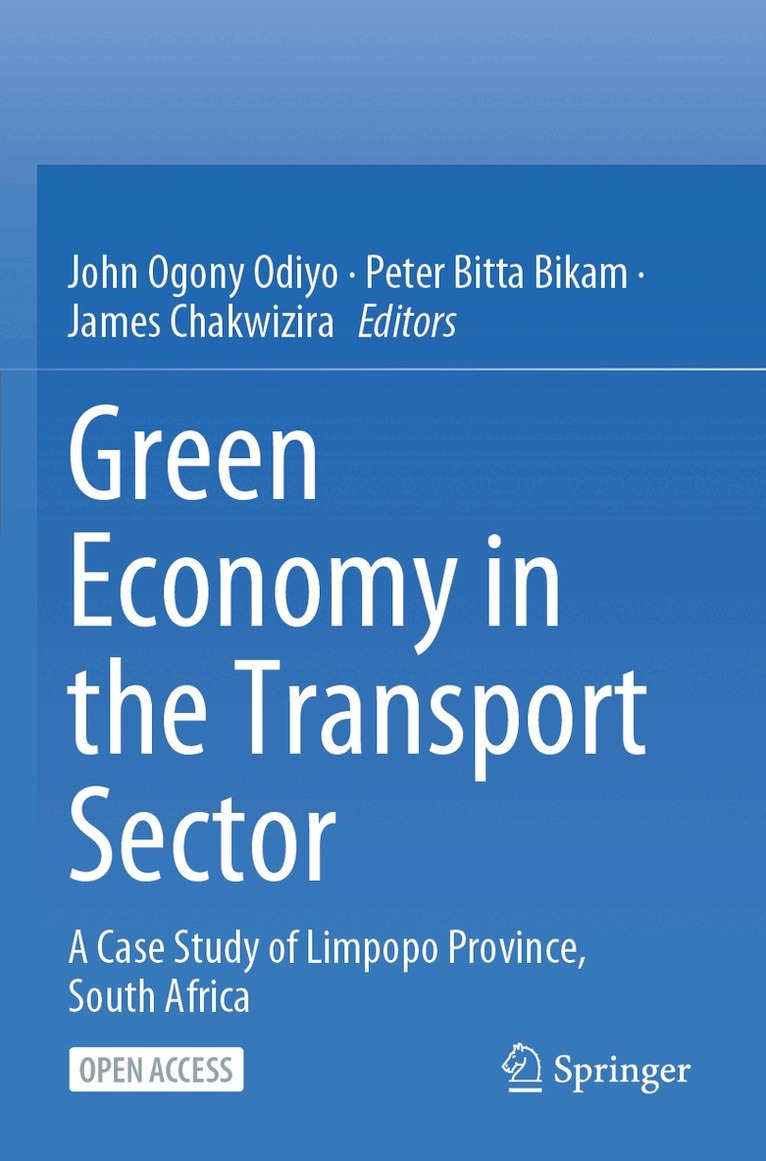
This open access book is interdisciplinary and provides cross-sectoral and multi-dimensional exploration of sustainable development and transportation in South Africa. Drawing on work from different disciplines, the book contributes not only to academia but also seeks to inform urban and regional policy with the view of contributing to the national aspirations of South Africa as espoused in the National Development Plan (NDP), 2030, National Spatial Development Framework (NSDF) Draft (2019), National Climate Change Adaptation Strategy (NCASS) Draft (2019), Green Transport Strategy for South Africa (2018–2050), and National Transportation Plan (NATMAP), 2050. Adopting a multi-dimensional assessment, the book provides a background for co-production concerning climate change, sustainable development, and transportation in the Global South. The book contributes in its analysis of the institutional and legislative framework that relates to the climate change, skills and knowledge transfer, sustainable development, and transportation in South Africa, as these are responsible for the evolution of the green economy and transport sector in the country. The connections among different sectors and issues such as environment, transport modes, technology innovation, vehicle management and emission control, skills and knowledge transfer, legislative and policy framework, and the wider objectives of the sustainable development goals (SDGs), especially goals 11 to 13. The success stories relating to climate change, sustainable development, and transportation in South Africa are identified together with the best possible practices that may inform better environmental, urban and regional planning, policy, practice, and management.
Inbunden, Engelska, 2024
1 515 kr
Skickas inom 10-15 vardagar
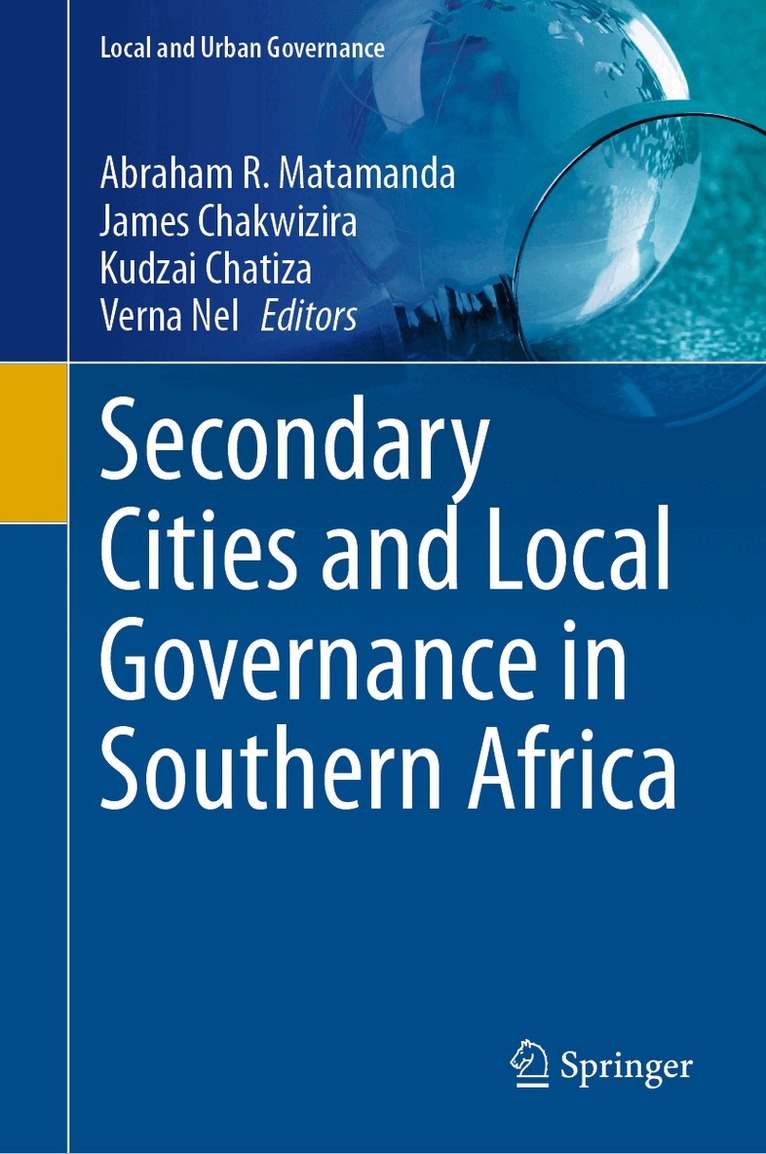
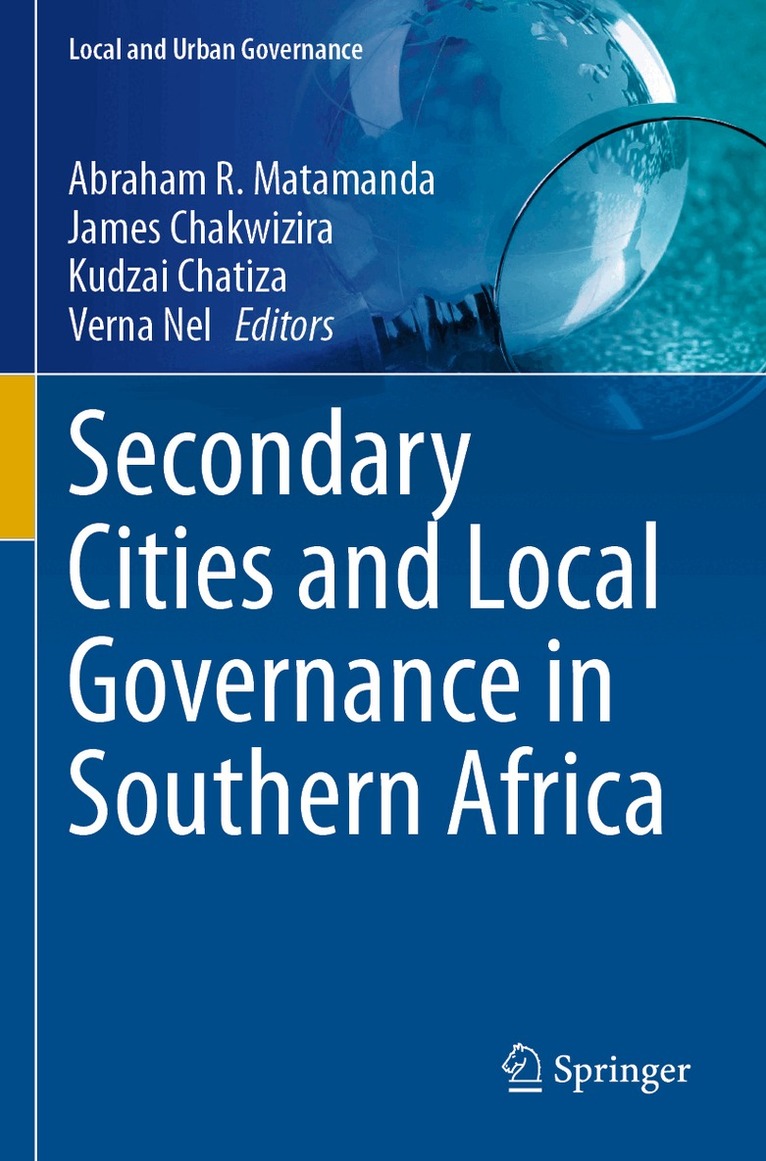
This book is the first to consider the roles, challenges and governance responses of secondary cities in southern Africa to changing circumstances. Among the challenges are governance under conditions of resource scarcity, managing informality, the effects and responses to climate change and the changing roles of the cities within the national space economy. It fills the gap in the literature on secondary cities with original case studies drawn from South Africa, Zimbabwe and Mozambique. The authors are all African scholars, working and living in the region with intimate knowledge of the settings they describe. The book is critical as it includes such regional case studies of different secondary cities in Southern Africa but also because of it’s multidisciplinarity: it contains substantive and pertinent issues such as climate change, disaster management, local economic development, and basic services delivery. It considers diverse environments, yet with similar challenges that could provide useful policy and governance proposals for other cities.
E-bok
Engelska, 20241 891 kr
Läs direkt efter köp
This book is the first to consider the roles, challenges and governance responses of secondary cities in southern Africa to changing circumstances. Among the challenges are governance under conditions of resource scarcity, managing informality, the effects and responses to climate change and the changing roles of the cities within the national space economy. It fills the gap in the literature on secondary cities with original case studies drawn from South Africa, Zimbabwe and Mozambique. The authors are all African scholars, working and living in the region with intimate knowledge of the settings they describe. The book is critical as it includes such regional case studies of different secondary cities in Southern Africa but also because of it’s multidisciplinarity: it contains substantive and pertinent issues such as climate change, disaster management, local economic development, and basic services delivery. It considers diverse environments, yet with similar challenges that could provide useful policy and governance proposals for other cities.
Häftad, Engelska, 2025
1 515 kr
Skickas inom 10-15 vardagar
This book is the first to consider the roles, challenges and governance responses of secondary cities in southern Africa to changing circumstances. Among the challenges are governance under conditions of resource scarcity, managing informality, the effects and responses to climate change and the changing roles of the cities within the national space economy. It fills the gap in the literature on secondary cities with original case studies drawn from South Africa, Zimbabwe and Mozambique. The authors are all African scholars, working and living in the region with intimate knowledge of the settings they describe. The book is critical as it includes such regional case studies of different secondary cities in Southern Africa but also because of it’s multidisciplinarity: it contains substantive and pertinent issues such as climate change, disaster management, local economic development, and basic services delivery. It considers diverse environments, yet with similar challenges that could provide useful policy and governance proposals for other cities.