James D. Faubion - Böcker
Visar alla böcker från författaren James D. Faubion. Handla med fri frakt och snabb leverans.
11 produkter
11 produkter
347 kr
Skickas inom 7-10 vardagar
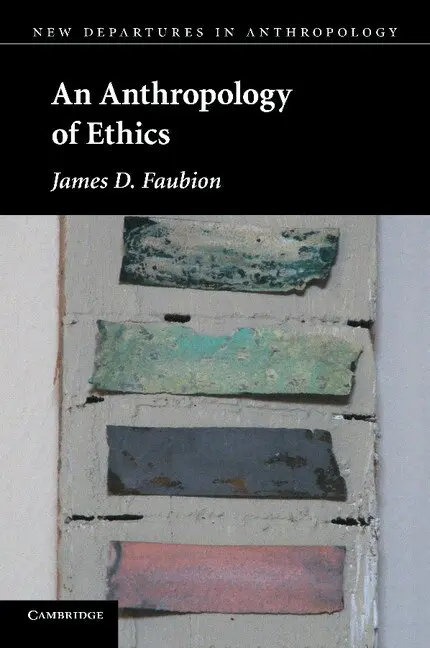
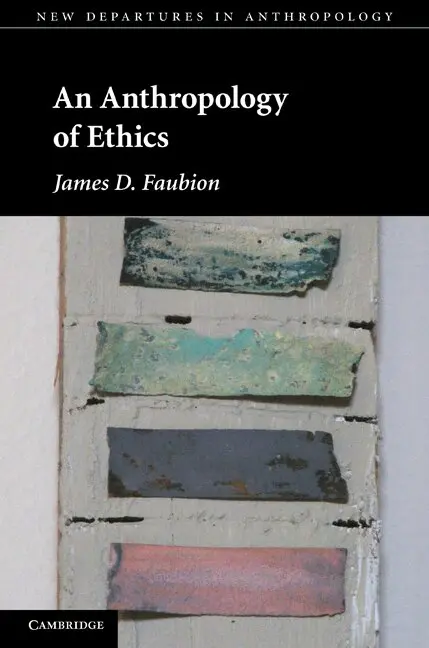
Through an ambitious and critical revision of Michel Foucault's investigation of ethics, James Faubion develops an original program of empirical inquiry into the ethical domain. From an anthropological perspective, Faubion argues that Foucault's specification of the analytical parameters of this domain is the most productive point of departure in conceptualizing its distinctive features. He further argues that Foucault's framework is in need of substantial revision to be of genuinely anthropological scope. In making this revision, Faubion illustrates his program with two extended case studies: one of a Portuguese marquis and the other of a dual subject made up of the author and a millenarian prophetess. The result is a conceptual apparatus that is able to accommodate ethical pluralism and yield an account of the limits of ethical variation, providing a novel resolution of the problem of relativism that has haunted anthropological inquiry into ethics since its inception.
541 kr
Skickas inom 7-10 vardagar
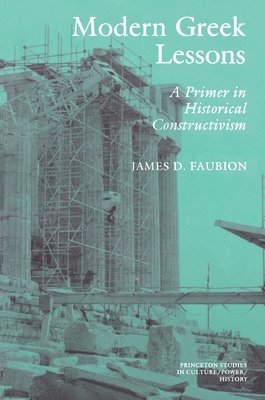
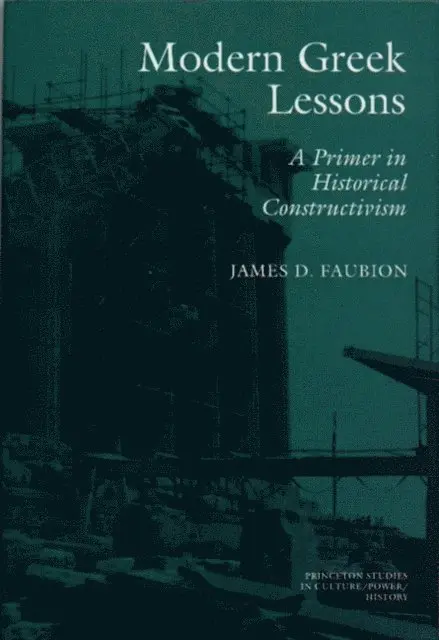
Through a blend of lively detail and elegant narration, James Faubion immerses us in the cosmopolitan intellectual life of Athens, a centerless city of multiplicities and fragmentations, a city on the "margins of Europe" recovering from the repressive rule of a military junta. Drawing inspiration from Athens and its cultural elite, Faubion explores the meaning of modernity, finding it not in the singular character of "Western civilization" but instead in an increasingly diverse family of practices of reform.
886 kr
Skickas inom 3-6 vardagar
When James Faubion visited the site of the Branch Davidian compound after its conflagration, what he found surprised him. Though the popular imagination had relegated the site's millennialist denizens to the radical fringe, Faubion found not psychopathology but a sturdy and comprehensive system for understanding the world. He also found, in the person of Amo Paul Bishop Roden, a fascinating spokeswoman for that system. Based on more than five years of fieldwork, including extensive life-history interviews with Roden, Faubion interprets millennialism as a "master-pedagogy." He reveals it as simultaneously a poetics, a rhetoric, a physics, an approach to history, a course of training, a gnosis, and an ethics. Millennialism resists the categories that both academic and popular analysts use to discuss religion by melding the sacred and secular, the spiritual and political, and the transcendental and commonsensical. In this respect, and in others, millennialism is a premodern pedagogy that has grown resolutely counter-modern. Yet, mainstream culture sees in it not a critique of modernity but dangerous lunacy.This disjunction prompts Faubion to investigate how the mainstream came to confine religion to an inner and other-worldly faith--an inquiry that allows him to account for the irrationalization of millennialism. Against this historical background, we can discern the genealogy of Adventist millennialism and make sense of contemporary religious events, including the actions of a small group in the central Texas prairie.
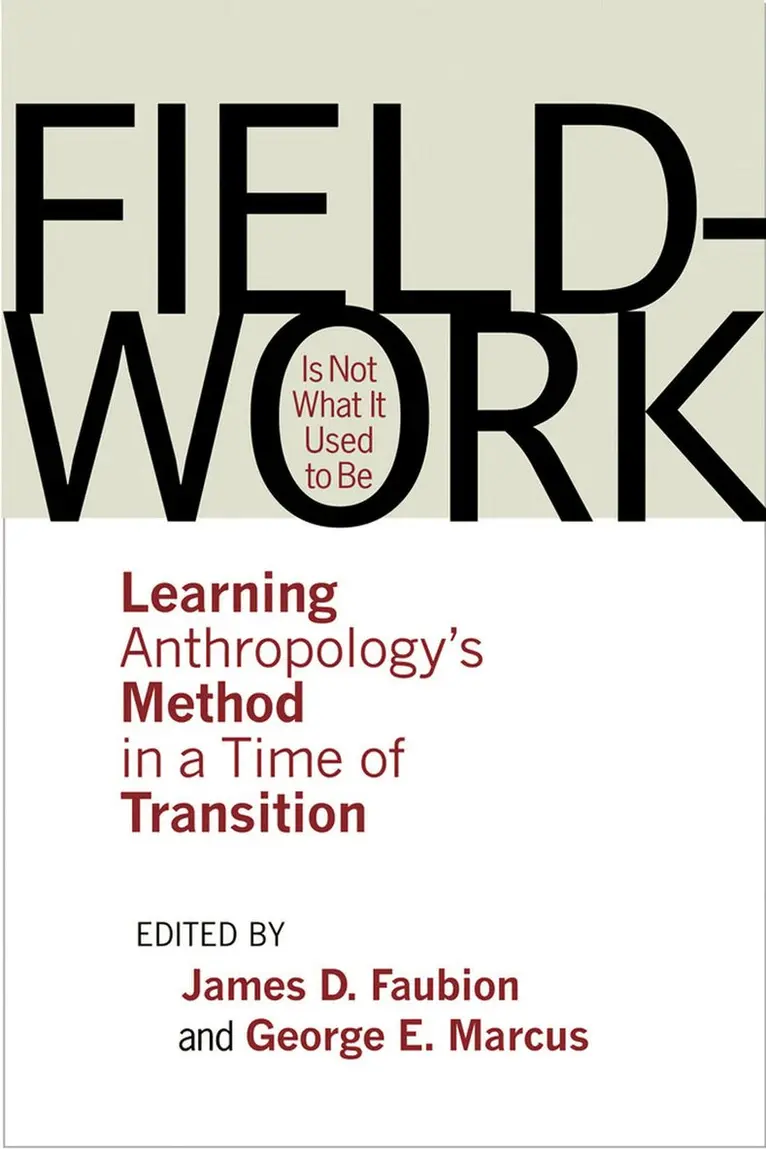
Fieldwork Is not What It Used to Be
Learning Anthropology's Method in a Time of Transition
Inbunden, Engelska, 2009
1 518 kr
Skickas inom 10-15 vardagar
Over the past two decades anthropologists have been challenged to rethink the nature of ethnographic research, the meaning of fieldwork, and the role of ethnographers. Ethnographic fieldwork has cultural, social, and political ramifications that have been much discussed and acted upon, but the training of ethnographers still follows a very traditional pattern; this volume engages and takes its point of departure in the experiences of ethnographers-in-the-making that encourage alternative models for professional training in fieldwork and its intellectual contexts.The work done by contributors to Fieldwork Is Not What It Used to Be articulates, at the strategic point of career-making research, features of this transformation in progress. Setting aside traditional anxieties about ethnographic authority, the authors revisit fieldwork with fresh initiative. In search of better understandings of the contemporary research process itself, they assess the current terms of the engagement of fieldworkers with their subjects, address the constructive, open-ended forms by which the conclusions of fieldwork might take shape, and offer an accurate and useful description of what it means to become—and to be—an anthropologist today.Contributors: Lisa Breglia, George Mason University; Jae A. Chung, Aalen University; James D. Faubion, Rice University; Michael M. J. Fischer, MIT; Kim Fortun, Rensselaer Polytechnic Institute; Jennifer A. Hamilton, Hampshire College; Christopher M. Kelty, UCLA; George E. Marcus, University of California, Irvine; Nahal Naficy, Rice University; Kristin Peterson, University of California, Irvine; Deepa S. Reddy, University of Houston-Clear Lake
Fieldwork Is not What It Used to Be
Learning Anthropology's Method in a Time of Transition
Häftad, Engelska, 2009
274 kr
Skickas inom 10-15 vardagar
Over the past two decades anthropologists have been challenged to rethink the nature of ethnographic research, the meaning of fieldwork, and the role of ethnographers. Ethnographic fieldwork has cultural, social, and political ramifications that have been much discussed and acted upon, but the training of ethnographers still follows a very traditional pattern; this volume engages and takes its point of departure in the experiences of ethnographers-in-the-making that encourage alternative models for professional training in fieldwork and its intellectual contexts.The work done by contributors to Fieldwork Is Not What It Used to Be articulates, at the strategic point of career-making research, features of this transformation in progress. Setting aside traditional anxieties about ethnographic authority, the authors revisit fieldwork with fresh initiative. In search of better understandings of the contemporary research process itself, they assess the current terms of the engagement of fieldworkers with their subjects, address the constructive, open-ended forms by which the conclusions of fieldwork might take shape, and offer an accurate and useful description of what it means to become—and to be—an anthropologist today.Contributors: Lisa Breglia, George Mason University; Jae A. Chung, Aalen University; James D. Faubion, Rice University; Michael M. J. Fischer, MIT; Kim Fortun, Rensselaer Polytechnic Institute; Jennifer A. Hamilton, Hampshire College; Christopher M. Kelty, UCLA; George E. Marcus, University of California, Irvine; Nahal Naficy, Rice University; Kristin Peterson, University of California, Irvine; Deepa S. Reddy, University of Houston-Clear Lake
309 kr
Skickas inom 7-10 vardagar
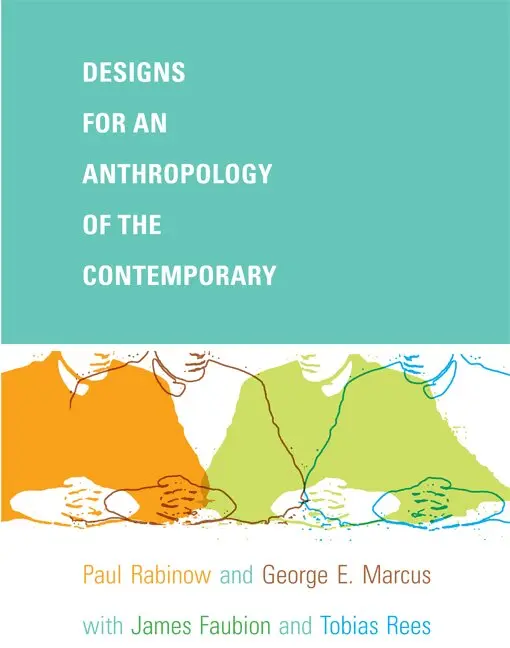
In this compact volume two of anthropology’s most influential theorists, Paul Rabinow and George E. Marcus, engage in a series of conversations about the past, present, and future of anthropological knowledge, pedagogy, and practice. James D. Faubion joins in several exchanges to facilitate and elaborate the dialogue, and Tobias Rees moderates the discussions and contributes an introduction and an afterword to the volume. Most of the conversations are focused on contemporary challenges to how anthropology understands its subject and how ethnographic research projects are designed and carried out. Rabinow and Marcus reflect on what remains distinctly anthropological about the study of contemporary events and processes, and they contemplate productive new directions for the field. The two converge in Marcus’s emphasis on the need to redesign pedagogical practices for training anthropological researchers and in Rabinow’s proposal of collaborative initiatives in which ethnographic research designs could be analyzed, experimented with, and transformed.Both Rabinow and Marcus participated in the milestone collection Writing Culture: The Poetics and Politics of Ethnography. Published in 1986, Writing Culture catalyzed a reassessment of how ethnographers encountered, studied, and wrote about their subjects. In the opening conversations of Designs for an Anthropology of the Contemporary, Rabinow and Marcus take stock of anthropology’s recent past by discussing the intellectual scene in which Writing Culture intervened, the book’s contributions, and its conceptual limitations. Considering how the field has developed since the publication of that volume, they address topics including ethnography’s self-reflexive turn, scholars’ increased focus on questions of identity, the Public Culture project, science and technology studies, and the changing interests and goals of students. Designs for an Anthropology of the Contemporary allows readers to eavesdrop on lively conversations between anthropologists who have helped to shape their field’s recent past and are deeply invested in its future.
692 kr
Skickas inom 7-10 vardagar
Through an ambitious and critical revision of Michel Foucault's investigation of ethics, James Faubion develops an original program of empirical inquiry into the ethical domain. From an anthropological perspective, Faubion argues that Foucault's specification of the analytical parameters of this domain is the most productive point of departure in conceptualizing its distinctive features. He further argues that Foucault's framework is in need of substantial revision to be of genuinely anthropological scope. In making this revision, Faubion illustrates his program with two extended case studies: one of a Portuguese marquis and the other of a dual subject made up of the author and a millenarian prophetess. The result is a conceptual apparatus that is able to accommodate ethical pluralism and yield an account of the limits of ethical variation, providing a novel resolution of the problem of relativism that has haunted anthropological inquiry into ethics since its inception.
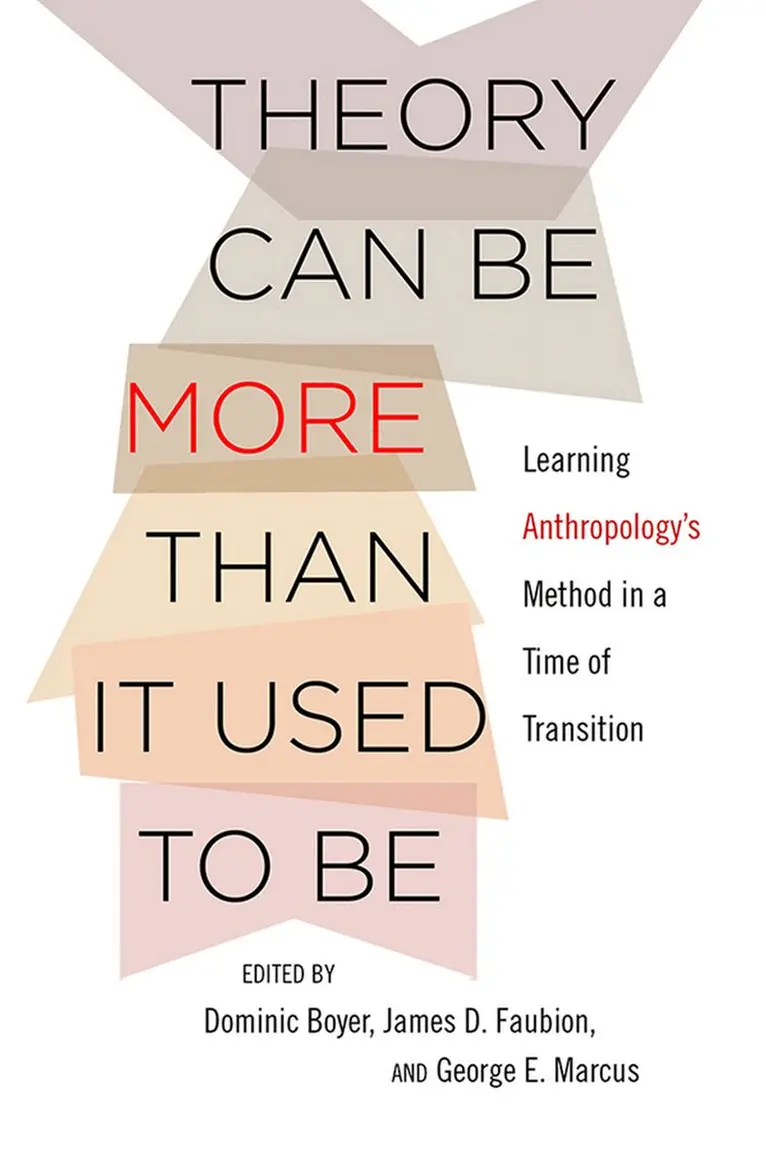
Theory Can Be More Than It Used to Be
Learning Anthropology's Method in a Time of Transition
Inbunden, Engelska, 2015
1 518 kr
Skickas inom 10-15 vardagar
Within anthropology, as elsewhere in the human sciences, there is a tendency to divide knowledge making into two separate poles: conceptual (theory) vs. empirical (ethnography). In Theory Can Be More than It Used to Be, Dominic Boyer, James D. Faubion, and George E. Marcus argue that we need to take a step back from the assumption that we know what theory is to investigate how theory—a matter of concepts, of analytic practice, of medium of value, of professional ideology—operates in anthropology and related fields today. They have assembled a distinguished group of scholars to diagnose the state of the theory-ethnography divide in anthropology today and to explore alternative modes of analytical and pedagogical practice.Continuing the methodological insights provided in Fieldwork Is Not What It Used to Be, the contributors to this volume find that now is an optimal time to reflect on the status of theory in relation to ethnographic research in anthropology and kindred disciplines. Together they engage with questions such as, What passes for theory in anthropology and the human sciences today and why? What is theory's relation to ethnography? How are students trained to identify and respect anthropological theorization and how do they practice theoretical work in their later career stages? What theoretical experiments, languages, and institutions are available to the human sciences? Throughout, the editors and authors consider theory in practical terms, rather than as an amorphous set of ideas, an esoteric discourse of power, a norm of intellectual life, or an infinitely contestable canon of texts. A short editorial afterword explores alternative ethics and institutions of pedagogy and training in theory.
Theory Can Be More Than It Used to Be
Learning Anthropology's Method in a Time of Transition
Häftad, Engelska, 2015
375 kr
Skickas inom 7-10 vardagar
Within anthropology, as elsewhere in the human sciences, there is a tendency to divide knowledge making into two separate poles: conceptual (theory) vs. empirical (ethnography). In Theory Can Be More than It Used to Be, Dominic Boyer, James D. Faubion, and George E. Marcus argue that we need to take a step back from the assumption that we know what theory is to investigate how theory—a matter of concepts, of analytic practice, of medium of value, of professional ideology—operates in anthropology and related fields today. They have assembled a distinguished group of scholars to diagnose the state of the theory-ethnography divide in anthropology today and to explore alternative modes of analytical and pedagogical practice.Continuing the methodological insights provided in Fieldwork Is Not What It Used to Be, the contributors to this volume find that now is an optimal time to reflect on the status of theory in relation to ethnographic research in anthropology and kindred disciplines. Together they engage with questions such as, What passes for theory in anthropology and the human sciences today and why? What is theory's relation to ethnography? How are students trained to identify and respect anthropological theorization and how do they practice theoretical work in their later career stages? What theoretical experiments, languages, and institutions are available to the human sciences? Throughout, the editors and authors consider theory in practical terms, rather than as an amorphous set of ideas, an esoteric discourse of power, a norm of intellectual life, or an infinitely contestable canon of texts. A short editorial afterword explores alternative ethics and institutions of pedagogy and training in theory.
224 kr
Skickas inom 5-8 vardagar
Few philosophers have had as strong an influence on the twentieth century as Michel Foucault. His work has affected the teaching of any number of disciplines and remains, twenty years after his death, critically important. This newly available edition is drawn from the complete collection of all of Foucault's courses, articles, and interviews, and brings his most important work to a new generation of readers. Aesthetics, Method and Epistemology (edited by James D. Faubion) surveys Foucault's diverse but sustained address of the historical forms and interplay of passion, experience, and truth.
271 kr
Skickas inom 5-8 vardagar