James D. Laird – författare
Visar alla böcker från författaren James D. Laird. Handla med fri frakt och snabb leverans.
4 produkter
4 produkter
E-bok
Engelska, 2007748 kr
Läs direkt efter köp
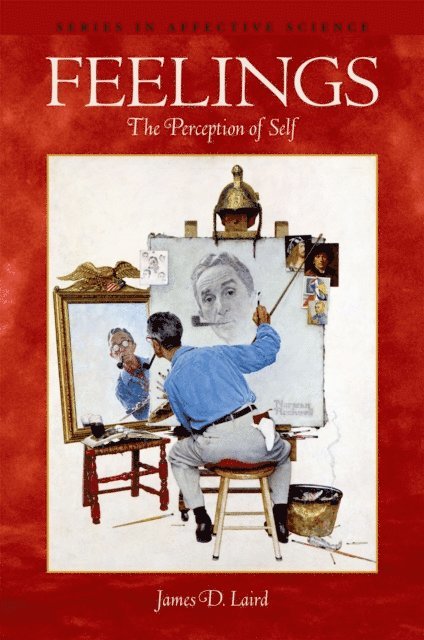
Feelings argues for the counter-intuitive idea that feelings do not cause behavior, but rather follow from behavior, and are, in fact, the way that we know about our own bodily states and behaviors. This point of view, often associated with William James, is called self-perception theory. Self-perception theory can be empirically tested by manipulating bodily states and behaviors in order to see if the corresponding feelings are produced.In this volume, James D. Laird presents hundreds of studies, all demonstrating that feelings do indeed follow from behavior. Behaviors that have been manipulated include facial expressions of emotion, autonomic arousal, actions, gaze, and postures. The feelings that have been induced include happiness, anger, fear, romantic love, liking, disliking, hunger, and feelings of familiarity. These feelings do not feel like knowledge because they are knowledge-by-acquaintance, such as the knowledge we have of how an apple tastes, rather than verbal, knowledge-by-description, such as the knowledge that apples are red, round, and edible.Many professional theories of human behavior, as well as common sense, explain actions by an appeal to feelings as causes. Laird argues to the contrary that if feelings are information about behaviors that are already ongoing, feelings cannot be causes and that the whole mechanistic model of human behavior as "caused" in this sense seems mistaken. He proposes an alternative, cybernetic model, involving hierarchically stacked control systems. In this model, feelings provide feedback to the control systems, and in a further elaboration, this model suggests that the stack of control systems matches a similar stack of levels of organization of the world.An original contribution to the study of the relationship between feelings and behavior, the volume will be of interest to social, emotional, and cognitive psychologists.
Inbunden, Engelska, 1998
1 317 kr
Skickas inom 5-8 vardagar
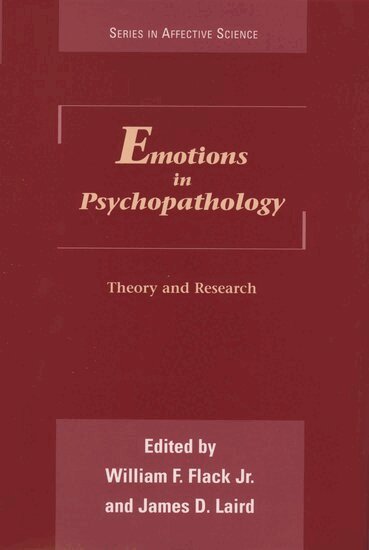
A wide range of researchers, clinicians, and academics have come to realize that emotions lie at the heart of many psychopathological disorders. This book assesses the latest research on this important topic and examines the relationship between emotions and psychopathology by bringing together current theoretical and research perspectives of leading figures from a variety of professional disciplines, including clinical, developmental, social, and personality psychology, psychiatry, and philosophy.
Inbunden, Engelska, 2007
994 kr
Skickas inom 5-8 vardagar
This book aims to pinpoint the connection feelings have with behaviour - a connection that, while clear, has never been fully explained. Following William James, Laird argues that feelings are not the cause of behaviour but rather its consequences; the same goes for behaviour and motives and behaviour and attitudes. He presents research into feelings across the spectrum, from anger to joy to fear to romantic love, that support this against-the-grain view. Laird discusses the problem of common sense, self-perception theory, the association between feelings and higher cognitive processes, and also the literature on facial expression, posture, and gaze.
E-bok
PDF, Engelska, 2007722 kr
Läs direkt efter köp
Feelings argues for the counter-intuitive idea that feelings do not cause behavior, but rather follow from behavior, and are, in fact, the way that we know about our own bodily states and behaviors. This point of view, often associated with William James, is called self-perception theory. Self-perception theory can be empirically tested by manipulating bodily states and behaviors in order to see if the corresponding feelings are produced.In this volume, James D. Laird presents hundreds of studies, all demonstrating that feelings do indeed follow from behavior. Behaviors that have been manipulated include facial expressions of emotion, autonomic arousal, actions, gaze, and postures. The feelings that have been induced include happiness, anger, fear, romantic love, liking, disliking, hunger, and feelings of familiarity. These feelings do not feel like knowledge because they are knowledge-by-acquaintance, such as the knowledge we have of how an apple tastes, rather than verbal, knowledge-by-description, such as the knowledge that apples are red, round, and edible.Many professional theories of human behavior, as well as common sense, explain actions by an appeal to feelings as causes. Laird argues to the contrary that if feelings are information about behaviors that are already ongoing, feelings cannot be causes and that the whole mechanistic model of human behavior as "caused" in this sense seems mistaken. He proposes an alternative, cybernetic model, involving hierarchically stacked control systems. In this model, feelings provide feedback to the control systems, and in a further elaboration, this model suggests that the stack of control systems matches a similar stack of levels of organization of the world.An original contribution to the study of the relationship between feelings and behavior, the volume will be of interest to social, emotional, and cognitive psychologists.